Friday, 3 September 2021

Adaptive Scooters Coming to a Street Near You

Adaptive Scooters Coming to a Street Near You
By Rachel Vierstra

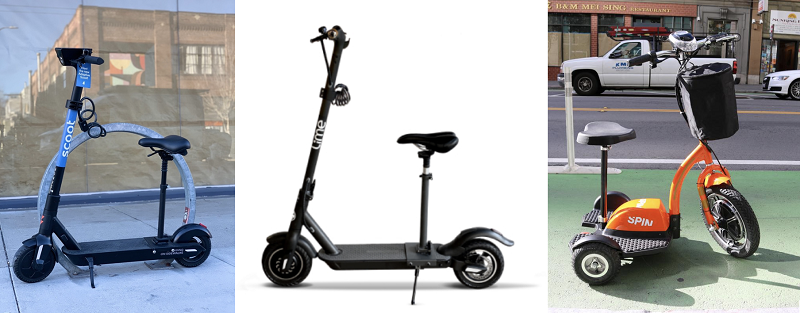
Photo of adaptive scooters from Scoot, Lime and SpinShared Powered Scooters have grown in popularity over the past few years, giving residents and visitors to San Francisco one more alternative to traveling by car. Scooters can provide increased access to nearby necessities and a fun option for shorter trips. However, standard scooter models are not accessible to many people with disabilities.

Motivated by our dedication to providing equitable access to transportation, the SFMTA required all powered scooter permittees to pilot an adaptive scooter program from January 2020 to June 2021. From that pilot, a first of its kind among U.S. transit agencies, we learned important lessons that inform how we can best require scooter operators to expand access for disabled riders moving forward.

2019-2021 Adaptive Scooter Pilot

The 2019-2021 scooter permittees, Scoot, Lime, and Spin launched their adaptive scooter pilots with devices that provided additional stability, such as a seat, a wider base, and an additional wheel. Each of the three pilots offered multiple options for reserving an adaptive scooter, including submitting a request through an online form, calling directly, or reserving through the company’s app. Once reserved, users were able to pick up the scooter from the company or have it delivered directly to them.

Throughout the pilot, the permittees were required to connect with different disability organizations to evaluate their program’s efficacy and solicit feedback on how best to meet their needs. This included surveys of users and roundtables with local disability organizations, including LightHouse for the Blind and Visually Impaired, Ability Now, Walk San Francisco, and the Community Living Campaign.  

What We Learned

At the end of the pilot, the SFMTA required the permittees to conduct an evaluation of their programs to identify strengths and weaknesses and to share what they learned. The program had many successes during the trial period. All three permittees were able to offer the adaptive scooter rentals free of charge (Lime had a $5 refundable deposit), making the program financially accessible. In addition, based on user feedback, permittees were able to make modifications to existing models and introduce new, more useful models to their adaptive fleets during the pilot program. For example, all permittees altered seats so they could be raised and lowered based on the user’s height, and Lime and Spin added baskets so users could carry personal belongings. Starting in February of 2021, Scoot placed some of their adaptive scooters on the street, allowing anyone to rent them on demand.

By the end of the pilot, 158 different people had rented an adaptive scooter at least once, for a total of 786 rides. Input received from the community throughout the pilot underscored the importance of offering an array of scooter models that allow people with different mobility needs to access the program.

Incorporating lessons learned from the pilot program, permittees are now required to provide adaptive scooters as a minimum of 5% of their on-street fleet.

What’s Next: Permanent Adaptive Requirements for Scooter Operators

The new scooter permit began July 1, 2021 with Spin and Lime and on August 20 for Scoot. All on-street adaptive devices are rentable from the permittee’s existing mobile app, meaning a rider can reserve and ride an adaptive scooter in the same way as a standard scooter. The adaptive scooters must feature at least two of the following expansions to increase access: 1) three wheels, 2) seat, or 3) basket. Rental costs for adaptive scooters must be equal to or less than the rental cost of a general fleet scooter.

 In addition to requiring the on-street adaptive scooters, SFMTA also incentivized permittees to continue piloting and testing additional adaptive scooter devices and service models, such as rental/testing hubs out in the community, pick up and drop off services, and additional community partnerships.

Learn More

Join us September 12, 2021 in Golden Gate Park to test ride an adaptive scooter! This adaptive transportation event will also feature our adaptive bikeshare pilot program and information about the Golden Gate Park Access and Safety Program. In addition, the scooter permittees will be sharing an adaptive scooter update at the Multimodal Accessibility Advisory Committee (MAAC) meeting on September 30, 2021.


Published September 03, 2021 at 11:21AM
https://ift.tt/2YrMoWf

Thursday, 2 September 2021

Celebrating 148 Years of Cable Cars in San Francisco

Celebrating 148 Years of Cable Cars in San Francisco
By Pamela Johnson

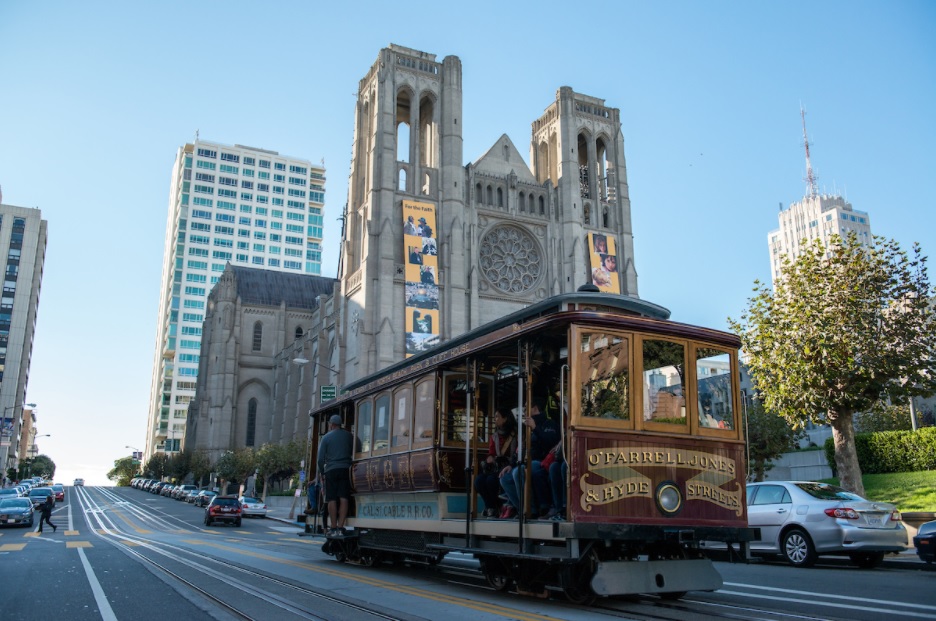
Photo of cable car on California Street near Grace Cathedral

On September 4, 2021, San Francisco’s historic cable cars will return to revenue service after an unprecedented shut down of more than a year as part of the city's emergency response to protect operators and the public during the Covid19 pandemic. Coincidentally, this reopening marks the 148th year of cable car operations in San Francisco.

Rebooting the cable car system required significant work. As the cars had been out of service since March 17, 2020 we had to recertify and hire new line inspectors and prepare the cable cars’ historic infrastructure to accommodate service. Cable car testing began with the Powell-Hyde line in July. In August, the SFMTA announced that free test rides would be offered to the public on all three lines as we worked out possible kinks in the system, leading to this month's return of the landmark cable cars.

All aboard? Ding! Ding! A familiar sound is in the air again. It's time to experience San Francisco once more with a ride on one of the city's landmark cable cars. When was the last time you were on board? Shop, dine, and visit your favorite destinations along the cable car line and support the reopening of San Francisco's economy.

History of the Cable Car

Andrew S. Hallidie, an engineer originally from Scotland, conceived his idea for a steam engine-powered, cable-driven rail system in 1869 after witnessing horses being whipped as they struggled to pull a passenger car up the wet cobblestones of Jackson Street.

Hallidie then entered into a partnership to form the Clay Street Hill Railroad, which began constructing a cable line on Clay Street—creating the first cable car line in the world, which launched in May 1873.

Opposition & Threats to the Cable Car System

The existence of San Francisco's cable cars has been threatened over and over again throughout the years. They have persisted through two World Wars and The 1906 Great Earthquake, and have outlasted political attempts to remove them from city streets in the late 1940s and 1950s, eventually becoming the international symbol of San Francisco that they are today.

In 1946, the cable cars almost saw their extinction when some city leaders, including then-Mayor Roger Lapham, wanted to tear out the 1870s-era transit system. The wooden vehicles towed by an underground cable system were seen more as a costly nuisance than a joyous marvel. In the same year, however, Friedel Klussman founded the Citizens Committee to Save the Cable Cars. The committee began a public campaign proclaiming that the cable cars’ value to San Francisco was far greater than their operational costs. They succeeded in placing an amendment on the ballot. With newspaper coverage, public support quickly grew. Celebrities voiced their support for cable cars as well.  The measure passed in a landslide victory, and the city of San Francisco had rallied to save the Powell Street cable car system.

Despite a shut-down in the 1980s for system reconstruction and the more recent pandemic-related service suspension, cable cars have proven to be an enduring legacy of San Francisco. We appreciate the patience of our riding public as we work to bring this service back better than ever.

To learn more about the history of San Francisco's historic cable cars, visit San Francisco's 148 Years of Cable Car Service, Then and Now: Keeping the Cable Cars on the Move and the Cable Car Museum webpages. You can also sign up for cable car service updates on our SFMTA alerts page.


Published September 02, 2021 at 08:09AM
https://ift.tt/3BCZvlA

Tuesday, 24 August 2021

29 Sunset Improvement Project Relaunched

29 Sunset Improvement Project Relaunched
By Shalon Rogers

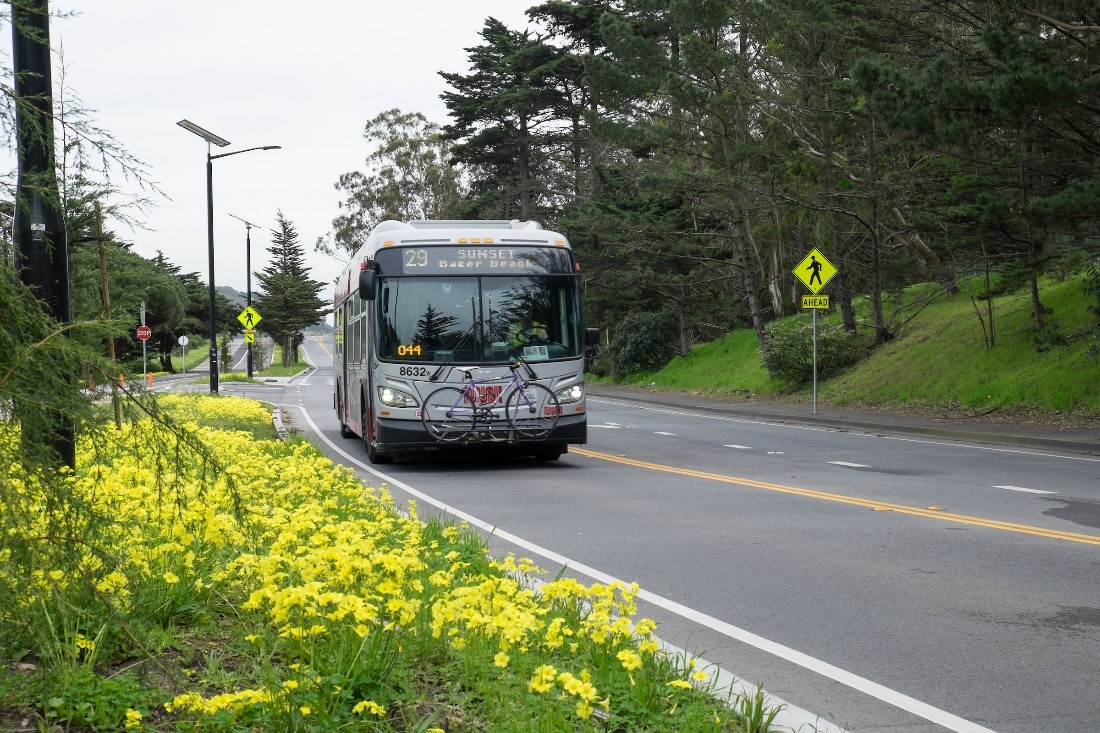
The 29 Sunset bus traveling through San Francisco

Improvements are on the horizon for one of the longest bus routes in the Muni system. As part of the 29 Sunset Improvement Project, the SFMTA is conducting a survey to gather feedback and ideas on how to improve the 29 Sunset.

 At the beginning of 2020, the SFMTA’s 29 Sunset Improvement Project was ready to kick-off a year-long outreach program. However, the COVID-19 pandemic  delayed the project and priorities were shifted to developing and implementing Temporary Emergency Transit Lanes (TETL) and service changes to respond to COVID and then restore service on Muni routes incrementally over the past year and a half. 

We’re excited to relaunch community outreach for the 29 Sunset Improvement Project, starting with a multilingual survey that is both online and over text message. We will also conduct additional outreach to different users of this route including students, service workers and groups that represent seniors and persons with disabilities to help determine priorities that will directly shape a near-term improvement proposal.

As with all Muni Forward projects, the 29 Sunset project will improve reliability of the service by reducing pass-ups and overcrowded buses while mitigating the impacts of traffic congestion. In addition, the project will also consider potential service changes such as a skip stop service for a 29R Sunset Rapid line.  We will look to stakeholders to help identify what stops should be considered for 29R service as part of the outreach process and will evaluate design options for feasibility.

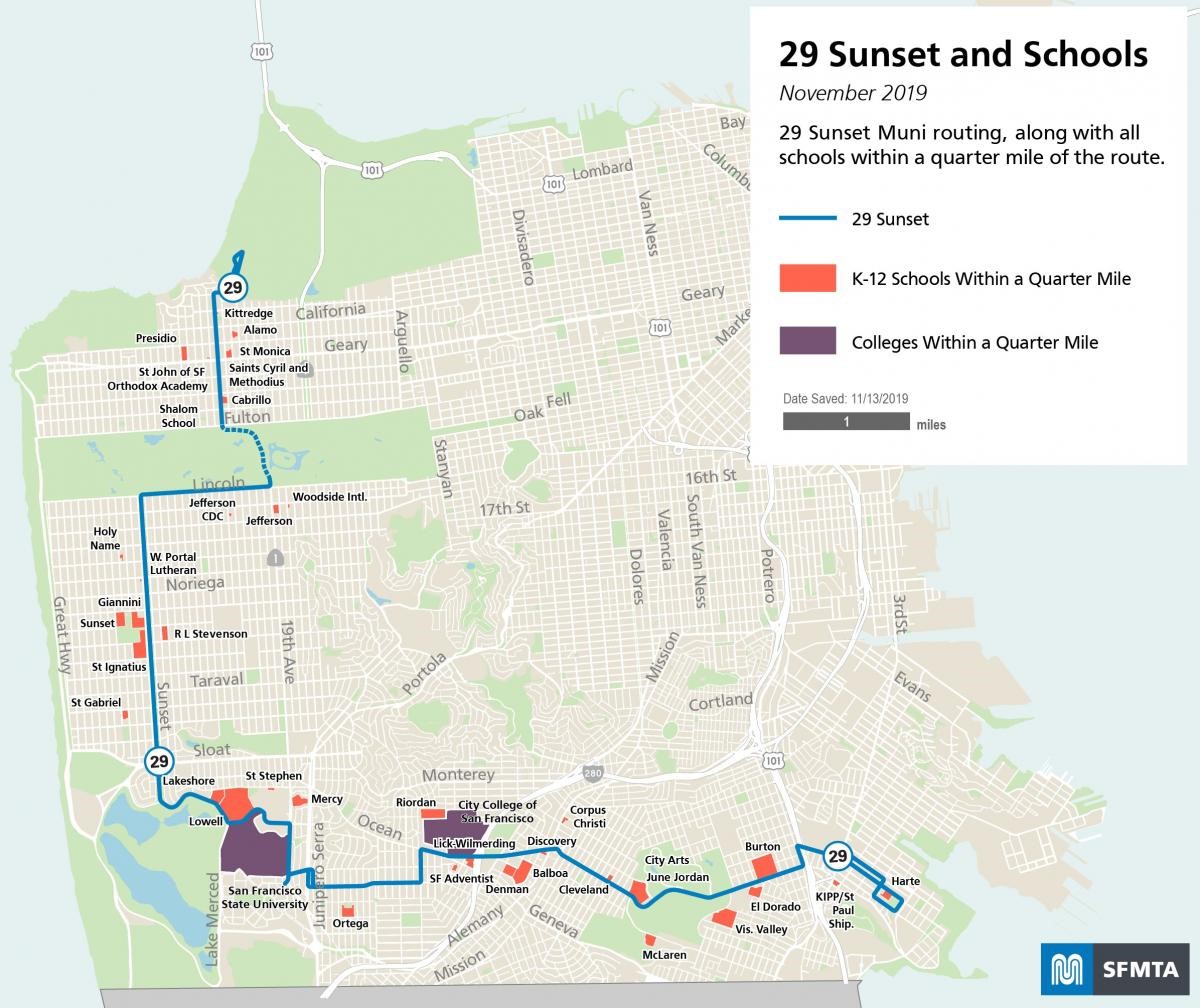
A route identified by our Muni Service Equity Strategy, the 29 Sunset is a critical cross-town bus serving the southern and western neighborhoods of San Francisco, as well as major destinations including McLaren Park, City College of San Francisco, San Francisco State University, Golden Gate Park and Baker Beach. Prior to the pandemic, the 29 Sunset served 18,800 daily riders and numerous K-12 schools and universities along its route.

Map showing the route for the 29 Sunset and all of the schools along the route

The 29 Sunset serves a significant number of schools along its route

The survey is just our first step. In the coming months, we will conduct broader community outreach, with a focus in the southeastern neighborhoods, which will build upon previous outreach already conducted with schools. Because the agency is faced with limited resources, predicting a timeline for implementation of this project and related changes is difficult.  However, we want to design the service now and have it ready to go if/when funding resources become available.


Published August 24, 2021 at 09:11AM
https://ift.tt/3D6LSwC

Friday, 20 August 2021

Then and Now: Keeping the Cable Cars on the Move

Then and Now: Keeping the Cable Cars on the Move
By Jeremy Menzies

When Andrew Hallidie’s first cable car climbed Nob Hill on Clay Street in August 1873, the cars were a brand-new technology to replace the horse-drawn streetcars used at the time. Little did he know that 148 years later, cable cars would still be scaling the steep slopes of Nob Hill.

Many of the methods used to maintain and operate the cars to this day harken back to the golden era of cable cars in the late 1800s. As we ramp up for the return of revenue service on San Francisco’s beloved cable cars, check out the images below for a look at just some of the behind-the-scenes work keeping the system running, both then and now.

Keeping up the Cars
Maintaining the cars on a regular basis is vital to keeping them safe, operable and looking good for the tens of thousands of people who ride them. At the Cable Car Division shops, mechanics, carpenters and painters perform routine maintenance, make repairs and brighten up worn out paint to keep the cars in shape.

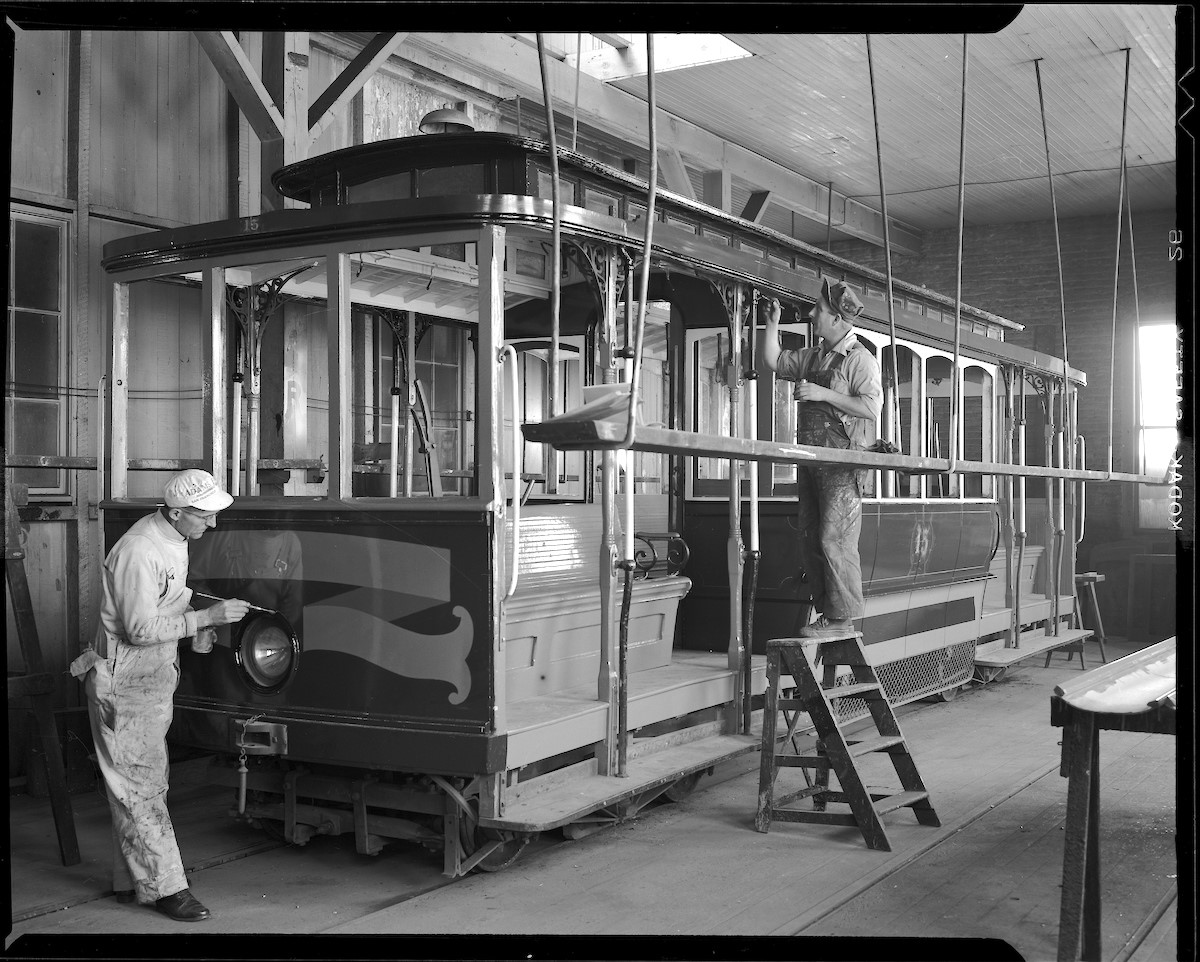
Two painters work on California Street Cable Car 15 in the paint shop

Then: Two painters work on California Street Cable Car 15 in the paint shop at California Cable headquarters in 1952 (once located on the SW corner of Hyde and California Streets).

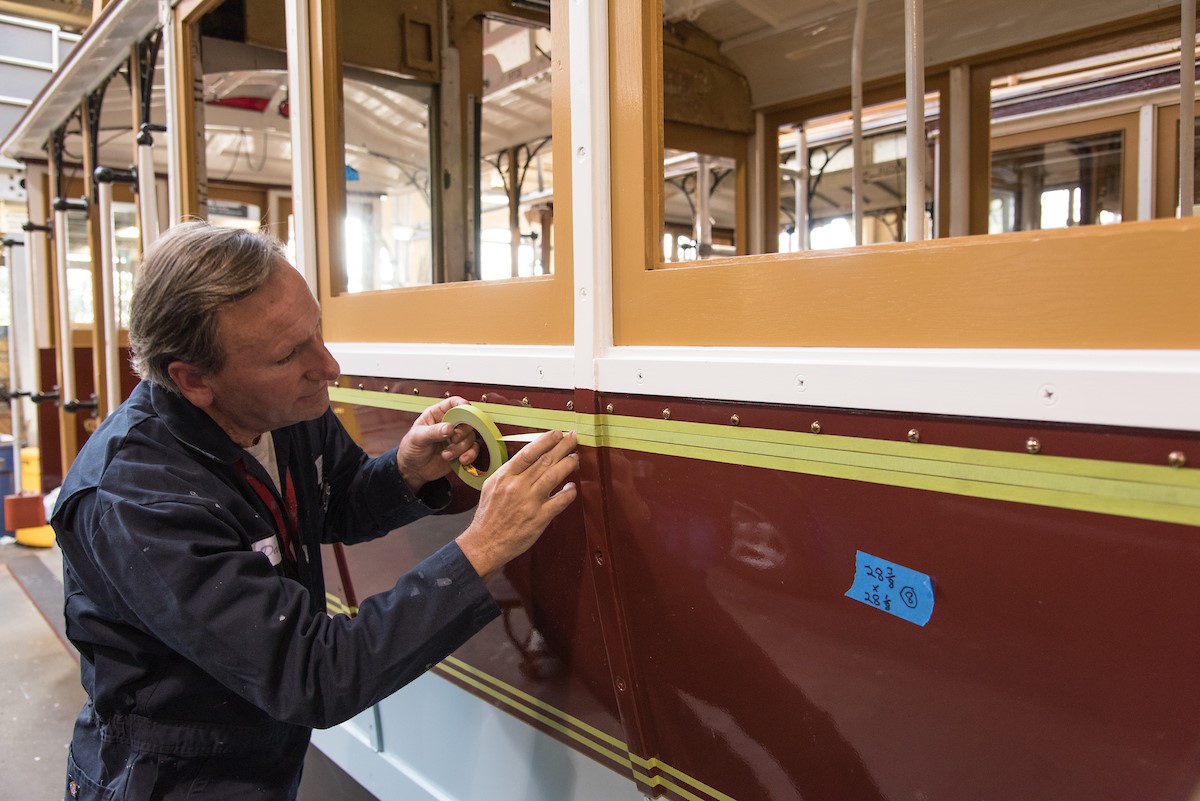
 A painter lays down masking tape to paint striping on the side of Powell St. Cable Car 22,

Now: A painter lays down masking tape to paint striping on the side of Powell St. Cable Car 22, which was rebuilt in 2017.

Minding the Cable
Without cables and the machinery used to move them, there would be no cable cars. Today the age-old work of cable splicing, a method of attaching one end of the cable to the other, is done by hand, the same as it has been done for over 100 years. Another critical job is maintaining the winding machinery used to move the cable and cars through the streets.

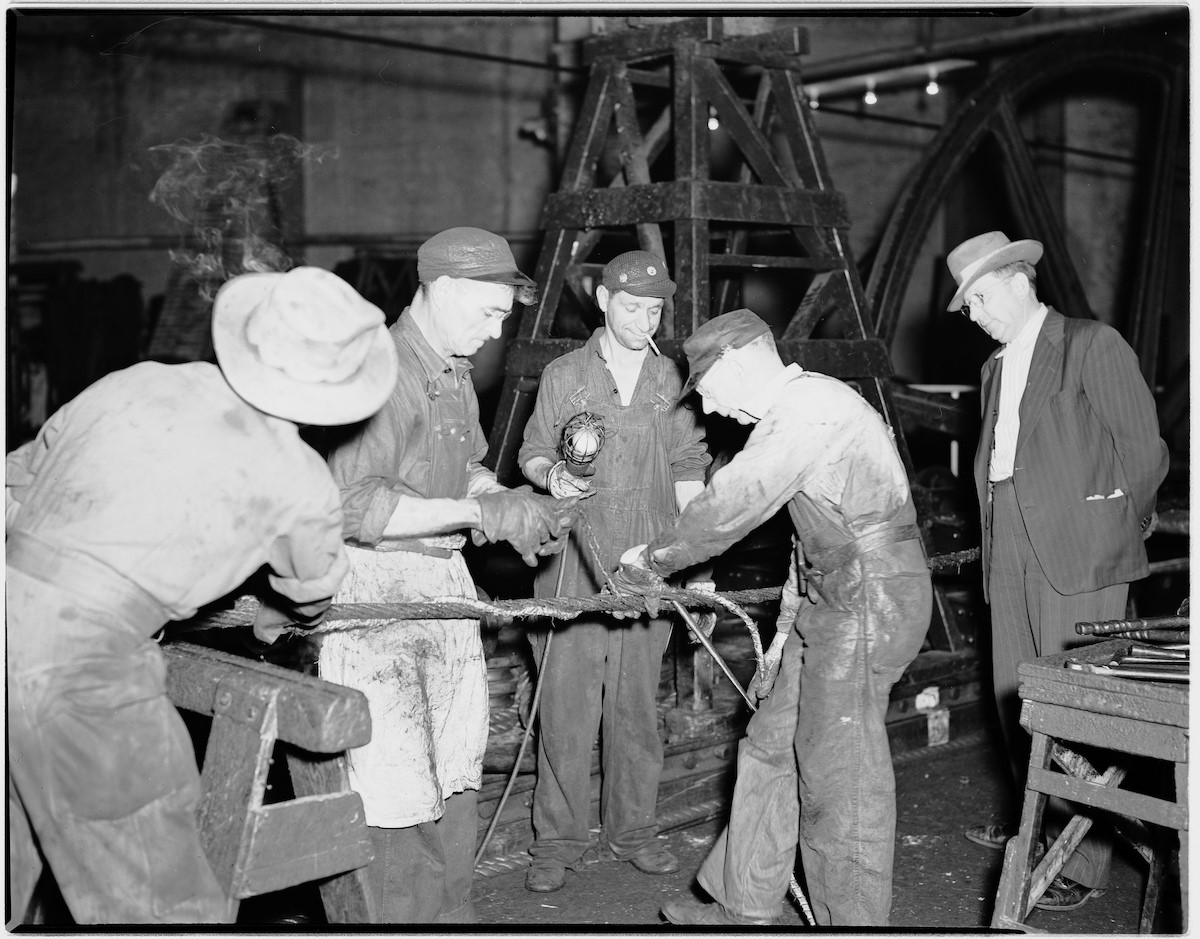
Four workers splicing a cable

Then: cable splicing in 1947 involved hand tools, skill and a bit of brute force, much the same as 10, 20, or 50 years earlier. 

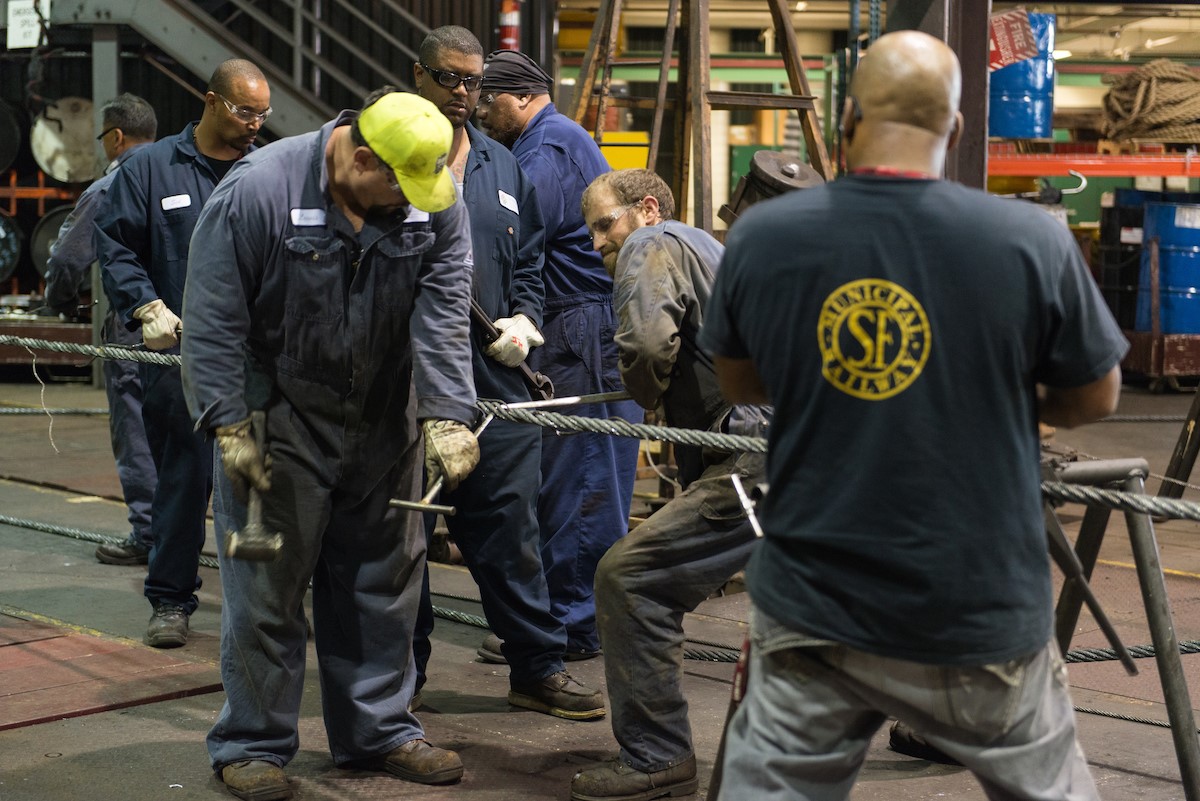
Workers splicing a cable

Now: This 2014 shot looks about the same as its 1947 counterpart, minus the hats and cigarettes!

Major Overhauls
When a car is too old or damaged to operate safely, it is rebuilt by teams of skilled craftspeople. The metalworkers in our Special Machine shop are responsible for building new metal parts used throughout the vehicle – from heavy wheel and suspension assemblies to decorative parts of the passenger grab bars. Carpenters rebuild the entire car, while painters and mechanics finish getting the car looking its best and ready to roll.

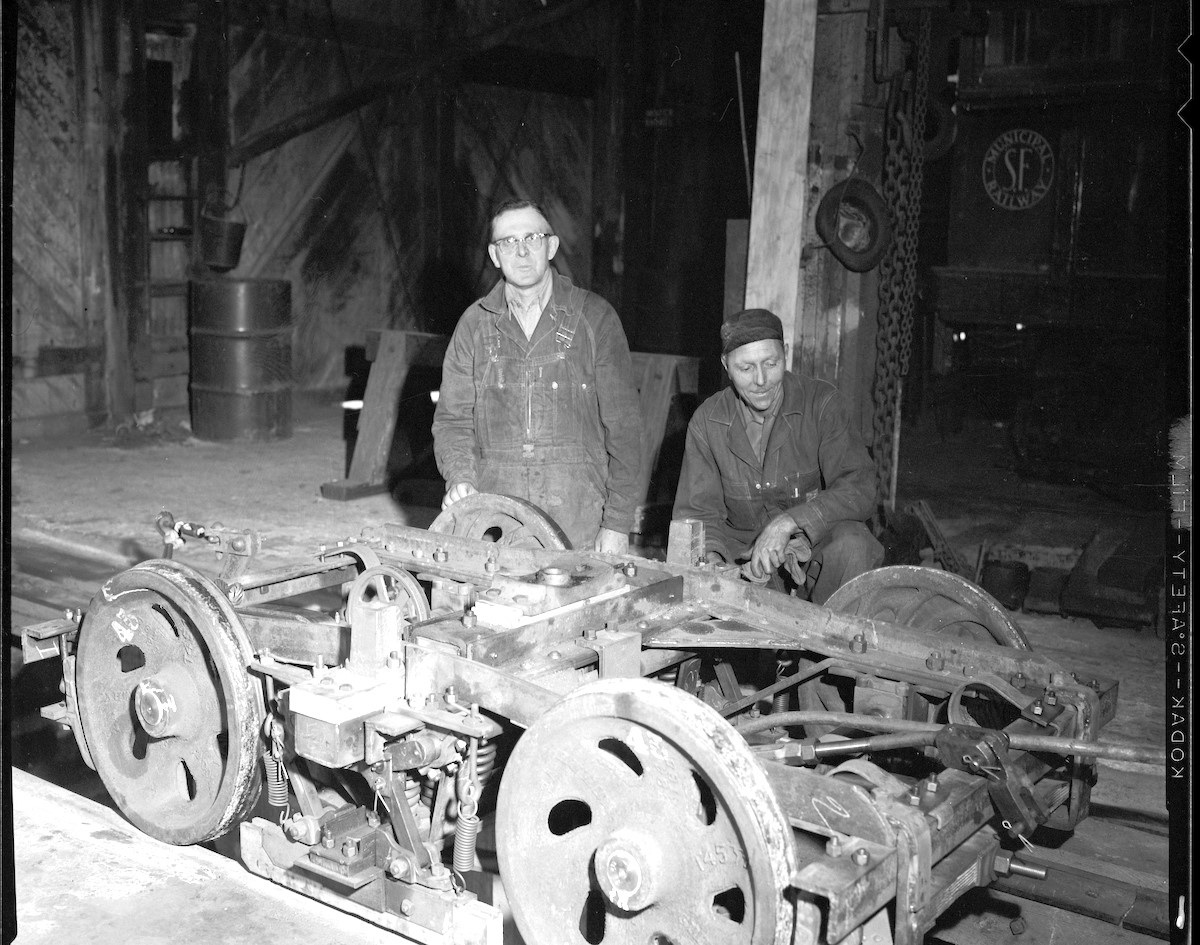
 Two mechanics stop for a photo with an overhauled cable car truck

Then: Two mechanics stop for a photo in 1958 with an overhauled cable car truck in the heavy repair shops once located on Ocean and San Jose avenues (present day location of Muni’s Green Division).

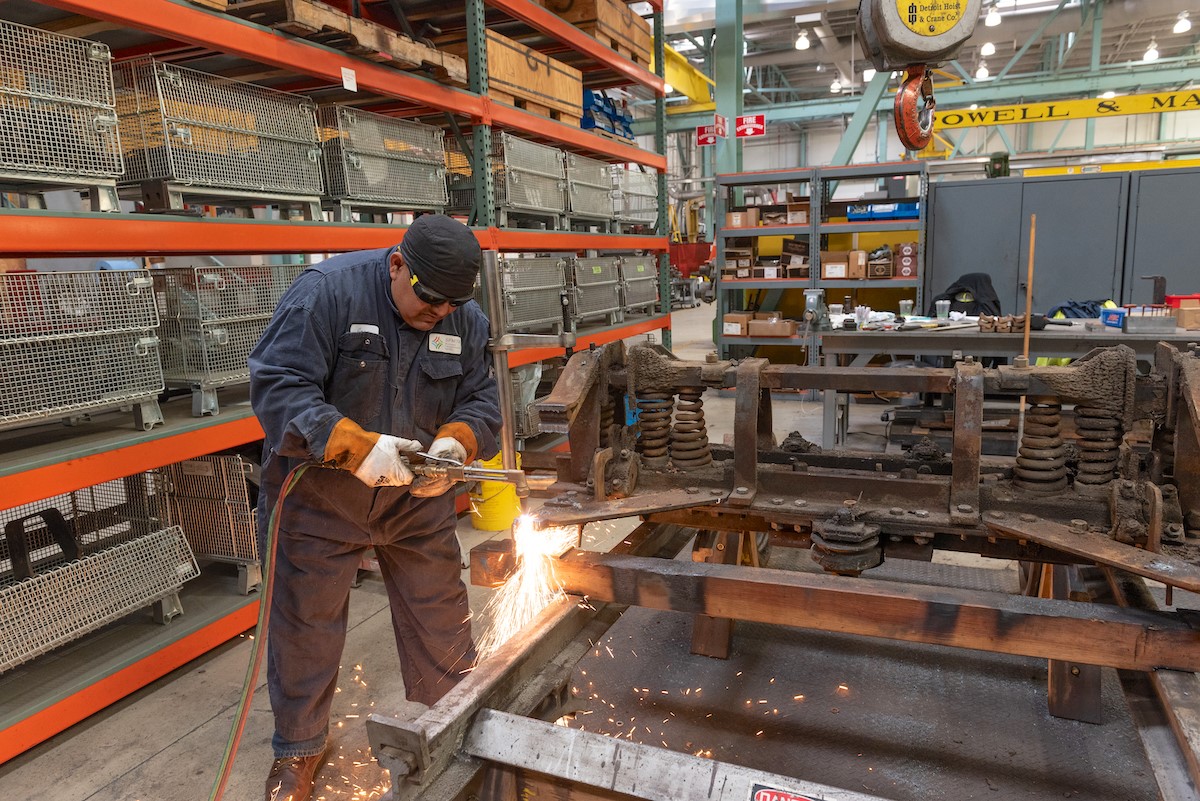
Photo of a worker welding a metal cable car frame

Now: A welder cuts up an old cable car truck using a torch at the Special Machine Shop, which handles building brand new trucks from scratch. In addition to using traditional methods, the shop is truly a 21st century operation with computer-controlled machines that can make parts from technical drawings that were painstakingly uploaded into modern machining software.

Tracks to Run On
Today, as throughout the past 100+ years, track crews are responsible for keeping the track system up and running. Unlike regular rails used in our streetcar and subway systems, the cable car rails include complex pieces to not only guide the cars but also move the cable up and over hills and around bends.

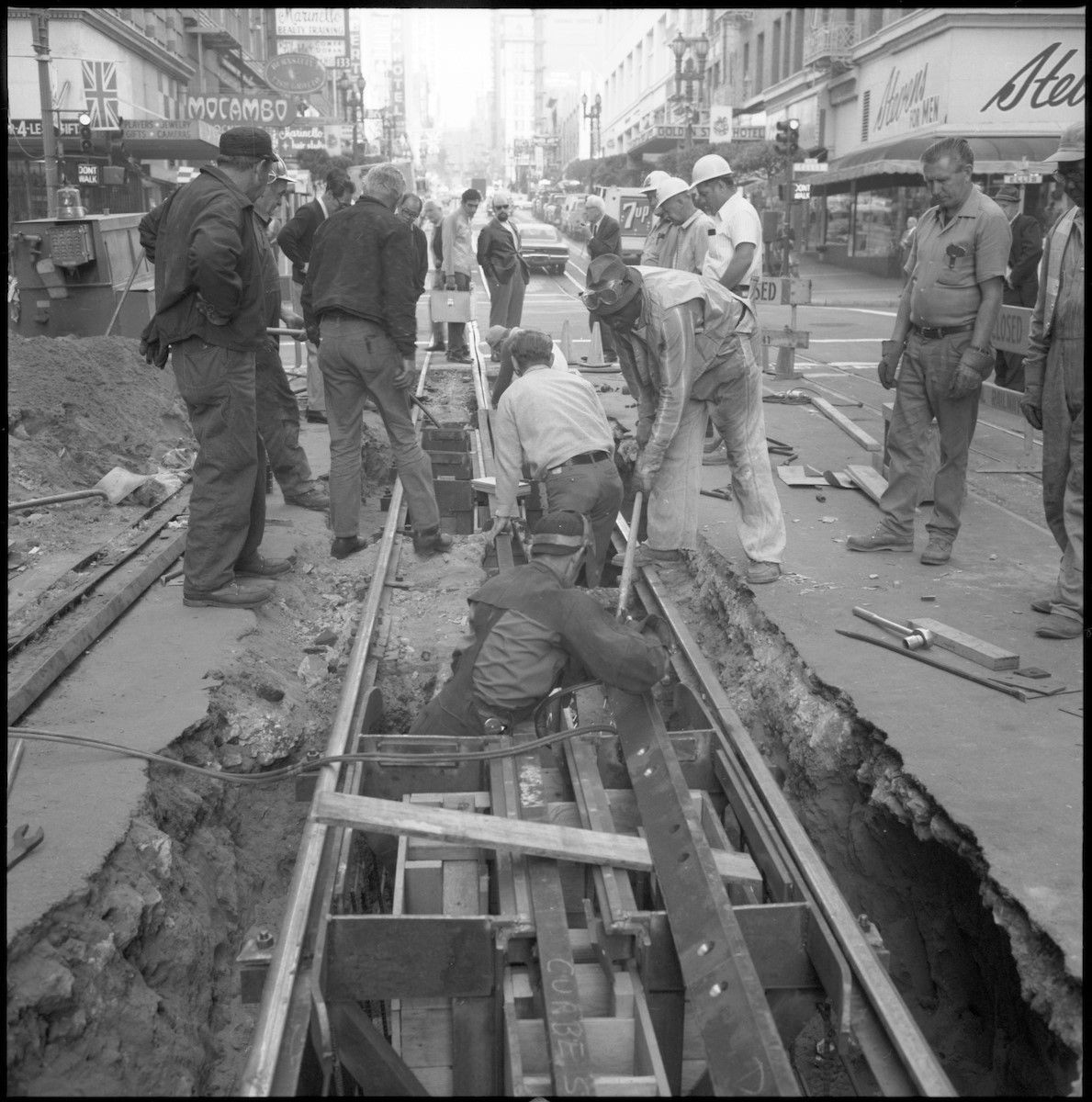
A track crew works to replace a depression beam and bumper bar

Then: A track crew works to replace a depression beam and bumper bar on Powell Street in this 1971 photo.

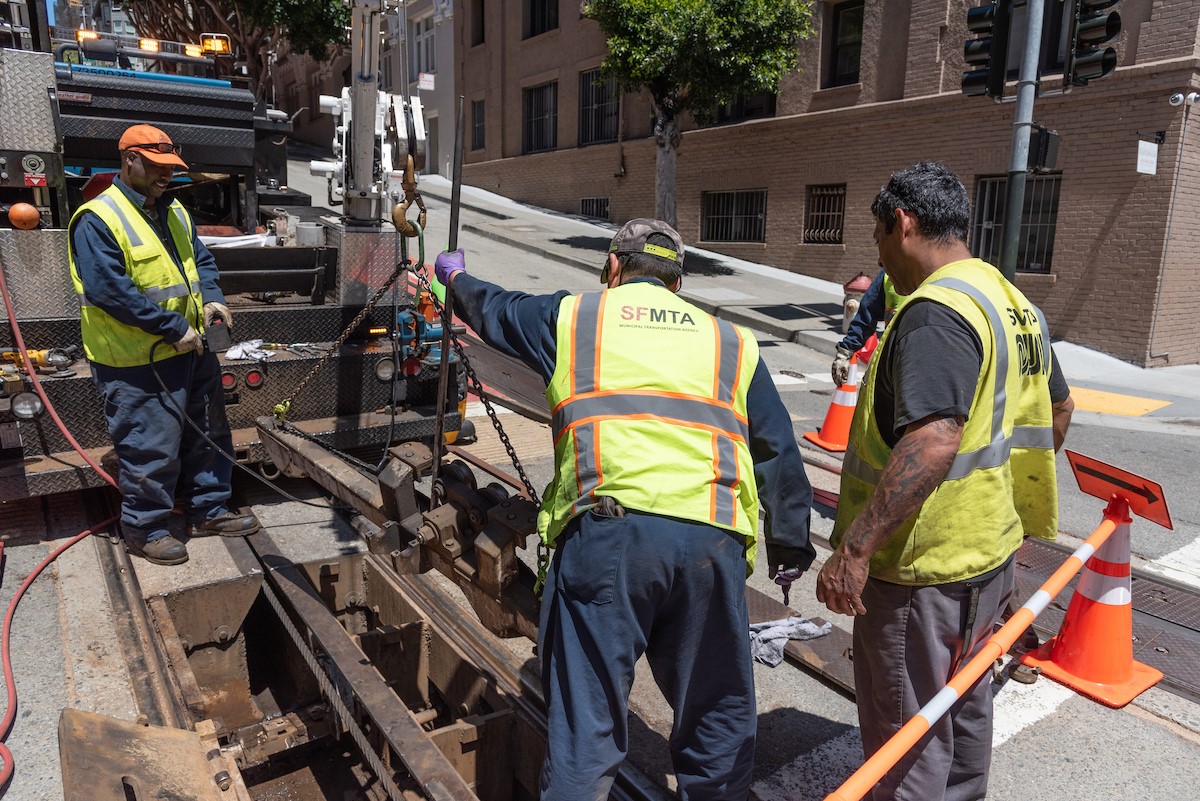
A track crew replaces an old depression beam

Now: In this 2019 shot, a track crew replaces an old depression beam just blocks from the 1971 photo. Depression beams are used to push against the cable to keep it from hitting the channel in which it runs wherever the road dips.

The maintenance and restoration efforts of SFMTA's cable car barn staff speak to their unparalleled background skills and their mastery of age-old trades that help keep our very own national landmark on the move. 

Catch a ride on the cable cars for free throughout the month of August and look for them to return to revenue service in September. 


Published August 20, 2021 at 04:27PM
https://ift.tt/3y2WvN9

Thursday, 19 August 2021

Thanks for Keeping Your Mask On

Thanks for Keeping Your Mask On
By Jonathan Streeter

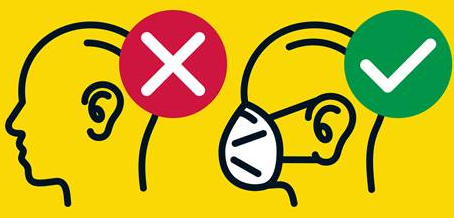
Image shows a maskless icon with a red X and a masked icon with a green checkmark

Throughout the COVID-19 pandemic, Muni customers have consistently demonstrated a strong willingness to comply with health safety mandates, in particular with wearing masks.  As a reminder, the Federal requirement to wear a mask while riding, boarding and waiting for Muni vehicles remains in place, and has been extended until January 18, 2022.

Everyone over the age of two is required to wear a mask, regardless of vaccination status. We are grateful for the cooperation of everyone involved, as it lowers the risks associated with the spread of the virus, not only for Muni customers, but also for vehicle operators, maintenance crews and others. 

If you haven’t already received a vaccination, we encourage you to explore the resources available in San Francisco as well as in other locations.

Thanks for helping to keep your transportation system as safe as we can for everyone.


Published August 19, 2021 at 09:13AM
https://ift.tt/2W00KfL

Tuesday, 17 August 2021

​​​​​​​Moving Towards San Francisco’s Transportation Future

​​​​​​​Moving Towards San Francisco’s Transportation Future
By Bonnie Jean von Krogh

report cover of Transportation 2050

Transportation is a vital part of a thriving and equitable community and economy. We are planning for a future transportation system to deliver the reliable and safe transit San Franciscans tell us they want, address changes in travel patterns and demographics and improve safety. We also need to address the historical wrongs of inequitable service and long delayed infrastructure repairs. 

We have looked at our past and begun charting our future. Transportation in San Francisco is on an unsustainable financial path. We are $50 billion short of the transportation system our city needs over the next 30 years. But we can act now to put San Francisco on a path to success. That’s what Transportation 2050 is about.   

Over the last 20 years, the demands on San Francisco’s transportation system have increased while revenues haven’t kept up. The last decade saw tremendous growth in San Francisco and its economy. That strength meant that the SFMTA’s operating revenues met the levels we predicted. Strong growth in the city’s General Fund compensated for the agency’s declining parking and transit fare revenues. Since the SFMTA’s financial structure relies significantly on these declining parking and transit fare revenues, growing costs have resulted in a budget deficit. COVID came along and exacerbated these long-standing budget challenges.  

How did we get here? San Francisco has grown and transportation has changed, but how we fund transit and our transportation infrastructure has not. Uber and Lyft have steadily eroded San Francisco's parking revenue, even as we’ve expanded paid parking. Costs to retain reliable, highly qualified bus and rail operators and maintenance staff have increased due to the extraordinarily high costs of living in the Bay Area. Even with this, we have been understaffed for years. Our fare discount programs – critical for keeping Muni affordable – have also meant declining fare revenue.  

Now the economic shock and impacts of the COVID-19 pandemic have permanently lowered our revenue projections. At the beginning of the pandemic, we immediately tightened our belts and made $119 million in cuts in a way that prioritized equity. Current federal relief is one-time funding that only keeps transportation afloat in the near term.  

With expenditures growing with Bay Area Cost of Living and revenues declining after federal relief is exhausted, the SFMTA faces a funding gap that cannot be closed. It will be years before enterprise revenues recover, leaving the agency on a financial path it cannot recover from alone. A new funding source could get the SFMTA back on track.  

Community-Driven Vision 

Transportation 2050 is based on transportation needs and priorities identified by the community over the last eight years through two mayoral transportation task forces (T2030 and T2045) and input from the city’s Muni Reliability Working Group in 2020. It outlines the resources needed to achieve the community’s transportation vision developed through ConnectSF, the infrastructure needs identified in the SFMTA’s 20-Year Capital Plan and highlights priorities, post COVID, from the SFMTA’s recent 2021 citywide Community Survey.  

Top community priorities include:  

  • Making our service equitable  
  • Providing quick, convenient transit access to all parts of San Francisco 
  • Improving access to public transit for people who are disabled  
  • Repairing and maintaining Muni equipment and facilities 
  • Improving service for communities most dependent on transit 
  • Ensuring that trips to all destinations work well 
  • Making street safety improvements for walking 

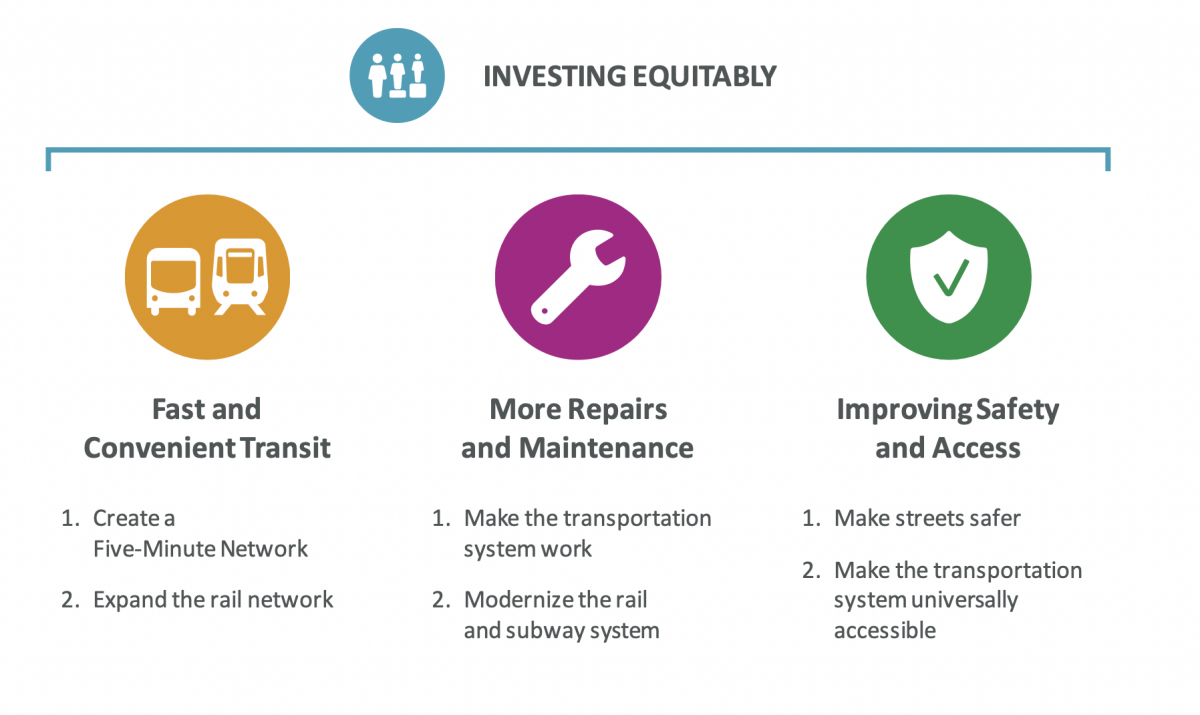
Here’s how we're focusing on your priorities and vision:


Image title: Investing equitably. Icon of transit vehicles titled Fast and Convenient Transit (1) create a 5-minute network (2) expand the rail network. Icon of wrench titled More Repairs and Maintenance (1) make the transportation system work (2) modernize the rail and subway system. Icon of check mark titled Improving Safety and Access (1) make streets safer (2) make the transportation system universally accessible

Addressing the needs of San Francisco’s transportation system will require a total of $111.3 billion over the next 30 years, but the costs to deliver on the complete vision are much higher than our revenues can support. Over the next 10 years, the gap between fully implementing this vision and the financial reality we face is $1.04 billion per year on average. We can get part of the way there, but the SFMTA cannot do it alone. We have used most of the tools in our toolbox. 

Transportation 2050 has identified some new potential revenue sources, which combined could amount to $149M per year, beginning the process of recovery on which we can build. These include a transportation special tax, changes to San Francisco’s parking tax, a general obligation bond to fix our infrastructure, advocacy for federal and state grants and revenue from the development of SFMTA properties, the newest tool in the SFMTA toolbox. Combining these new sources with existing funds would allow us to fund nearly 2/3 of the transportation vision for San Francisco over 30 years and put our transportation system on the path to firmer financial footing.  

Stay tuned for further updates as we work towards achieving this vision while identifying future revenue streams and cost savings strategies to create an equitable and sustainable transportation system for San Francisco. Learn more on our website SFMTA.com/T2050


Published August 17, 2021 at 02:01PM
https://ift.tt/3za9pKZ

Friday, 13 August 2021

Powered Scooter Share Program Update

Powered Scooter Share Program Update
By Philip Cranna

On Friday, August 13, 2021, the SFMTA granted Scoot a permit to operate a shared power scooter share system in San Francisco.  Scoot’s permit comes in addition to the two 12-month permits previously granted to Lime and Spin on July 1st.

Scooters are a sustainable mode of travel and a complement to Muni and public transit service. The SFMTA’s Powered Scooter Share Program ensures that shared scooter operations support the City’s recovery in a safe, sustainable, and equitable way. We take seriously permittees’ adherence to the permit terms and conditions, which are crafted to ensure private mobility options best contribute to the public welfare of the City.

SFMTA’s decision on Scoot’s permit

In June 2021, SFMTA temporarily deferred the decision to grant a permit to Scoot in order to investigate their compliance with the 2019 permit terms and conditions after learning that Scoot had been operating with unauthorized and inadequately insured contractors in violation of the 2019 permit program terms.

After taking into consideration this new information, SFMTA staff completed a careful re-evaluation of Scoot's application, and determined that the company has qualified for a permit to operate.

The final application scores for Lime, Spin, and Scoot are all within 1 point of each other, demonstrating that Scoot’s application is comparable to other those of other applicants who were awarded a permit.

Permitted Scooter Operators - Final Scores for the 2021 Permit Application

Operator Final Score Permitted Fleet Size
Lime 78.8 2,000
Spin 78.4 2,000
Scoot 78.2 1,500

Changes to the Powered Scooter Permit Program

Due to the SFMTA’s findings regarding Scoot’s previous misuse of contractors in operations, we have updated the permit terms and conditions to ensure integrity in maintaining employment best practices. The SFMTA now requires all subcontractors to adhere to the identical labor standards we set for the permitted scooter operators’ in-house staff.

The initial maximum fleet size the SFMTA granted to Scoot will be 1,500 scooters, which is the same fleet size they were granted at the end of the 2019 permit. The SFMTA also granted permittees Lime and Spin each the same maximum fleet size –2,000 scooters—they were allowed at the end of the prior permit period.

As under the 2019 permit, the new permit program limits the maximum possible citywide fleet size at 10,000. Permittees may request fleet size increases in increments of 500 scooters every several months. Fleet size increases will be predicated on compliance with SFMTA-defined metrics and policy outcomes, including those focused on equity, access, and sustainability, as well as adherence to all permit terms and conditions.

Next Steps

The SFMTA plans to closely monitor permittees’ compliance with the updated permit terms and conditions. Additionally, Scoot and all other permittees will be subject to other improvements to the permit previously highlighted in our June 2021 scooter share blog post. We also look forward to further stakeholder collaboration as the Powered Scooter Share Program evolves.


Published August 13, 2021 at 11:47AM
https://ift.tt/3g1xGvb