Thursday, 14 October 2021

Sunday Streets Returns October 17, with Phoenix Day

Sunday Streets Returns October 17, with Phoenix Day
By Pamela Johnson

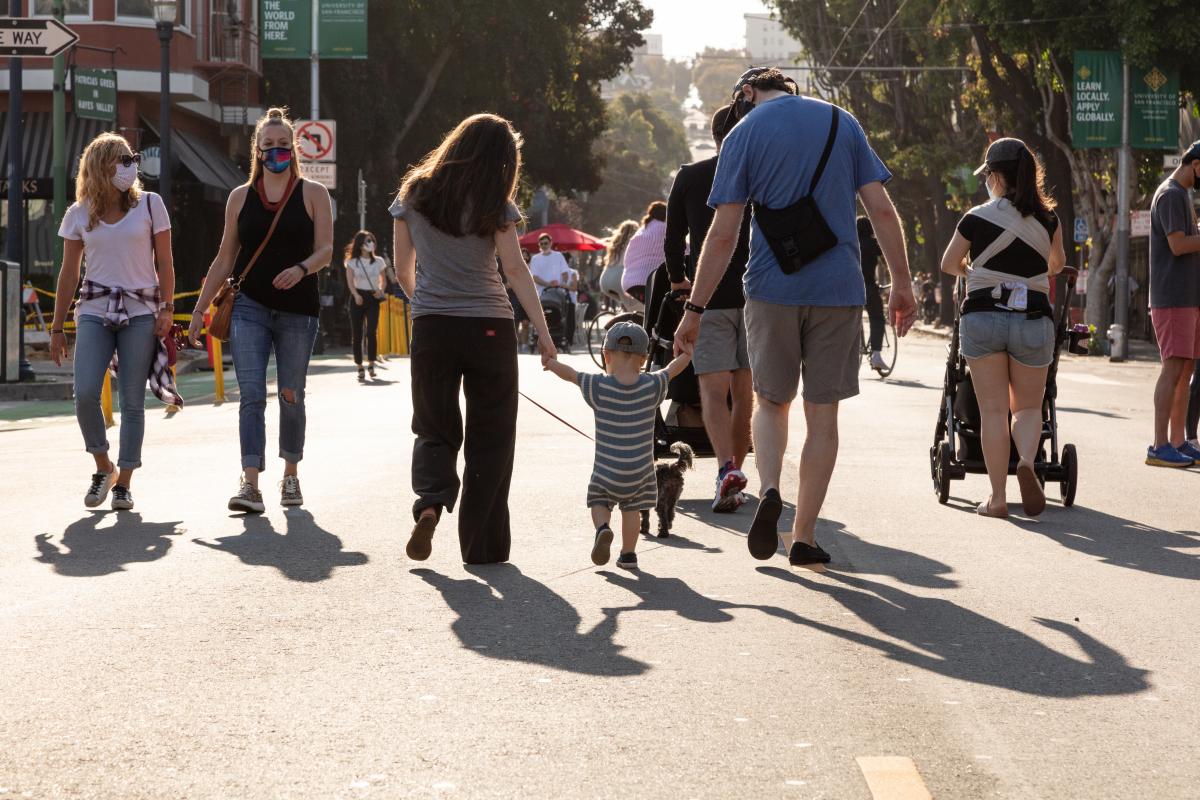
Images of pedestrians and people on bicycles enjoying a car free streetFor 13 years, the SFMTA and Livable City have brought "Sunday Streets" to San Francisco neighborhoods. Sunday Streets encourages communities to transform miles of car-congested streets into car-free spaces for neighbors to gather, kids to play, and for organizations and businesses to connect. On October 17, 2021, after more than 18 months of Covid-related shutdowns, Sunday Streets Phoenix Day will again bring free recreational activities, resources, and fun to the streets for tens of thousands of San Franciscans to enjoy. While Sunday Streets was celebrated in one neighborhood at a time in the past, this year's Phoenix Day spans various districts in the City for a simultaneous celebration of community, health, and resilience. This year's theme is "One City. One day. Rising together.”

 Highlights this year include historic Sunday Streets SF routes, a 20+ mile community bike ride, three neighbor-run block parties, pop-ups, and free community-hosted activities across the city. Along the way, participants will be offered free health and wellness activities as well as cultural offerings and open space for the whole family to enjoy.  As part of the block party program for Phoenix Day, the City has issued more than 30 permits for neighbors from different communities to participate in the day's festivities.

 Phoenix Day is about communities coming together to celebrate healthy fun as San Francisco reopens during the COVID-19 pandemic. Supporting the City’s economic recovery and its residents physical and mental health includes bringing joy back to our communities as we gather again outside to have fun with family and friends. At the same time, we are committed to keeping our community safe from COVID-19 and encourage people to wear masks in crowded outdoor spaces and always indoors, use hand sanitizer, and stay home if they are sick.

 In this critical moment for San Francisco it's more important than ever to transform our streets into places that foster human connection and civic pride. Sunday Streets Phoenix Day will be a monumental opportunity to do that together. 

About Sunday Streets

In 2008 the Sunday Streets SF program was started as a one-day pilot by then Mayor Gavin Newsom and the SF ShapeUp Coalition. It was inspired by the La CiclovĂ­a initiative in the Colombian capital of Bogotá.  Since starting the program in 2008, the nonprofit Livable City in partnership with SFMTA and City and County of San Francisco has grown Sunday Streets into one of North America’s premiere open street programs serving 100,000 residents in diverse neighborhoods across San Francisco.

Visit Sunday Streets SF Phoenix Day to learn more.


Published October 14, 2021 at 10:11AM
https://ift.tt/3AFzlxW

Thursday, 7 October 2021

Focus on Muni Reliability and Street Safety for Proposed Bond Measure

Focus on Muni Reliability and Street Safety for Proposed Bond Measure
By Bonnie Jean von Krogh

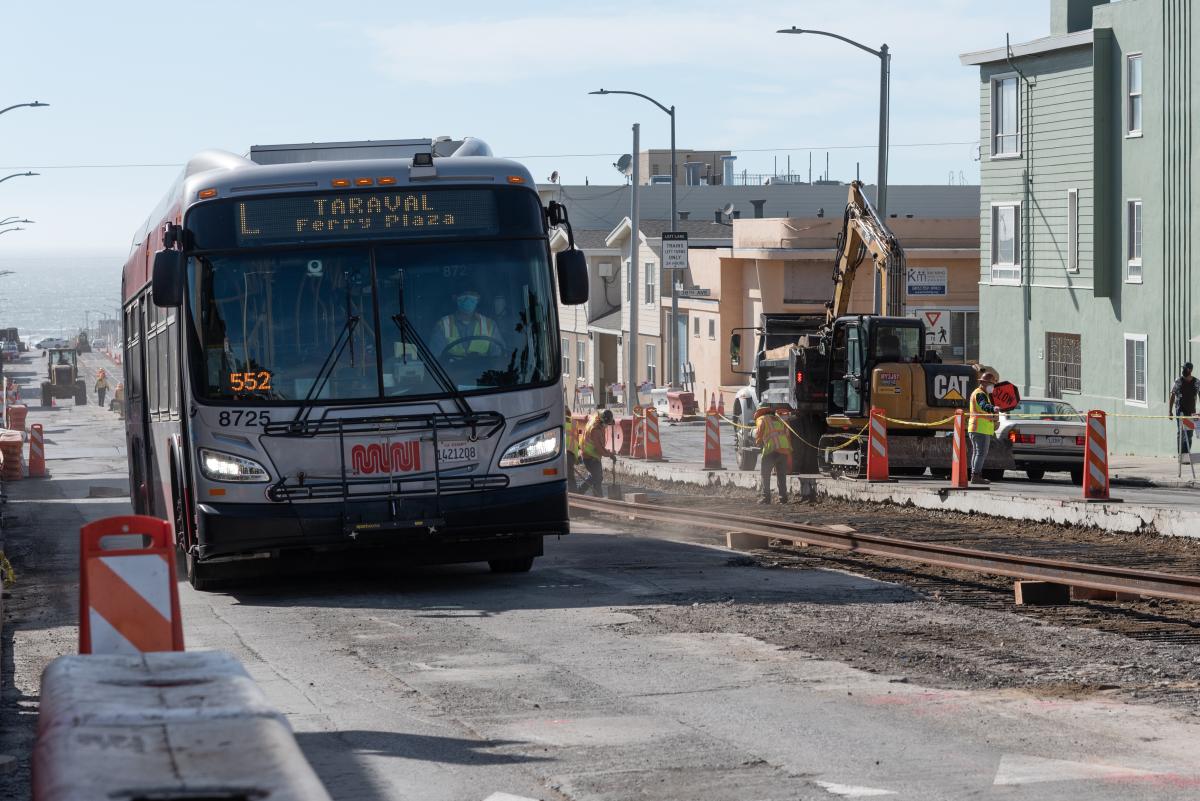
 L Taraval Bus passing by construction on Taraval L Taraval Bus passing by construction on Taraval Street
Reliable transit and safe streets are essential to making San Francisco an equitable and just city. In these truly unprecedented times, the SFMTA has worked hard to sustain critical services and buy time for our revenues to recover before current federal relief funding runs out.

But some investments in our transportation infrastructure just can’t wait. That’s why two mayoral transportation community task forces over the last eight years (Transportation 2030 and Transportation 2045) recommended a General Obligation (GO) Bond. The city’s 10-Year Capital Plan calls for a Transportation GO bond on the June 2022 ballot.

The bond proposal focuses on your top priorities. It would keep Muni equipment and facilities working efficiently, provide quick and convenient transit access, improve Muni service for communities that depend on transit, ensure Muni service is inclusive and accessible to all and make street safety improvements for people walking and biking.

Proposed Bond Program Components

Make the Transportation System Work Better

  • Speed up Muni repairs and keep public transit moving by repairing, upgrading and maintaining aging facilities and equipment
  • Enable faster, more reliable, and more frequent Muni service by improving public transit infrastructure
  • Increase subway capacity, reduce delays, and deliver dependable, high-frequency transit by modernizing the Muni train control system

Many Muni bus yards were built decades ago, with some over one hundred years old. While addressing all of SFMTA’s facility needs requires a variety of funding solutions, this proposed bond can fund high-priority needs to repair Muni buses faster, preventing breakdowns and supporting reliable Muni service.

Our train control system is also over 20 years old. Upgrading it will allow us to run longer trains to reduce crowding, increase speed in the subway and improve reliability for surface trains. These improvements can help Muni Metro become a modern rail system to better service our growing communities by providing fast service that is reliable.

 Improve Street Safety and Traffic Flow

  • Improve safety and visibility at intersections by upgrading traffic signals, signage and crossings
  • Strengthen walking, bicycling and Muni connections along major corridors by redesigning streets and sidewalks
  • Slow speeds and reduce crashes by implementing proven traffic calming and speed reduction tools

The proposed bond can improve safety, accessibility and visibility for people walking and biking. Streets in historically disadvantaged communities are almost twice as likely to be on the High Injury Network, where we see the most deaths and serious injuries on our streets. The proposed bond includes funds to make strategic street safety and visibility improvements with an equity focus by prioritizing communities with a high percentage of households with low incomes and people of color.

By funding traffic signal upgrades with safety features for people walking, we can make intersections work better for everyone, especially people with disabilities, older people and children. Redesigning streets with wider sidewalks, curb ramps, safer bikeways and traffic calming elements are proven tools to make streets safer and more accessible for all. These improvements are in support of the city’s Vision Zero policy goal to eliminate all traffic deaths in San Francisco.

Street improvements will also help us reduce travel times and delays for Muni. Proven successes include smart traffic signals that give Muni priority, wider sidewalks at bus stops for easier, more accessible boarding, and dedicated transit lanes to keep buses moving.

When buses run faster and are not stuck in traffic, Muni can service more people with the same number of vehicles and drivers. This saves money that can be reinvested elsewhere in the system.

Next Steps

Under-investment in transportation has been a decades-long trend that can’t be fixed with any single revenue source. Visit our Transportation 2050 website for more information about SFMTA’s effort to chart a more sustainable course with your help. The GO Bond would provide a dedicated local funding source that can help meet San Francisco’s transportation needs.

The bond proposal will be presented for feedback at a number of public hearings including the SFMTA Citizens’ Advisory Council, the SFMTA Board Policy and Governance Committee, the SFMTA Board of Directors and the city’s Capital Planning Committee.


Published October 07, 2021 at 04:31PM
https://ift.tt/3iCutn1

Wednesday, 6 October 2021

International Walk & Roll to School Day is October 6, 2021

International Walk & Roll to School Day is October 6, 2021
By Christine Osorio

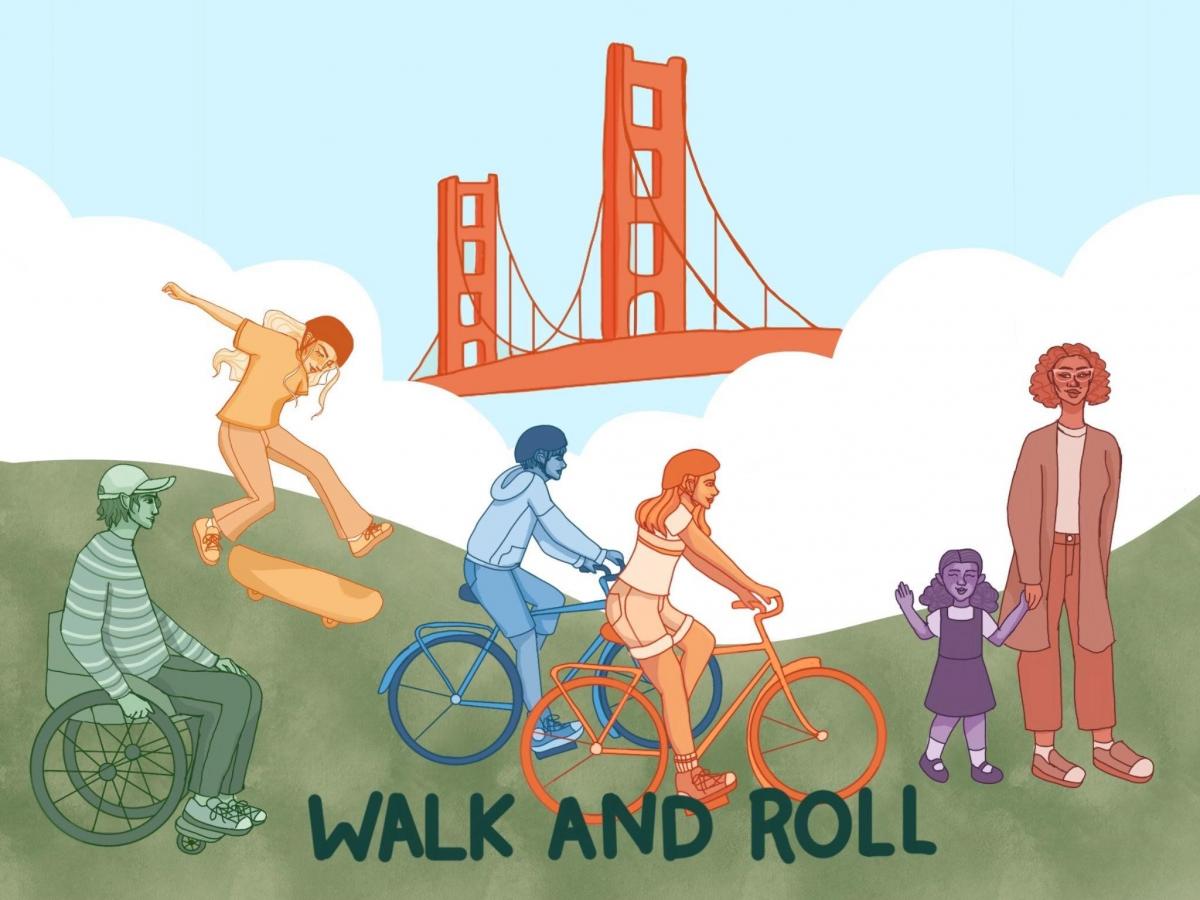
Cartoon image of people walking, biking, skateboarding and using a wheelchair

Banner artwork created by Annika, an 8th grader at James Denman Middle School, as part of 2020’s Walk & Roll to School art contest

On Wednesday, October 6, thousands of students across San Francisco will walk, bike, scoot and roll to school. Walking and rolling is a fun and healthy way for families to get to to the classroom. Schools also benefit from Walk & Roll because it eases traffic congestion around schools during drop off and pick up times.

Hosted by the SF Safe Routes to School partnership, this event builds year-long excitement around getting to school in people-powered ways that are good for our health, environment and communities, as well as promoting COVID-19 safety.

San Francisco Unified School District elementary classrooms will compete for the highest participation, with a prize package for the top 30 classrooms in the district.

Middle and high school students: help get the word out to your classmates about the 2021 Walk & Roll to School Day by sharing this video: https://youtu.be/mIKHgNLfmCo

We want as many middle and high school students to use human-powered ways to get aroundon Wednesday, October 6! Submit your participation form here on the day of the event to win prizes, too.

The SF Safe Routes to School team is available to assist students, caregivers, teachers and principals on how to get started. To learn more, visit walksf.org/walkandroll.

This project was made possible in part by Proposition K sales tax dollars provided by the San Francisco County Transportation Authority.


Published October 06, 2021 at 08:32AM
https://ift.tt/3lhmCgl

Tuesday, 5 October 2021

Employee Vaccination Update

Employee Vaccination Update
By

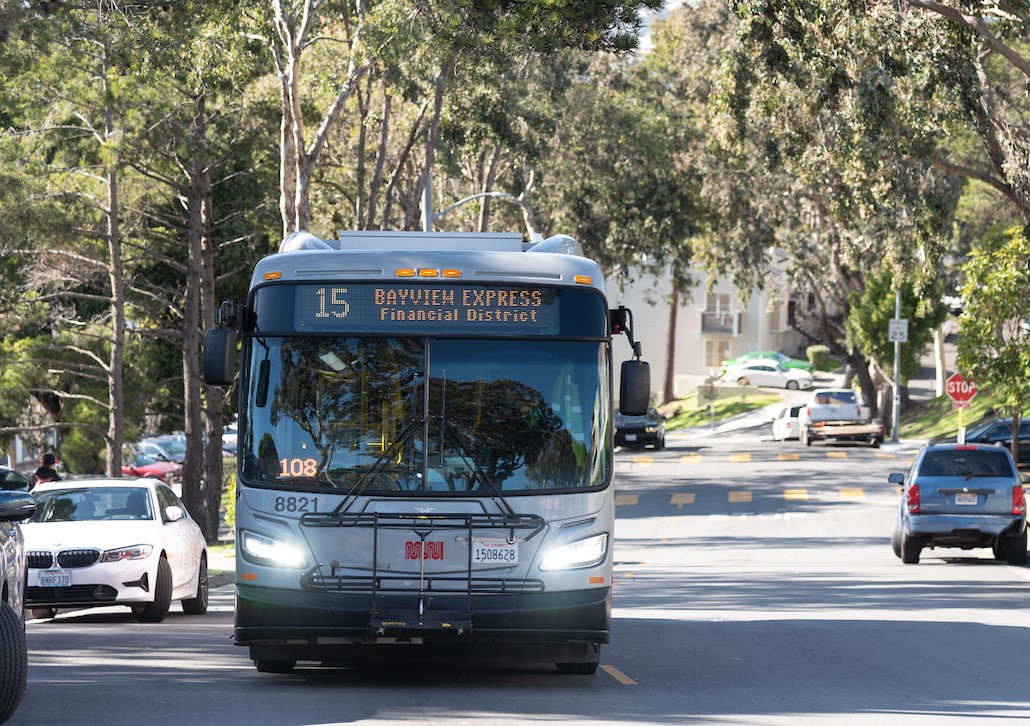
15 Bayview Hunters Point Express bus

As you may be aware, for the health and safety of City and County of San Francisco workers and the public, the city’s Department of Human Resources instituted a policy that all city employees need to be fully vaccinated by Nov. 1. 

The SFMTA fully supports vaccination, as it has been proven to be the best tool to protect each other against the dangers of COVID-19. Since the vaccines received emergency approval at the end of 2020, we have been educating our employees about the safety and efficacy of COVID-19 vaccines, encouraging them to get vaccinated and providing them with opportunities to get vaccinated on work time.  

Unfortunately, as of Sept. 30, we had 640 employees who were either unvaccinated or had not reported their vaccination status, which represents 11% of the SFMTA workforce. 

If several hundred of our employees are still unvaccinated as of Nov. 1 and are terminated, it will significantly impact transit operations and parking control in San Francisco. Up to four schools could be without crossing guards and approximately eight schools could see a reduction in the number of crossing guards serving them. 

Impact on transit operations: The number of unvaccinated transit operators is roughly equivalent to the total number of operators we plan to train and hire between June 2021 and December 2022. If this number is not significantly improved, we will be forced to reduce service back to May 2021 levels. 
 
Impact on parking control: If we can’t reduce the number of unvaccinated parking control officers before Nov. 1, the agency will be forced to partially suspend abandoned vehicle enforcement, booting, and commuter shuttle enforcement as well as reduce residential parking permit enforcement and meter enforcement. It could also impact disabled placard enforcement and shrink our Chase Stadium detail.  

We absolutely do not want any of our employees to lose their jobs or their incomes and are going to keep working to support them in complying with the mandate in every way we can. We have multiple teams working across the agency to improve this situation over the course of the next month, but as we hope and work for a better outcome we are simultaneously planning for the worst. 

We have begun continuity of operations planning based on pre-built scenarios, and it is time for us to inform our city leaders and the public of how this situation may impact the daily lives of our city’s residents. 

We will keep customers and the public updated and will report on this topic in more detail at our Board of Directors meeting today. You can tune in at 1 p.m. at SFGTV. For the latest, please follow us on Twitter @sfmta_muni or Facebook.


Published October 05, 2021 at 01:18PM
https://ift.tt/2ZZCz2B

Monday, 4 October 2021

Warriors Ticket Holders Ride for Free

Warriors Ticket Holders Ride for Free
By Stephen Chun

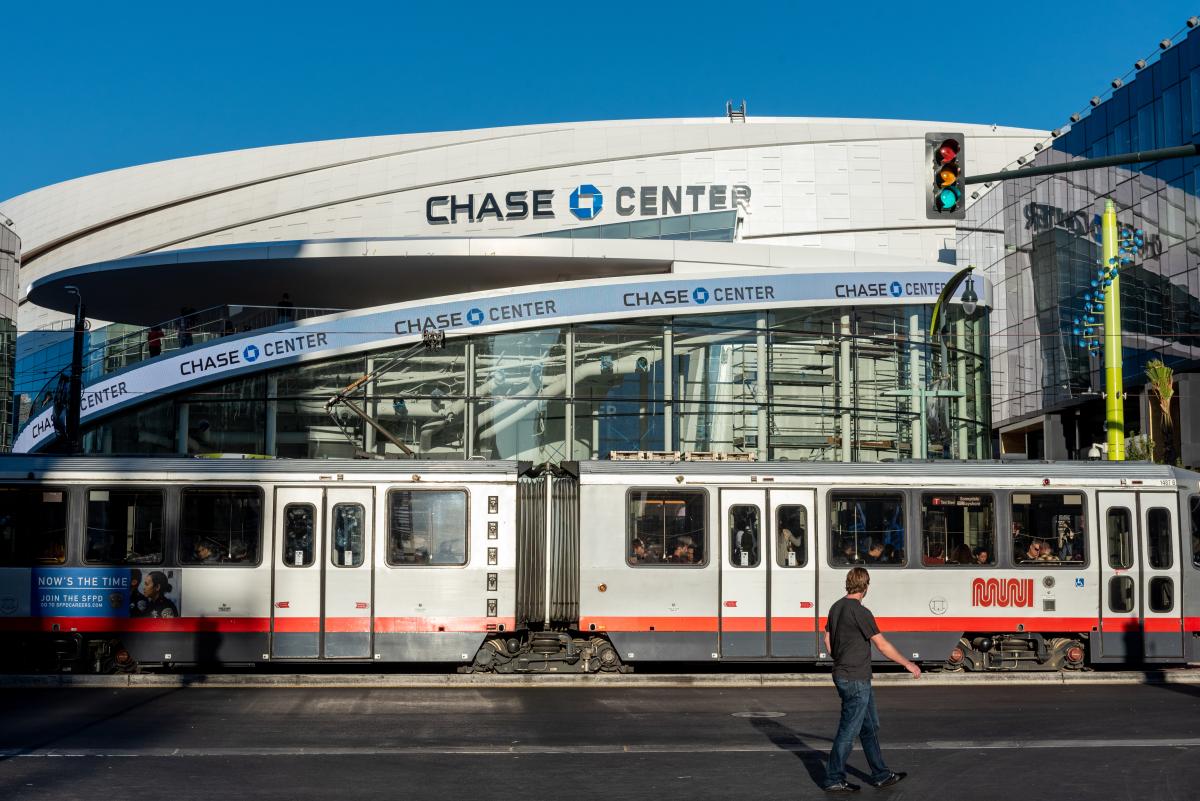
Photo of T Third in front of Chase CenterCalling all Warriors fans and Muni riders! As you know, an exciting preseason is underway, with the anticipated season opener scheduled to tip off in just a few weeks. As the Warriors look to a promising year with a committed staff and tenacious roster, it’s going to be an electrifying season for the six--time NBA Champs.
To catch these blue and (golden) yellow must-see games at 1 Warriors Way, consider taking Muni for free! Your game ticket (electronic or physical) is your all-day Muni ticket. The ticket provides quick and free Muni for bus and light rail lines (but not cable cars), up until the end of the service day at 2 a.m. after the event. Just show your ticket to the Station Agent or board through any door on our coaches. Muni uses all-door boarding across our system, so fans can board through any door and arrive quickly to the game! For the Muni Metro stations, if the booth is not occupied, proceed through the gate nearest the Station Agent window; the gate will open automatically. Here are additional guidelines for your fast, reliable and frequent trips.

This transit accommodation which aims to boost (affordable) ridership to Chase Center, is provided by the Transit Bundling Program. Sponsored by Mayor London Breed and the Golden State Warriors, Warriors ticket holders receive free service on Muni all-day on game day. But wait! There’s more!  Any ticket to a Chase Center event can also ride Muni all-day for free. It’s the same procedure and paid for by the Warriors. Thanks, Dub Nation!

The Warriors chose Mission Bay as the site for the new arena back in 2019 largely because of its transit-rich location with easy access to Muni and regional connections such as BART, Caltrain and Ferry services. Walking, biking or scooting are also additional modes of transportation.

As a reminder and to help stop the spread of COVID-19, federal law requires wearing a mask in Muni stations and while riding transit. Additionally, some Muni routes have been modified as a result of COVID-19 pandemic restrictions, the city’s emergency order and ongoing resource constraints. For details on Muni’s current routes and service, visit individual route webpages or the Muni Core Service Plan.   We’ll see you at Chase Center. Go Warriors! Go Muni!

Muni Service to Chase Center:

KT: K Ingleside-T Third Street - service to / from downtown San Francisco and Embarcadero BART Station. The stop is located on 3rd Street.

78X 16th Street Arena Express – service to / from 16th St Mission BART to Chase Center before and after the event. This shuttle stop is located on 3rd St near Illinois

22 Fillmore - serves as a connection to 16th St Mission BART. Exit 3rd St & Warriors Way. This stop is located on 3rd and Gene Friend Way.

15 Bayview Hunters Point Express - serves as a connection to Montgomery St BART. Exit 3rd St & Warriors Way.


Published October 04, 2021 at 09:04AM
https://ift.tt/3a7uiLD

J Church Pilot Eases Subway Congestion for Muni Metro

J Church Pilot Eases Subway Congestion for Muni Metro
By Jonathan Streeter

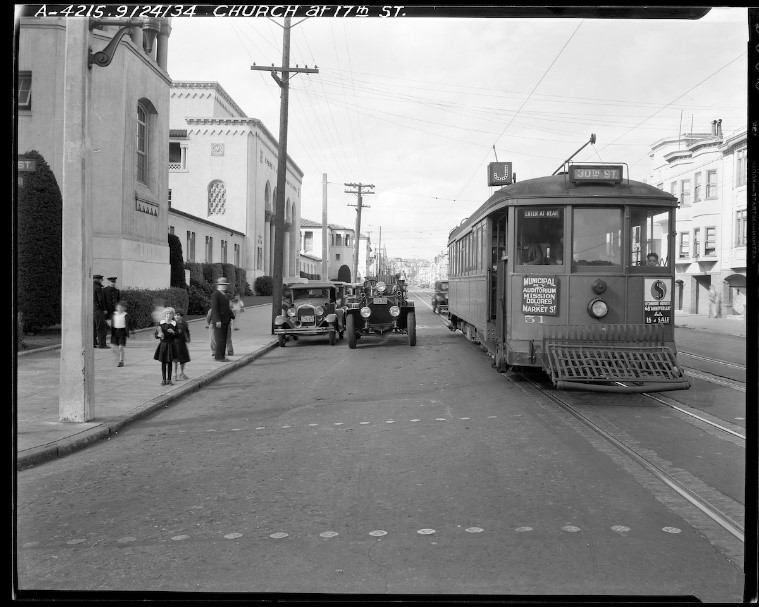
In December 2020, the J Church returned as a surface-only route, much like its earliest predecessor, which opened in 1917.  Although the J Church travelled as far as the Embarcadero for more than 100 years, establishing Duboce Avenue as the terminal for this route as a test case was the result of careful analysis undertaken to improve the line’s poor reliability. This routing also allows us to address crowding and delays in the Muni Metro subway that plagued the system for decades.

photo of the J Church near Dolores in 1926

The J Church in 1926

Surface Route

The J Church has historically had the lowest ridership of any Muni Metro line. Keeping it as a surface-only route should improve the J Church’s reliability and frequency, increase Muni Metro subway performance and reduce crowding. In addition, to enable the pilot we provided temporary accessibility and pedestrian safety upgrades at an intersection that is on the city’s High-Injury Network -- those San Francisco streets that have the highest severe and fatal collisions.

In addition to delays, there are other drawbacks to having the J Church Line in the subway. Once in the subway, the J’s lower-capacity one-car trains are unable to ease crowding at peak hours.  The shorter trains are necessary due to the limited length of platforms along portions of the surface route.  When the J line did go in the subway, those trains used the Embarcadero switch back to turn around, which limited its availability for other trains. Additionally, J Church (and N Judah) trains heading into the tunnel at Duboce Avenue must cross the path of all outbound subway traffic, which can cause system-wide delays.

Performance

When we surveyed J Church customers in 2019, 63% said the wait for a train was too long. Nearly four out of five people (78%) said they would walk farther to a stop for more reliable service or a shorter trip overall, including 52% of people with disabilities and 58% of seniors.  

Prior to the COVID-19 pandemic, poor reliability on the J Church meant that only about three out of four trains were showing up within five minutes of the expected time. Now, reliability has improved so that nearly nine out of 10 trains arrive without delay. Travel time on the J Church line’s surface route is less variable than the subway and didn’t change much during the pandemic. Avoiding subway congestion has eliminated the main source of unpredictable delays.

When transferring to the subway, customers at Church Station are seeing a high frequency of trains, minimizing the wait time for downtown destinations. At present the average wait time for an inbound train is two to three minutes. By comparison, the J Church frequently takes that amount of time simply to clear the Market Street intersection when heading northbound towards Duboce Avenue, and often took several minutes to enter the tunnel at Duboce.

Transfer Experience Improvements

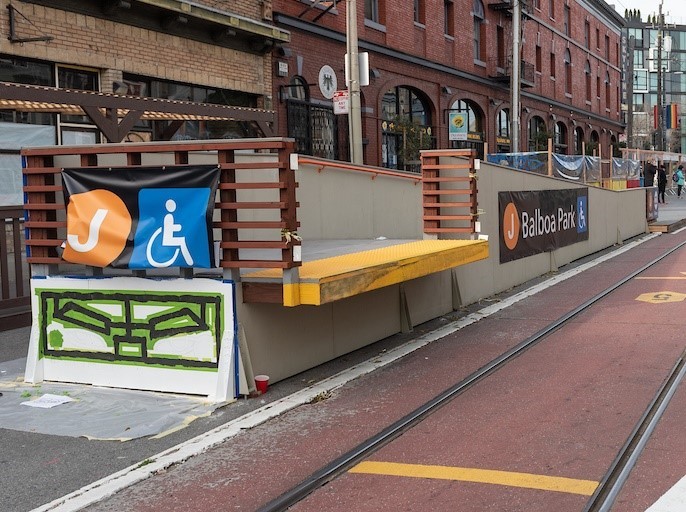
To support the shortened route, we installed temporary ramps in August 2020 that enable J Church customers with mobility limitations to access the Church Street Station elevator at Market Street or the N Judah accessible ramps at Duboce Avenue. We also installed a new temporary transit stop just south of Market Street to create a more seamless transfer to the subway. Learn more about these transfer improvements and proposals for additional upgrades at the J Church Transfer Improvements webpage.

Temporary accessible ramp on the 200 block of Church Street

Temporary accessible ramp on Church Street south of Market Street

Next Steps

This pilot project, fully operational since December 2020, will be reviewed by the SFMTA Board of Directors in December 2021 as a part of our overall 2022 Muni Service Network plan. If approved, the J Church shortened route would remain in place in 2022, but the line could still be returned to the subway in the future as our service plan continues to evolve.

To sign up for updates and provide feedback visit our J Church Surface Route webpage.


Published October 04, 2021 at 09:11AM
https://ift.tt/3oxIO84

Friday, 1 October 2021

Essential Trip Card Program Provides Crucial Accommodations

Essential Trip Card Program Provides Crucial Accommodations
By Stephen Chun

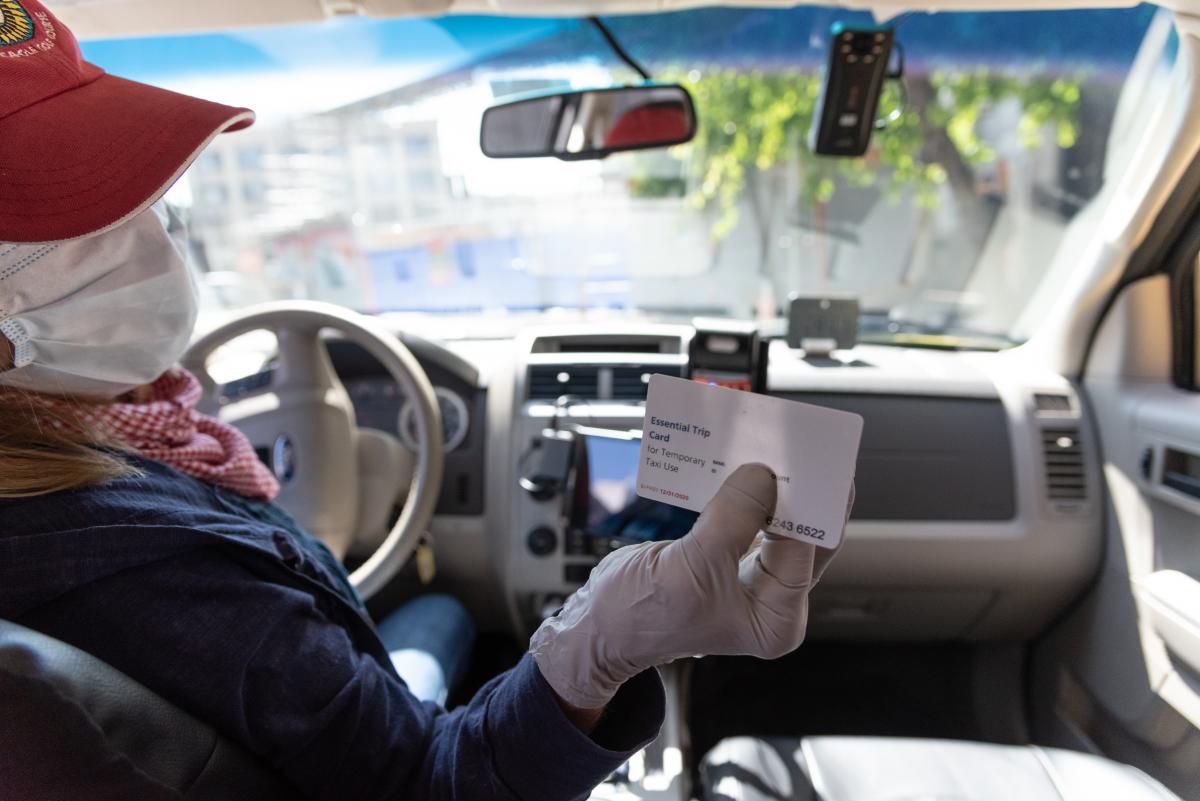
Photo of taxi driver holding essential trip card voucherDuring a time of unprecedented uncertainty, we reflect on a very successful 18 months since the launch of our Essential Trip Card (ETC) program.  The ETC is administered through the SFMTA’s Paratransit program (SF Paratransit) which has provided door to door van and taxi (paratransit) services for more than 40 years to people who are unable to independently use Muni, for some, all the time, because of a disability or disabling health condition.  
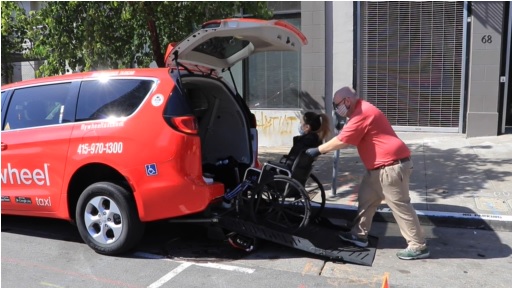
In response to the Muni service reductions in April 2020, the ETC program was launched to provide seniors and persons with disabilities with safe and door-to-door taxi service to essential services during the pandemic as a supplement to the existing Muni service. Such essential trips include grocery shopping, pharmacy visits, medical treatments, and later, vaccination appointments.

Once enrolled, ETC participants receive a monthly taxi subsidy of $60 (for a $12 cost) to pay for taxi rides, similar to a regular card payment for a taxi. This allows participants to take approximately four to five one-way trips each month via taxi while receiving an 80% discount.

In an effort to continue providing discounted taxi services and prioritizing access to vaccinations for its participants, the SFMTA issued a one-time allotment increase of $60 (for an additional $12 cost) in February 2021, when vaccines started becoming widely available. This provision avoided participants dipping into their existing monthly trip budget while being able to use a taxi services to get to and from their vaccination appointments. And while an ETC participant is limited to a $60 monthly subsidy, those with extenuating circumstances who may have greater transportation needs can request a permanent increase of their monthly taxi allotment to $120, or rather another $60 allotment increase (for a $12 cost).

The ETC has been a critical and previously mentioned, a successful program for those seniors and riders with disabilities. Even as SFMTA provides additional service to ensure that 98% of residents live or work within two blocks of a Muni stop, the ETC program remains a lifeline for important trips that are difficult for seniors and persons with disabilities to make on Muni.  Furthermore, as trip numbers were higher after the vaccination availability than from before, this program has instilled greater self confidence for seniors and persons with disabilities to make essential trips as such and provides a safety net for greater mobility and engagement as they resume their normal activities.

Since its inception, approximately 4,400 seniors and persons with disabilities have enrolled in the program and over 86,000 trips have been performed.  A strong partnership between SFMTA, SF Paratransit and the taxi industry, executing successful community-based outreach and incorporating public feedback, including those from the Paratransit Coordinating Council, were all key components in implementing the program so quickly and with such success!

SF Paratransit and ETC intends to roll the program into FY21-22 and is committed to continuing to provide safe, reliable and discounted taxi service trips for seniors and people with disabilities. For eligibility, registration and FAQ’s, please visit the Essential Trip Card webpage.

As an added note, SF Paratransit for those with disabilities who are eligible under the Americans with Disabilities Act (ADA) is provided throughout San Francisco, including Treasure Island, to the northernmost part of Daly City in San Mateo County and to the Marin Headlands on weekends. Also, once ADA-certified to use paratransit, a participant may also be eligible to receive ADA paratransit services in other cities and states. Please visit our SF Paratransit Eligibility and Registration page for more information.

Photo of taxi driver assisting wheelchair user enter into the vehicle


Published October 01, 2021 at 09:41AM
https://ift.tt/3uxd43L