Thursday, 12 May 2022

Scooter Sidewalk Riding Detection Technology Demonstration

Scooter Sidewalk Riding Detection Technology Demonstration
By Sarah Hellman

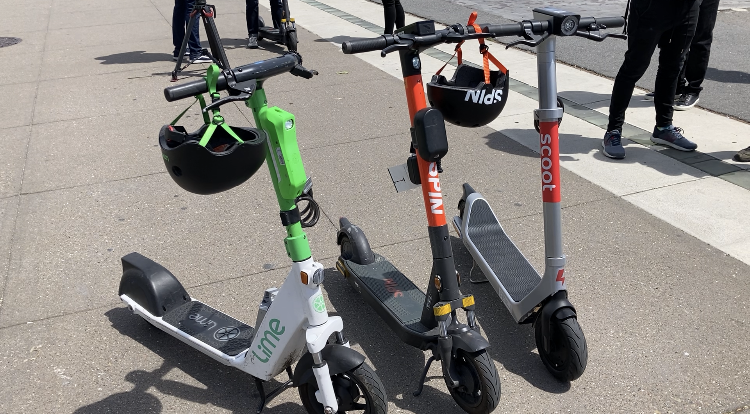
Scooter permittees Lime, Spin and Scoot lined up during the MTA's Scooter Sidewalk Riding Detection Technology Demonstration

The SFMTA held a public demonstration of e-scooter sidewalk riding detection technology on Thursday, May 12, 2022 involving the three permittees: Lime, Scoot, and Spin. The demonstrations were required as part of the SFMTA’s Powered Scooter Share Program, which ensures that shared scooter operations support the City’s recovery from the pandemic in a safe, sustainable, and equitable way. This includes keeping our sidewalks safe, particularly for our most vulnerable pedestrians and road users.  

Scooter sidewalk riding is illegal pursuant to the California Vehicle Code Section §21235(g) and poses significant risk to pedestrian and scooter rider safety, particularly for older adults or persons with disabilities using the sidewalk. Sidewalk riding detection technology enables the device to detect sidewalk riding in real time. Once detected, the scooter automatically slows the rider to a safer speed. We believe that sidewalk riding technology has a strong potential to curb usage scooter riding in San Francisco and may be the most effective way to reduce scooter share sidewalk riding in the City.  

As part of the permitting process, the SFMTA required operators to first submit a plan for deploying sidewalk riding technology and then to begin implementation consistent with the plan. In recent months, each of the three permitted operators—Lime, Scoot, and Spin—have complied with our requirements and deployed scooters equipped with the new technology. 

Thursday’s demonstration is the second demonstration to test this technology – the first was held in December 2021 – and we are pleased that the scooter companies are making progress with this important safety technology. Since the first demonstration, all permittees have started rolling out their sidewalk detection technology along The Embarcadero, which is a high-use area. Staff reported notable improvements during Thursday’s demonstration. The ride felt safer, there was an audible signal that the device had mounted the sidewalk and the sidewalk was detected more accurately. There are still areas for improvement, and as the scooter companies roll out this technology to their full fleets over the coming months, SFMTA staff will provide additional guidance. For example, staff identified deceleration method and speed as areas for additional guidance based on the results of Thursday’s demonstration. Because this technology is so new, these types of demonstrations help staff identify best safety practices and we will continue to work with the companies to continually improve. 

The Powered Scooter Shared permit program allows for innovation while also ensuring private mobility options are positioned to best contribute to the public welfare of the city. Requiring sidewalk riding detection is just one of SFMTA’s initiatives to ensure that shared scooter usage follows safe riding measures and does not deteriorate the pedestrian environment and disability access.   

In addition to deterring improper riding through specific safety requirements, on-street enforcement and holding the scooter share permittees accountable for implementing their sidewalk riding detection technology, the SFMTA is also committed to: 

  • Actively maintaining an accessible path of travel along city sidewalks by requiring scooter permittees to have a locking mechanism and adhering to specific parking requirements to ensure that the scooters are not strewn about the sidewalk. If scooters are not parked properly, scooter companies may be cited. SFMTA has a public dashboard that shows citations and complaints.  

  • Requiring scooter permittees to provide adaptive scooter devices as part of their on-street fleet and complementary rental programs. All permittees must provide devices with adaptive features such as three wheels, a basket or seat, to expand the range of users who can participate.  

Scooters are a sustainable mode of travel and a complement to Muni and public transit service, and SFMTA looks forward to working with the Powered Scooter Shared Permittees to continue improving this important technology. For more information, please visit Powered Scooter Share Permit Program


Published May 12, 2022 at 04:09PM
https://ift.tt/wl5mrfa

Wednesday, 11 May 2022

May is Motorcycle Safety Awareness Month

May is Motorcycle Safety Awareness Month
By Christine Osorio

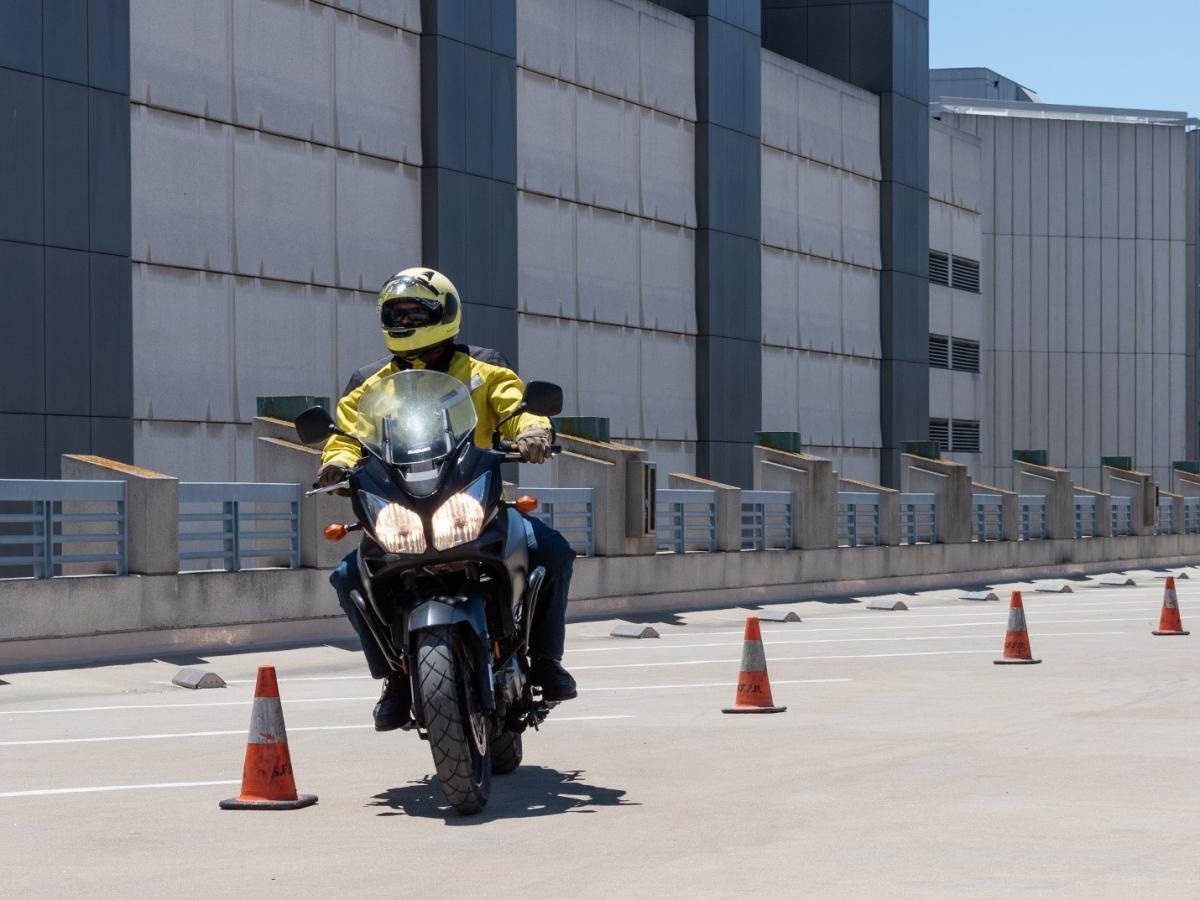
Image of motorcyclist weaving through cones during a motorcycle safety class.

Motorcyclist participating in the 2021 Motorcycle Safety Class.

May is Motorcycle Safety Awareness Month. In San Francisco, motorcyclists remain some of the most vulnerable road users. Over the last few years, the number of registered motorcycles has increased consistently, and it is now common to see motorcycles and scooters in every neighborhood of the city. This presents benefits in the form of reduced congestion and fuel consumption versus private automobiles, but also safety challenges for people who ride motorcycles.  In 2020, motorcyclists comprised 23% of all traffic fatalities, reversing two years of decline for motorcyclists.

To reduce severe and fatal motorcycle crashes, the Vision Zero SF Motorcycle Safety Program was created in 2016. Over the years this program has worked to raise awareness of motorcycle safety through outreach, safety ambassador trainings, and marketing campaigns. The Vision Zero SF Motorcycle Safety Program also increases capacity building within the motorcycle community, partnering with the San Francisco Police Department (SFPD) Traffic Company to provide free hands-on motorcycle skills classes to riders. Classes are conducted by SFPD motorcycle instructors, and participants get one-on-one feedback for how to improve their riding. 

 Riders learn techniques that improve defensive riding and practice drills like:

  • Crash-avoidance drills
  • Emergency maneuvers
  • Going slow with control
  • Proper braking
  • Turning techniques
  • Urban riding drills

Participants cite the class as beneficial in improving their skills and “totally worth it” to learn from experienced motorcyclists from SFPD. The motorcycle classes are funded by the Office of Traffic Safety and is in its third year of offering hands-on classes. Classes begin in May and will run through August.

More information can be found at Motorcycle Safety | Vision Zero SF


Published May 11, 2022 at 06:58AM
https://ift.tt/b2UVejs

Tuesday, 10 May 2022

Muni Moves You!

Muni Moves You!
By Jeanne Brophy

This week we are launching a campaign to welcome back Muni riders as San Francisco continues to move further into pandemic recovery. The campaign encourages transit trips to destinations throughout the city to reconnect you to the people and places that define our city and shape the communities we belong to.

As many of us adopt new travel patterns for work commutes, school trips with visits to neighborhood businesses, and cultural and sporting activities, Muni offers a reliable, safe option to move about the city.

The launch of the campaign coincides with steadily increasing ridership during the work week and even more increases for weekend ridership. This is good news for SF. Increased ridership will help the city wet its climate goals and reduce traffic congestion. Sustained lower transit ridership can have negative implications for the environment and traffic congestion.

The campaign graphics feature the popular Muni “worm” logo originally designed by Walter Landor in 1975. The abstract logo morphs into iconic images of San Francisco culture. Customers returning to the system will see ads on buses, social media, digital ads, and outdoor media throughout the city. The campaign is a reminder of the importance that public transit plays in fueling the city’s economic and cultural life.  

The theme of the campaign is “Muni Moves You”  and is focused on the many reasons to take transit to destinations throughout the city including dining, shopping, nightlife, and museums. Additionally, the campaign educates the public on how the transportation system has evolved during the pandemic with improvements to routes and the expansion of transit lanes throughout the city.  Check out the campaign video to understand some of the changes that have been done.

Look for the #MuniMovesYou, #TakeMuni social tags for the campaign as it rolls out this week encouraging everyone to take Muni as an efficient, reliable, cleaner system than the one experienced before the pandemic. We are always listening so keep the feedback coming.

Visit the campaign page (SFMTA.com/MuniMovesYou).


Published May 10, 2022 at 09:03AM
https://ift.tt/E7L40Jy

Monday, 9 May 2022

Taking Muni to Bike San Francisco’s Iconic Rides

Taking Muni to Bike San Francisco’s Iconic Rides
By Kate McCarthy

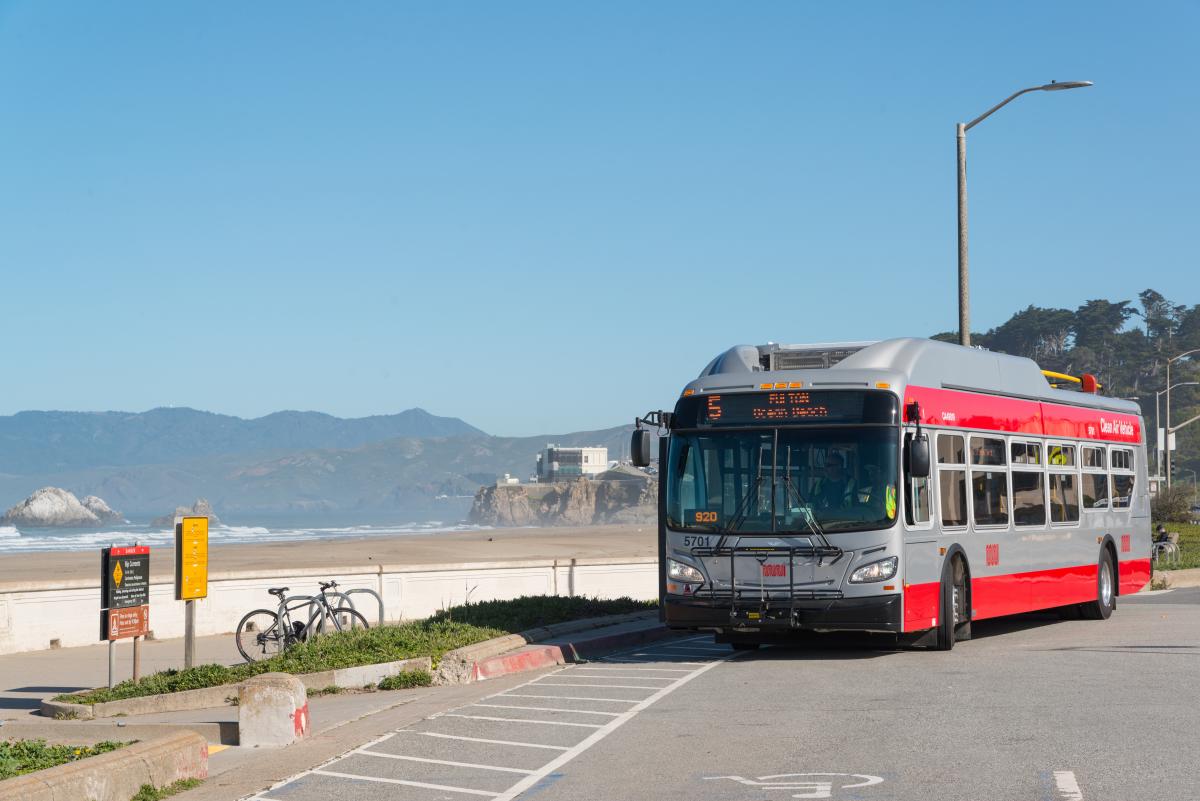
 Image of a Muni bus stopped along Ocean Beach in San Francisco.

Take your bike on Muni using the racks on the front of buses to access bike rides on the Great Highway, through Golden Gate Park and across the Golden Gate Bridge.

Thousands of riders are expected to hop on a bike in May for National Bike Month and Bike to Wherever Day on Friday, May 20. For people new to bicycling in San Francisco, using Muni buses to avoid our famous hills and reduce overall trip distances is a great way to get to iconic bike rides and scenic parks.  

All Muni buses have bike racks on their front that can hold two or three bikes (only folding bicycles are allowed on Muni’s Metro trains and historic streetcars). Using the bike racks on Muni buses to transport your bike is easy! And, if you have questions while you are doing it, you can always ask the operator, who can assist you. Those looking to bicycle in parks, along the Great Highway, through Golden Gate Park or across the Golden Gate Bridge can simply hop on Muni buses with their bikes—or take Muni to a bikeshare bike—to experience these iconic rides.  

Along the Great Highway 

There may be nothing more spectacular than riding a bicycle at the edge of the Pacific Ocean. Each week the Great Highway temporarily becomes a great bike ride Fridays at noon until Mondays at 6 a.m. when the roadway is closed to private automobiles for the two miles between Lincoln Boulevard and Sloat Avenue. Hop on the 5 Fulton, 5R Fulton Rapid, 7 Haight/Noriega, 18 46th Avenue, 38 Geary, 38R Geary Rapid or 48 Quintara/24th Street to access the 17-acre park and its unrivaled scenic public space. 

Through Golden Gate Park 

Families shouldn’t miss the opportunity to pedal the along the 3.1 mile Promenade through Golden Gate Park that was recently made permanently car-free. Adults and children alike have learned how to ride a bike in Golden Gate Park on JFK between Stanyan Street and Transverse Avenue. From there you can explore all Golden Gate Park has to offer from the Conservatory of Flowers to the Japanese Tea Gardens (recently made free to all San Francisco residents), watch roller skaters at the 6th Avenue Skate Park or roll over to Stow Lake to check out the nesting herons.  

One of our favorite Muni facts is that 70% of San Franciscans live within a 15-minute walk of a transfer-free Muni ride on one of our many buses serving Golden Gate Park including 18 46th Avenue, 29 Sunset, 5 Fulton, 5R Fulton Rapid, 7 Haight/Noriega, 28 19th Avenue, 33 Ashbury/18th Street,  43 Masonic and the 44 O’Shaughnessy

Over the Golden Gate Bridge to Sausalito Ferry  

Avoid San Francisco hills on the way to the Golden Gate Bridge by putting your bike on Muni’s 28 19th Avenue and getting off at the Golden Gate Bridge Stop. The Golden Gate Bridge has a bike path on the western side that you can access from the bus stop by bicycling west under the bridge. Once you get across the bridge, take Conzelman Road to Alexander Avenue, go right to pass under Highway 101, and enjoy the downhill ride as you glide into Sausalito. Follow the waterfront onto South, Second and Bridgeway to the ferry terminal at Viña del Mar Park. Golden Gate Ferry will take you and your bicycle on a scenic cruise back to San Francisco.  

Once at the San Francisco Ferry Building you can hop on the 9 Fulton, 9R Fulton Rapid, 14 Mission or 14R Mission Rapid to get where you are going next. Or, to get back to the 28 19th Avenue, it is a mostly flat eleven-minute (2.1 mile) bike ride along the Embarcadero north and left onto to Jefferson to Aquatic Park. On the west side of Aquatic Park, you can hop back on the 28 19th Avenue. Depending on whether you decide to pedal the two miles back to the 28 19th Avenue route, this ride is four to six miles, mostly downhill and flat. 

For more information about bicycling in San Francisco go to Bicycling San Francisco or SFMTA.com/Bikes


Published May 09, 2022 at 08:40AM
https://ift.tt/BKUz2HS

Friday, 6 May 2022

New Sculptures Light up Van Ness Avenue

New Sculptures Light up Van Ness Avenue
By Luis “Loui” Apolonio

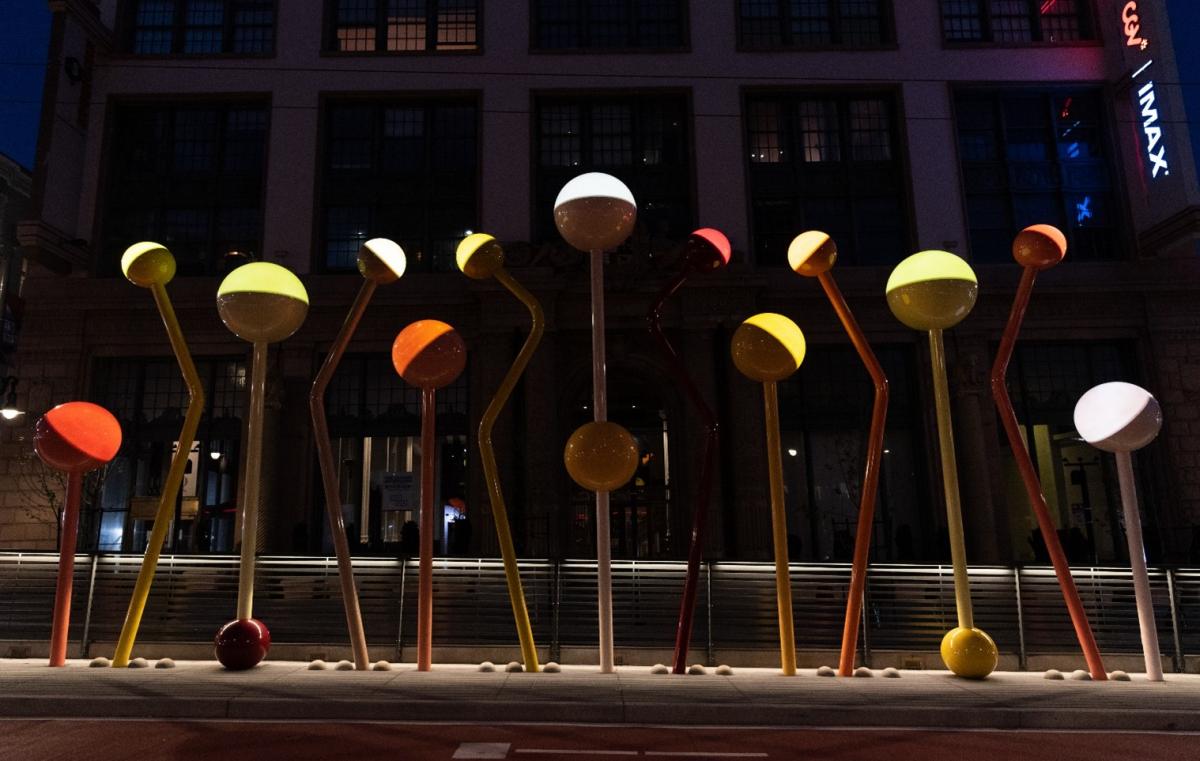
A light sculpture of colorful round orbs of light on bent and angled colored poles installed at Van Ness and O’Farrell streets

Light sculpture at Van Ness Avenue and O'Farrell Street

Spectators gathered both online and in person to watch new lighting sculptures on Van Ness turned on for the first time on March 31, 2022. The whimsical and brightly colored sculptures located on the new Van Ness BRT boarding platform between Geary and O’Farrell are made of steel with LED lights inside on a timer set to illuminate at night. 

The lighting event was kicked off with SFMTA Director Jeff Tumlin and MTAB Chair Gwyneth Borden serving as emcees. Mary Chou, Director of Public Arts and Collections at the San Francisco Arts Commission, spoke about the art installation itself, as well as the process for selecting the artist who would be awarded the project. In addition, Maddy Ruvolo, a member of the SFMTA’s Accessible Services team and a recently appointed member of President Biden’s U.S. Access Board, shared the importance of having accessibility as a part of transportation projects. 

However, the true star of the evening was the light sculpture itself—the two installations at the intersections of Geary and O’Farrell streets are parts of a single piece of art. At a prime location among the culture, arts and civic life of Van Ness Avenue, this artwork is meant to inspire conversation. 

Contrasts among Pardo’s modern fixtures provide pops of bright color and light against the architecture and more muted tones nearby. The light sculpture at once stands out as being unique and colorful while also complementing the space in which it exists without competing with the surrounding visual elements in the area.  

Cuban-American artist Jorge Pardo described the sculpture as “an urban coastal redwood.. it is made of steel, light and weather… it is young not old… it comes out of the concrete…not the soil…it does not grow… its purpose is to orient and remind… maybe of the past... maybe the present... it is an urban machine…” 

Pardo, who is based in Los Angeles, is an internationally acclaimed contemporary artist and 2010 MacArthur Fellow known for colorful, architectural, thought-provoking designs. His work is displayed in Miami, Berlin, New York and Paris, and now San Francisco.  

The San Francisco Arts Commission selected his proposal which was then shared with the public for comments in 2015. San Francisco’s commitment to public art is codified in the 1969 Arts Enrichment Ordinance, which mandates a percentage of construction costs be earmarked for public art.  

Pardo’s creations provide plenty for San Franciscans to discuss. Next time you’re on a bus traveling down Van Ness, visit the new installation and be sure to catch a selfie of yourself with the sculptures. 

Published in memoriam of our colleague, Luis “Loui” Apolonio. 


Published May 06, 2022 at 04:21PM
https://ift.tt/UdpFs83

Thursday, 5 May 2022

L Taraval Improvement Project Update

L Taraval Improvement Project Update
By Sevilla Mann

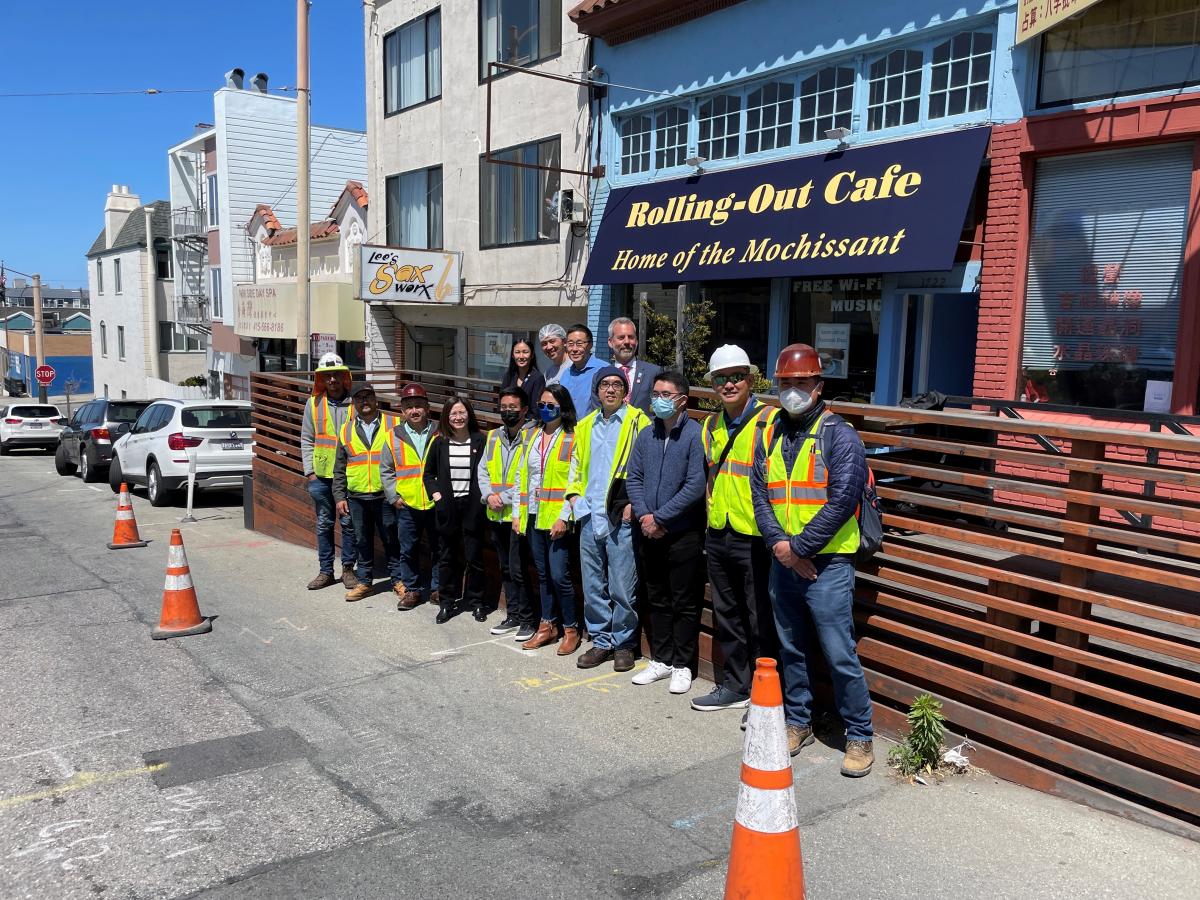
Group photo with NTK Construction, SFMTA project staff, MTA Board Director Sharon Lai, Owner of Rolling out Cafe, Supervisor Gordon Mar and MTA Director of Transportation Jeff Tumlin outside Rolling Out Cafe on Taraval and 26th after the Media Roundtable for L Taraval Improvement Project Segment B

Roundtable at the Community Parklet Shares Project Updates 

This past week, the SFMTA hosted a media roundtable discussing updates about the L Taraval Improvement Project at the community parklet located in front of the The Rolling Out Café on Taraval St.  

Segment B construction began in February 2022 and is scheduled to be completed Fall 2024. Sewer and water infrastructure work is currently taking place. Future work includes track work, overhead line work, the construction of new boarding islands and streetscape improvements.   

On hand to answer questions and provide updates was District Four Supervisor Gordon Mar, SFMTA Board Director Sharon Lai and Director of Transportation Jefferey Tumlin.  

The Roundtable 

Supervisor Mar opened the discussion by highlighting the many benefits that the local community will receive with the planned infrastructure upgrades along the corridor. These benefits include:  

  • Replacing sewer and water lines to allow for longer longevity of utility lines 

  • Track upgrades resulting in a smoother ride and less noise for residents and merchants  

  • New safety boarding islands for safer boarding and off boarding for Muni customers and for ADA compliance  

  • Sidewalk bulbouts and pedestrian crossing at intersections for enhanced visibility and to make pedestrian crossing safer  

We value our community partnerships, frequently provide updates and listen to and address community needs and concerns from individual residents and community organizations like the People of Parkside (POPS). As part of the community outreach for project updates, we utilize media in multiple languages, develop multilingual printed materials, use social media, post web updates on project pages and send out email and text updates to subscribers to keep the community informed about potential impacts. Director Tumlin reminded everyone that we depend on our community partners for the success of this project. The partnership is what has led the way during the planning, design and construction of the entire L Taraval Improvement Project. 

A construction mitigation program is active for the project to help lessen the impacts to residents and local businesses during construction. The program integrates construction mitigation measures such as dust mitigation, traffic control, and loading, delivery and parking assistance mitigation. The SFMTA in partnership with the Office of Economic and Workforce Development (OEWD) will support small businesses with resources and a suite of services such as free consulting, technical assistance, and the creation of a business action plan. A small business working group has been formed as part of the project and will develop a marketing campaign specific to the businesses in the Taraval neighborhood.  

The Community Parklet 

Designated as a public space for the neighborhood and Parkside’s first parklet, the community parklet in front of the Rolling Out Café located at 1722 Taraval St. between 27th and 28th avenues was built as a community effort.  Demonstrating tenacity, proprietor Bruno Tse of The Rolling Out Café drove fundraising efforts to solicit and secure the donations and funding needed to complete the parklet. Since its opening in 2016, he has also taken care of the upkeep. Slated for removal this month for the duration of construction, the parklet will be rebuilt once the project is completed. The unique design elements and plaques with contributors’ names have been saved and will be incorporated into the new structure.   

The L Taraval Improvement Project 

The L Taraval Improvement Project is a multi-agency collaboration with the SF Public Utilities Commission and the Department of Public Works to improve and upgrade the aging infrastructure to make pedestrian crossing safer, increase accessibility and improve transit reliability.  

To follow the progress of this project as we move into the next phase, please visit the project webpage and sign up for updates.  

For questions or comments, please email LTaravalProject@SFMTA.com or call 415.646.4771. 


Published May 05, 2022 at 02:31PM
https://ift.tt/hjs0WaK

Tuesday, 3 May 2022

Making Way for the Muni Metro of our Dreams

Making Way for the Muni Metro of our Dreams
By Erin McMillan

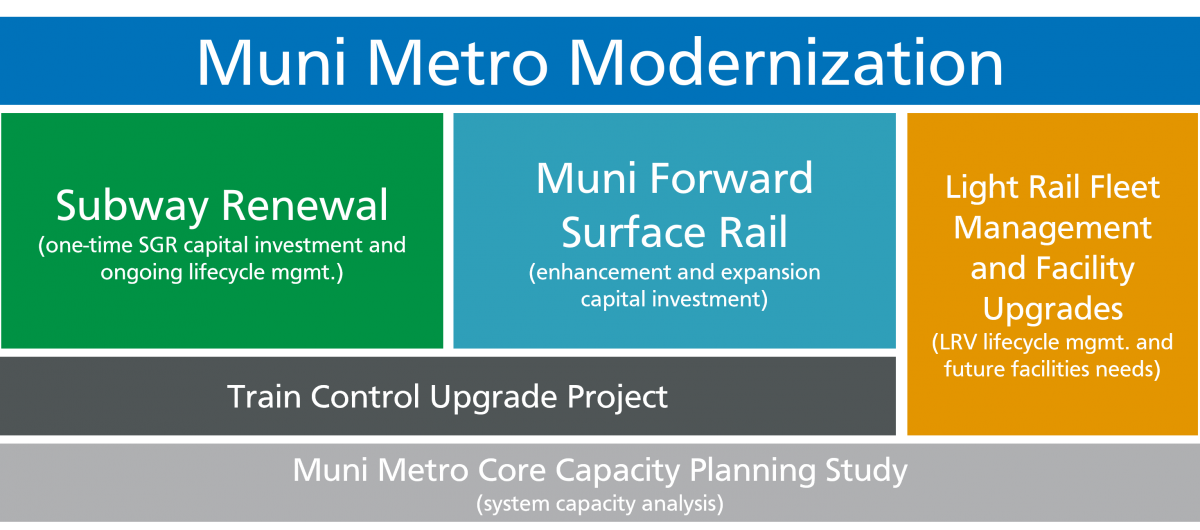
In order to achieve the SFMTA’s vision for transit service, we have some work to do. Staff have provided an overarching framework for how SFMTA will achieve a truly dazzling vision for Muni service: The Muni Metro Modernization program. 

Chart showing the projects that fall under the Muni Metro Modernization program.

The Muni Metro Modernization program. 

The program uses a multifaceted approach: As a foundation, making state of good repair upgrades and replacing aging systems through our Subway Renewal Program already underway. San Francisco's Muni Metro subway system moves our highest volumes of customers through the core of the city. And it operates on infrastructure that was constructed between 50 to 100 years ago, much of it original. It is well-documented that Muni Metro has been plagued with service reliability problems for decades. The Subway Renewal Program lays out a systematic approach to capital upgrades over the next ten years, targeting strategic repairs, replacing and enhancing our most critical systems. This work will improve our subway’s resilience and prepare it for the demands of the future. Much of this work over the next ten years include things that customers never see, but are essential to keeping the system safe, efficient and reliable.  

Another major project that will increase the Muni Metro network’s capacity, and reduce wait times and crowding on your Muni Metro trips:  the Train Control Upgrade Project (TCUP). TCUP possesses the greatest potential of any single investment to significantly improve system efficiency. Our outdated centralized train control system is under constant pressure and is increasingly operating beyond the capacity for which it was designed nearly three decades ago. 

While we’ve learned operational and service lessons throughout the pandemic, we’re continuing to improve our ability to measure the health of the subway. Using data dashboards to monitor subway travel time, queuing, average daily subway delay and maximum trains per hour, we’re improving our ability to make informed decisions about subway operations and service. Following the successful pilot of the J Church surface-only route, we’re looking for ways to increase our adaptability and improve responsiveness to changing travel patterns.  

In addition to improving subway infrastructure and performance, the Muni Forward program will focus on improving surface rail through capital improvements that will increase the reliability and performance of the line segments operating outside of the subway. Customers will continue to feel the positive impacts from the Muni Forward program with more reliable surface rail service that translates into a more reliable subway.  

The Train Control Upgrade Project bridges state of good repair improvements and service improvements by replacing a 20+ year old system in the subway and expanding new technology to the surface. And of course, strategic investment in our light rail fleet and facilities is critical to achieve this work.  

In addition to improving the infrastructure and service of Muni Metro, we are also planning for the future. The Muni Metro Core Capacity Planning Study sets out to answer critical planning questions for our system— What is our future higher-capacity transit system?​ What is the program of infrastructure projects and service that will get us there?​ How can we get more capacity in the subway and at the same time improve reliability? We have already begun to experiment with innovative service approaches, such as the J Church Surface-only Pilot, as a way to test some of the service ideas that will be explored further in the Core Capacity Planning Study. Building upon the work laid out in the Metropolitan Transportation Commission Bay Area Core Capacity Transit Study and the ConnectSF Transit Strategy, the Core Capacity Planning Study will develop a comprehensive long-term strategy for expanding the capacity of the Muni Metro system.  

We know what the issues with Muni Metro are—and we have the tools and programs in place to improve the system. From capital improvements like train control system upgrades to improving our service performance through the Muni Forward program and innovative service solutions like the J Church Surface-only Pilot, we’re working to improve the reliability and service of the Muni Metro both in the near and long term. 

For more information, visit the Muni Metro Modernization Program page.


Published May 03, 2022 at 12:50PM
https://ift.tt/atkM0nu