Thursday, 26 January 2023

Replacing Parking Meters with (Actual) Bike Parking

Replacing Parking Meters with (Actual) Bike Parking
By Eillie Anzilotti

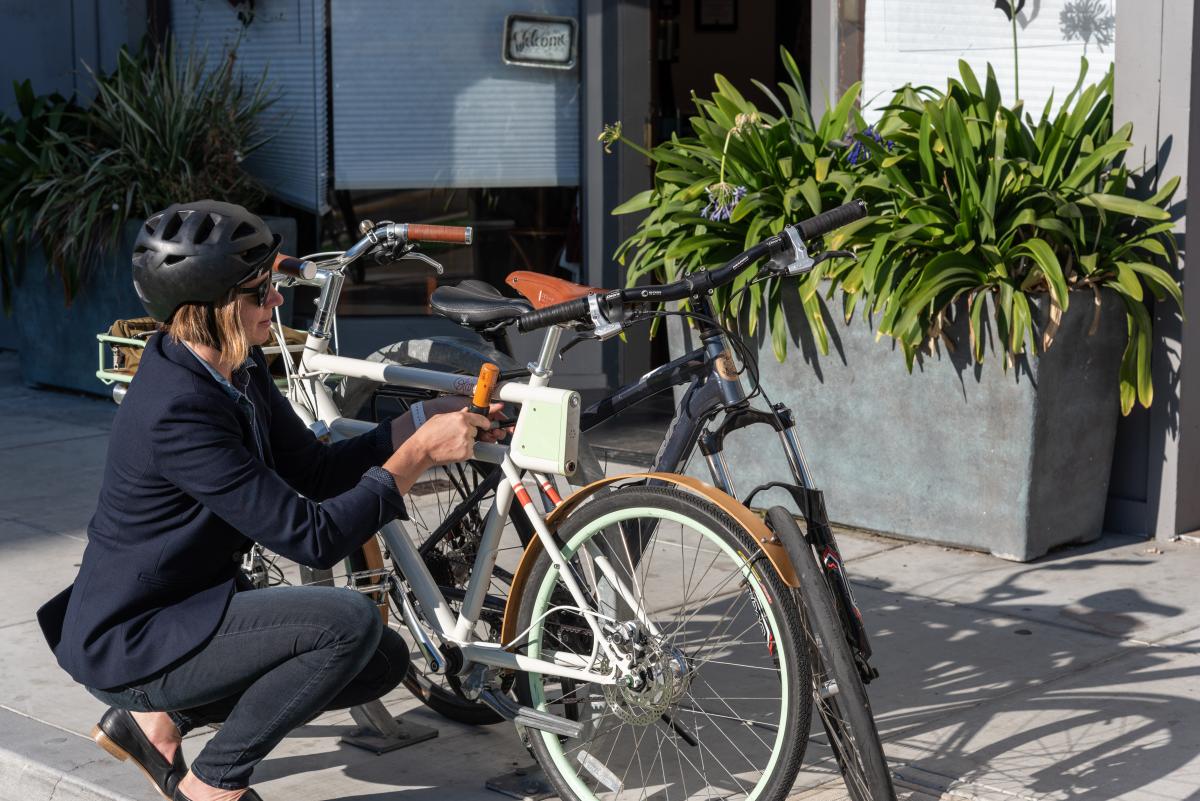
Bicyclist kneeling while locking up their bike

Did you know you can submit a request for new bike parking?

Anyone who rides a bike in San Francisco knows: A parking meter is not just a parking meter. Like street sign poles, meters are also a place to lock your bike when you’re out running errands and exploring the city. 

As an agency, we’re working towards the goal of making bike racks and corrals available across the city, wherever people need them. In the meantime, we recognize that informal bike and scooter parking options, like parking meters, meet people’s needs.  

So, when we announced a campaign last year to remove existing parking meters and replace them with pay stations, this brought up a question: what does this mean for bike parking? 

We strive to install bike racks to replace parking options wherever meters are removed. Right now, our bike parking team is focused on identifying locations for new racks in high-demand areas like the Mission and the Financial districts. Currently, we have 125 locations to install new racks in the next 1-2 months. That means a total of 250 new spaces to park your bike or scooter! We’ll continue surveying new racks in the coming months, focusing on commercial corridors and locations along the bike network where many bike and scooter trips start and end. 

Also, we are in the process of installing over 250 racks with space for 500 bikes across the city as requested by members of the public. Through our website, anyone can submit a request for new bike parking, and we encourage people to let us know where these should go next. Overall, our goal is to install at least 100 racks per month.  

There are many reasons the old parking meters can’t stay in the ground forever: they’re inefficient, labor-intensive to maintain, and take up a lot of space on the sidewalk that could be put to better use (like dedicated bike racks). We recognize that meter removal is progressing at a faster pace than replacement with bike racks. Now that the rain has paused, our crews are moving forward with getting new racks in the ground. We look forward to sharing our progress! 

As more and more people choose to bike and roll in San Francisco and move us toward our goal of 80% low-carbon trips by 2030, adding more parking options is essential. Our vision is for secure, convenient parking to be plentiful for anyone who bikes or rolls in the city. Help us reach that goal by using our online portal to request a new bike rack or corral! 


Published January 26, 2023 at 12:23PM
https://ift.tt/CQB1tVk

Thursday, 5 January 2023

New T Third Connecting Chinatown to Sunnydale Starts Saturday

New T Third Connecting Chinatown to Sunnydale Starts Saturday
By Christopher Ward

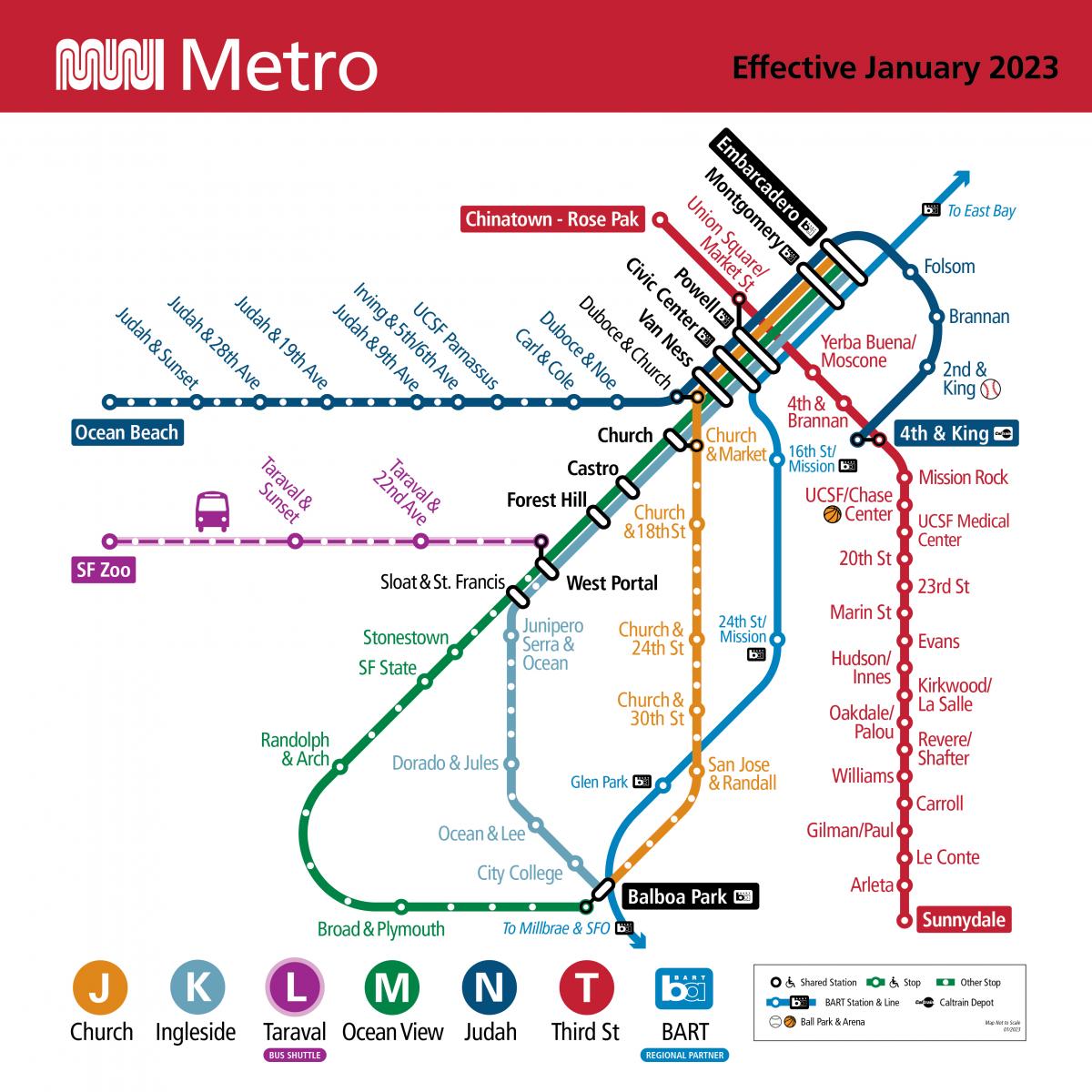
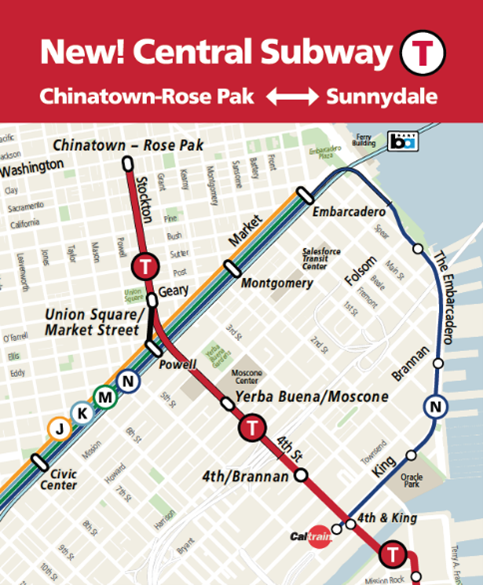
Muni Metro map effective January 7, 2023, showing the new T Third route connecting Chinatown-Rose Pak Station from 4th & King in Central Subway. Muni’s J Church, K Ingleside and M Ocean View turn around at Embarcadero Station; the N Judah continues along the Embarcadero to Embarcadero & Folsom, Embarcadero & Brannan and 2nd & King and onto 4th & King.New Muni Metro map.

This Saturday the T Third starts its long-awaited new route connecting Chinatown-Rose Pak Station from 4th & King in Central Subway, Mondays through Fridays, 6 a.m. to midnight every 10 minutes and Saturdays and Sundays, 8 a.m. to midnight every 12 minutes.  

The K Ingleside will now travel between Balboa Park and Embarcadero Station. Customers using Embarcadero & Folsom, Embarcadero & Brannan and 2nd and King platforms should transfer to the N Judah at Powell Station or 4th & King.

Watch the new Muni Metro service map animations.

The following bus service changes also start this Saturday:

  • The T Third Bus will now run along 3rd and 4th Streets in SoMa and on Stockton Street north of Market Street to align with the new T Third rail line and will no longer travel on the Embarcadero and Market Street. 
  • The 6 Haight/Parnassus will now run until 12 a.m. daily instead of 10 p.m. to cover the service gap on Haight Street.
  • The 21 Hayes will now run to Fulton Street and 8th Avenue on weekdays after 7 p.m. and weekends all day to provide access to Golden Gate Park. There will be no additional stops between Stanyan Street and 8th Avenue.
  • The terminals on the 12 Folsom/Pacific and 36 Teresita are changing to provide better operator relief points, with minor reroutes near Cesar Chavez and Valencia Streets.
  • Service will be added on 28 19th Avenue and 38R Geary Rapid to help reduce crowding.
  • The bus stops at 4th and Folsom streets and 4th and Howard streets will be consolidated into one stop in front of the new Yerba Buena/Moscone Station to provide better connections for customers as part of 4th Street Improvement Project.

Customers traveling to stops along the Embarcadero or the baseball stadium at 2nd & King should use the N Judah.

Customers going to Sunnydale should catch the new T Third at the new Union Square/Market Street Station.

Watch how to get around with our video, Connecting Communities: How to Navigate the Central Subway. 

For more travel and connections tips read our Frequently Asked Questions.

The new Central Subway tunnel runs underneath the Market Street subway, which means the stations are deeper and have very long escalators – the longest in the United States west of the Mississippi. There are also two glass elevators at each station from street level to concourse level and from concourse level to platform level for accessibility.

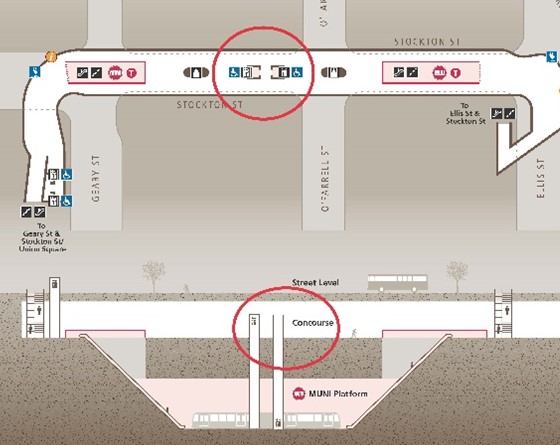
At Union Square/Market Street Station, the elevators are in the center of the concourse with their own fare gates.

MuniMobile and Lifeline customers may use any of the wide fare gates at the Union Square/Market Street Station – at the Geary escalators, the Ellis escalators or the elevators in the center of the concourse.

WiFi Connectivity in the New Subway Stations

All three new Central Subway underground stations are equipped with WiFi, and cellular service will be set up soon. To connect to the free, open WiFi network, open your phone’s WiFi settings and select #SFWiFi and enjoy connectivity on all station platforms and concourse levels.

To report WiFi connectivity issues please take note of the exact location in the station where the signal is low or nonexistent and call 311 You can also write to us here with any feedback or questions.

Enjoy your ride on Muni!


Published January 05, 2023 at 04:31PM
https://ift.tt/20vrRGQ

Wednesday, 4 January 2023

Ride to Chase Center Events Along the New T Third

Ride to Chase Center Events Along the New T Third
By Christopher Ward

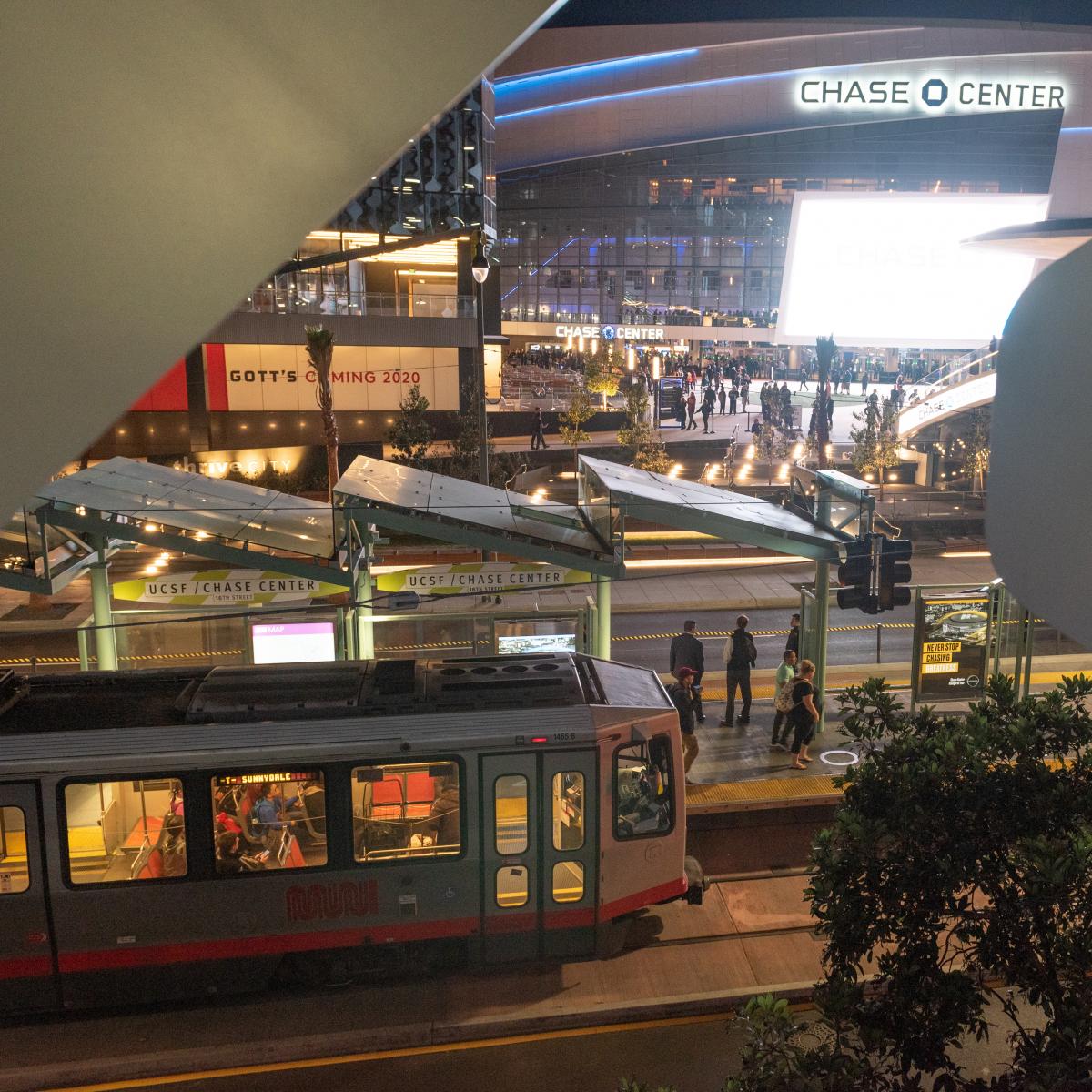
 Photo of a Muni Metro train at the UCSF/Chase Center platform with Chase Center in the background.

Starting January 7, take the S Shuttle Mission Bay on the new T Third line via Central Subway to Chase Center events.

Service on the new T Third Line from Chinatown Rose-Pak to Sunnydale starts January 7. With it, new event service to Chase Center will also start via Central Subway on the S Shuttle Mission Bay.

During events at Chase Center, shuttles will operate between Chinatown-Rose Pak Station and UCSF/Chase Center every 10 minutes. These shuttles will start approximately two and a half hours before an event and continue for two and half hours after an event.

From Chinatown to Chase Center, riding the S Shuttle Mission Bay takes about 20 minutes. Best of all, your Chase Center event ticket is your Muni fare. No additional Muni fare needed!

  • Both electronic and physical tickets for events – including Warriors games, concerts and other events – will serve as proof of payment for Muni service throughout the day.
  • The ticket will be valid all day and expire at the end of the service day at 2 a.m. after the event.
  • Passengers with a valid ticket can board through any door so we can quickly get you to the event or game! There is no need to show your Chase Center ticket to a bus or rail driver.
  • Keep your event ticket handy for proof of ticket purchase. To avoid fines, you will need to show your valid event ticket as proof of purchase if requested by a Transit Fare Inspector.

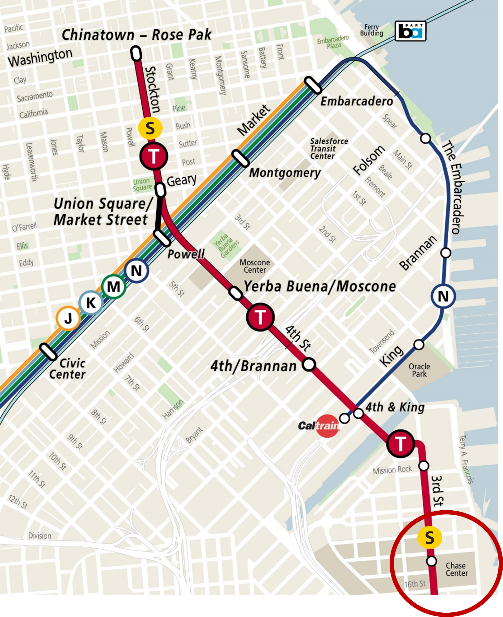
Map showing the new alignment of the T Third to Chinatown-Rose Pak Station, connecting from 4th and King streets and continuing north to Central Subway; existing Muni Metro system's J Church, K Ingleside and M Ocean terminating at Embarcadero Station; the N Judah continuing along the Embarcadero to Embarcadero & Folsom, Embarcadero & Brannan and 2nd & King and onto 4th & King; S Shuttle service between Chinatown and Chase Center.

The S Shuttle Mission Bay will operate between Chinatown-Rose Pak Station and UCSF/Chase Center during Chase Center events.

Muni Metro and BART customers can transfer at Powell Station underground to Union Square/Market Street Station and board the S Shuttle Mission Bay southbound to the UCSF/Chase Center Station. At Union Square/Market Street Station, elevators to the platform are in the center of the station with their own fare gates.

Customers traveling past Chase Center should board trains with head signs that say “T Third Sunnydale” to avoid transferring at Mission Bay.

The 78X 16th Street Arena Express will continue to run express service between Chase Center and the 16th Street BART station two and a half hours before events and one hour after events.

Visit our Chase Center webpage (SFMTA.com/ChaseCenter) for more information.


Published January 04, 2023 at 04:01PM
https://ift.tt/GKcCsmq

Tuesday, 3 January 2023

How To Navigate Transfers on the New T Third

How To Navigate Transfers on the New T Third
By Mariana Maguire

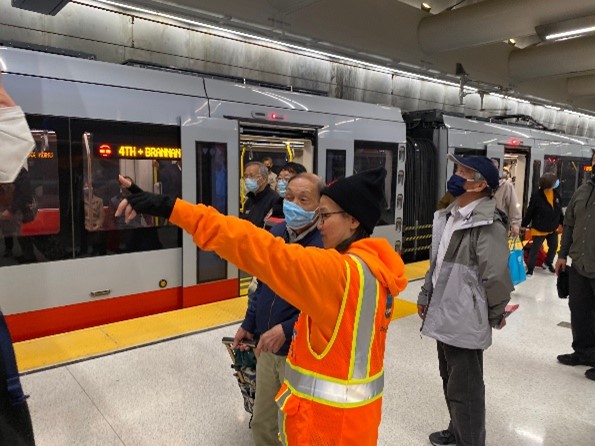
SFMTA Ambassador talking to customers on Metro station platform.

SFMTA Ambassadors are helping customers navigate the new Central Subway stations and Metro service changes.

As we prepare for the start of new T Third service on Saturday, January 7, between Sunnydale and Chinatown-Rose Pak Station, here are some important travel tips to help you plan your new connections.

Map showing the new alignment of the T Third to Chinatown-Rose Pak Station, connecting from 4th and King streets continuing north to Central Subway. Existing Muni Metro J Church, K Ingleside and M Ocean View terminating at Embarcadero Station. The N Judah continues along the Embarcadero to Caltrain at 4th and King streets.

New T Third service via Central Subway starts January 7 with service between Sunnydale and Chinatown-Rose Pak Station.

For J Church, K Ingleside, M Ocean View Customers

  • For stops along the Embarcadero and King Street including 2nd & King (Oracle Park) and 4th & King (Caltrain), take the N Judah.
  • For service north to Chinatown-Rose Pak Station or south to Yerba/Buena Moscone Station, 4th & King streets (Caltrain), UCSF/Chase Center and beyond to Sunnydale, transfer at Powell Station to Union Square/Market Street Station and take the new T Third. The N Judah will also continue to serve 4th & King (Caltrain).

For T Third Customers

  • For service to Balboa Park, transfer at Union Square/Market Street Station to Powell Station and take the K Ingleside westbound. Or take any westbound J Church or M Ocean View.
  • For service to 2nd & King (Oracle Park) and stops along the Embarcadero, take the N Judah at 4th and King streets, next to the Caltrain station.
  • For service to all Market Street Metro stations, transfer at Union Square/Market Street Station to Powell Station and take the K Ingleside and M Ocean View for Embarcadero to West Portal Stations or take the N Judah and J Church for Embarcadero to Van Ness Stations.

Bird’s eye view and cross-sectional station layout map of Union Square/Market Street Station emphasizing elevators in the center of the station connecting the concourse and platform levels.

Elevators to trains at Union Square/Market Street Station are located in the middle of the concourse with their own fare gates.

Accessibility at New Union Square/Market Street Station

The new Central Subway stations are more accessible to riders with disabilities, with level boarding between the train and platform and two glass elevators between each level for more reliability, light and visibility. Once service between Chinatown-Rose Pak and Sunnydale starts January 7, use our Elevator Status Page to help you plan your trip.

Here are a few key tips to consider if you are taking the elevators at the new Union Square /Market Street Station

  • Elevators between street level and the concourse are located at two locations:
    • The new station entrance at Geary and Stockton, at Union Square.
    • The existing BART and Muni elevator on Market and Stockton streets. Exit the elevator to the left at concourse level and follow signs to Union Square/Market Street Station.
  • The first set of fare gates at both entrances to the Union Square/Market Street Station lead to a long set of escalators. The elevators from concourse to platform level are in the center of the concourse with their own fare gates.

Find additional information about new connections and wayfinding in our new T Third service Frequently Asked Questions.


Published January 03, 2023 at 05:19PM
https://ift.tt/C9BzbjJ

Wednesday, 28 December 2022

Free Muni for New Year’s Eve

Free Muni for New Year’s Eve
By Stephen Chun

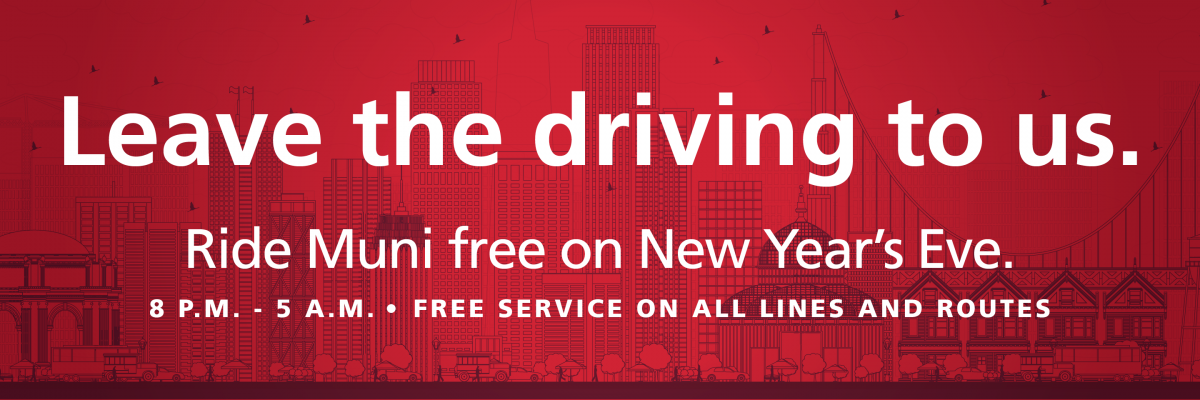
White text "Leave the driving to us with additional advisory subtitles" on a red canvas background with city skyline silhouette.

For the 23rd consecutive year, the San Francisco Municipal Transportation Agency (SFMTA) will offer free rides on New Year’s Eve from 8 p.m. on Saturday, December 31 through 5 a.m. on Sunday, January 1. Extra Muni Metro Subway Service will be provided from 8 p.m. Saturday to 2:15 a.m. Sunday. Extra Owl Service will be provided from 10 p.m. Saturday to 5 a.m. Sunday

This program supports San Francisco’s Vision Zero goal to eliminate traffic fatalities.

Ride Muni Free New Year’s Eve includes all Muni lines and routes. Clipper Card customers should NOT tap their cards to make sure they don’t get charged a fare. Muni Mobile passes will not be necessary. Metro fare gates will be open that night. All information, including schedules and stops, will be posted on New Year's Eve Free Muni and Extra Service or SFMTA.com/NYE. Clipper Card customers should NOT tap their cards to make sure they don’t get charged a fare.

Don’t drink and drive, let Muni do the driving.

New Year's Eve Muni Service

  • Complimentary Muni service from 8 p.m. Saturday, December 31 to 5 a.m. Sunday, January 1.
  • Please do not tag your Clipper® card. If you tag it, you will be charged.
  • Please do not activate a MuniMobile ticket. Metro fare gates will be open.
  • Extra Muni Metro service:
    • Trains between West Portal Station and 4th & King from 8 p.m. to 2:15 a.m.
    • Additional trains between West Portal and Embarcadero Station from 8 p.m. to 2:15 a.m.
    • Transfer at West Portal Station to OWL bus lines.
  • Extra service on the OWL Network, from 10 p.m. to 5 a.m.:

At midnight on New Year’s Eve, a city-sponsored fireworks show from a barge off The Embarcadero, south of the Ferry Building, will take place. Motorists should anticipate delays in the area from approximately 11 p.m. to 1 a.m. and pedestrians are advised to use caution when traveling.

Note: Central Subway will provide free rail shuttle service from Chinatown Rose-Pak to 4th / Brannan St on Saturday, December 31st and Sunday, January 1st from 8 am to 5 pm, instead of midnight. We encourage those planning to use the Central Subway after 5 p.m. this weekend to use the 30 Stockton and 45 Union/Stockton which are scheduled to come every 15-20 minutes. For further information on our staffing & service plans, please visit Central Subway Will Close Early On The Holiday Weekends.

Regional Transit Connections for New Year's Eve

  • BART will provide additional service on January 1.
    • Full fare pricing will be in effect.
    • The last East Bay bound train running through Downtown San Francisco will be at around 1:30am and the last Southbound train heading toward Millbrae will run through Downtown San Francisco at 2:10am.
    • For more details & trip times, please visit BART’s New Year’s Eve service article.
  • Caltrain service will be running on a Weekend Schedule. For more details, please visit https://www.caltrain.com
  • SamTrans service will be from 8 p.m. on December 31 until 3:30 am on January 1. For more details, please visit http://www.samtrans.com 


Published December 28, 2022 at 12:33PM
https://ift.tt/9YNlvLk

Monday, 19 December 2022

Upcoming Capacity Indicators

Upcoming Capacity Indicators
By Christopher Ward

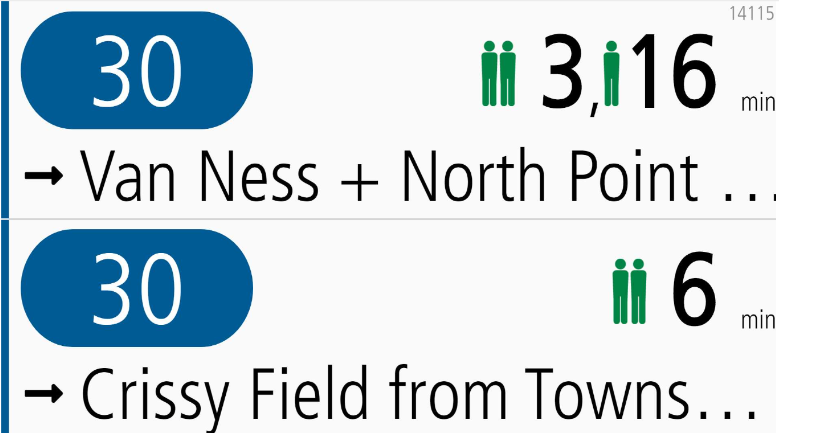
Image of new stick figures indicating bus capacity on shelter signs.

Next Generation Customer Information displays will show capacity indicators: One figure means there are many seats available. Two figures indicates that there are likely a few empty seats available. Three figures tell you that there’s likely only standing room available.

The SFMTA continues expanding trip planning and accessibility features and improving Muni predictions. This is part of the ongoing Next Generation Customer Information System (CIS) project. One of the newest features is a capacity indicator.

A capacity indicator helps customers understand how much space is available on vehicles. Customers can see the indicator on our Next Generation displays in the bus shelters and on train platforms. Customers may use this information to make travel choices. For example, customers can choose to wait for a less full vehicle or take an alternative route.

As of November 2022, Muni vehicles equipped with automatic onboard passenger counters send capacity information to our Next Generation CIS. This information is now shown symbolically with stick figures. One figure means there are many seats available. Two figures indicates that there are likely a few empty seats available. Three figures tell you that there’s likely only standing room available.

Customers should always yield the priority seating area for people with disabilities, older adults, and pregnant persons.

We’re excited to finally bring these features to our customers and build a system that will help make Muni travel even more efficient, reliable and enjoyable.


Published December 19, 2022 at 03:08PM
https://ift.tt/Gwp7MsH

Thursday, 15 December 2022

A Brief History of the T Third Part 2: 1980s-2023

A Brief History of the T Third Part 2: 1980s-2023
By Jeremy Menzies

Beginning in January 2023 full service on the new T Third extension 2023 will run from Sunnydale to Chinatown every day. In this two-part blog series, we will look back at some of the history of the T Third Street line. Part 1, published last month goes through the first 100+ years. In Part 2, we look at the recent history of the T Third and Central Subway projects from the 1980s to today. 

The Call for Better Transit: 1980s-90s 

In the decades following World War II, the neighborhoods along the southern end of 3rd Street became more economically depressed and transit service declined.  Residents felt cut off from the rest of the city as bus service did not meet their needs. 

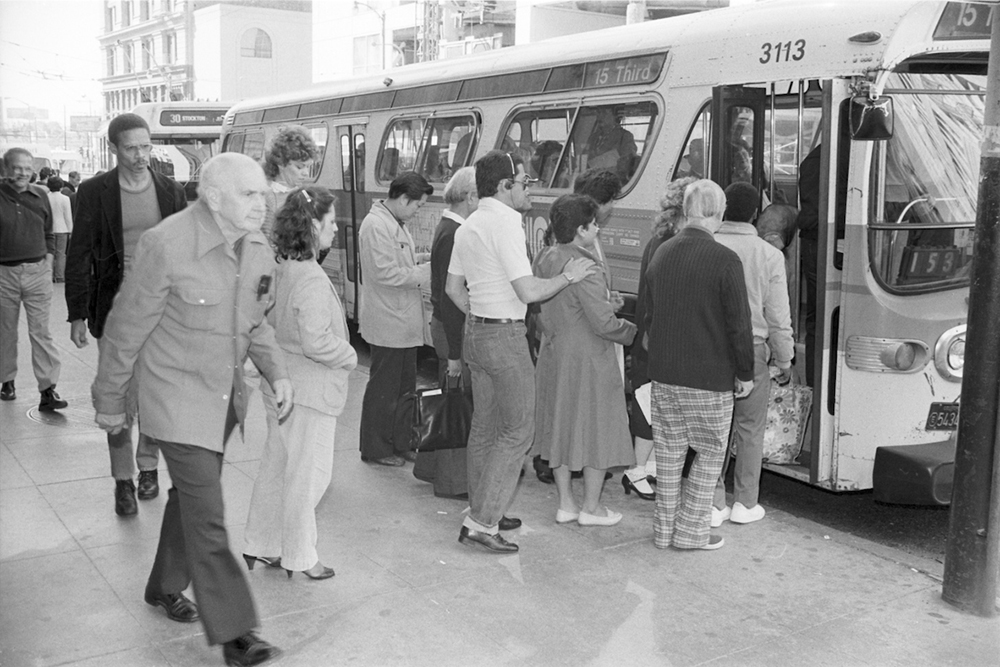
Passengers lining up to board a bus on a busy city street with buildings in the background People boarding a 15 Route bus on 3rd Street near Market in 1983. Bus service on the 15 provided critical north-south service through the City’s busiest areas. 
In the late 1980s, the city was looking to revitalize the Mission Bay, Dogpatch, and Bayview and reliable transit was critical to this goal. Early outreach and research resulted in the 1993 Bayshore Transit Study. This initial plan solicited community input on several possible solutions on how to improve transit to these neighborhoods. Two years later in 1995, the Four Corridor Plan built upon the Bayshore Transit Study and elevated 3rd street as the top priority for San Francisco’s long-range transit plan. It was clear that residents, particularly in Bayview, wanted rail service to return to 3rd Street. 

T Third Phase 1: 1990s-2007 

These reports and outreach formed the backbone of the Third Street Light Rail Project, which would be built in two initial Phases. Phase 1 involved extending Muni Metro service from 4th and King to Bayshore Boulevard along 3rd Street. Phase 2 would focus on the 4th and Stockton corridors to extend the service into Chinatown and possibly North Beach. 

By the end of the ‘90s, funding was coming in to make Phase 1 a reality. Early plans for the T also included a new rail maintenance facility, Muni Metro East, as well as a turnback loop in Mission Bay and a direct connection to the Bayshore Caltrain Station. Due to various factors during preconstruction planning, the Mission Bay Loop and Bayshore Caltrain connection were dropped from the T Line plan. 

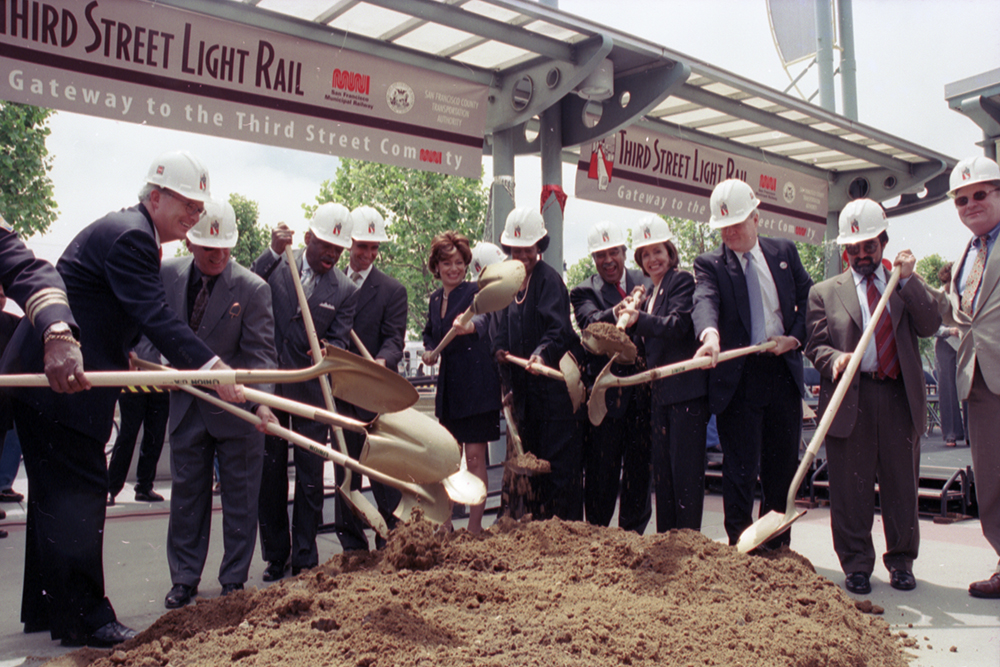
People in business attire and hard hats smiling with shovels in hand over a large pile of dirt under s station structure

A groundbreaking ceremony for T Third construction was held on May 28, 2002 at the 4th and King Caltrain Station.  

Construction of 5.1 miles of new tracks, overhead power lines, lighting, stations, and a variety of other improvements took five years to complete. On January 13, 2007, free weekend shuttle service commenced on the new line and full weekday service started on April 7. Just one year later in 2008, the Muni Metro East rail yard opened, boosting Muni’s ability to serve the new line. For the first time in 50 years, rail service returned to the eastern waterfront. 

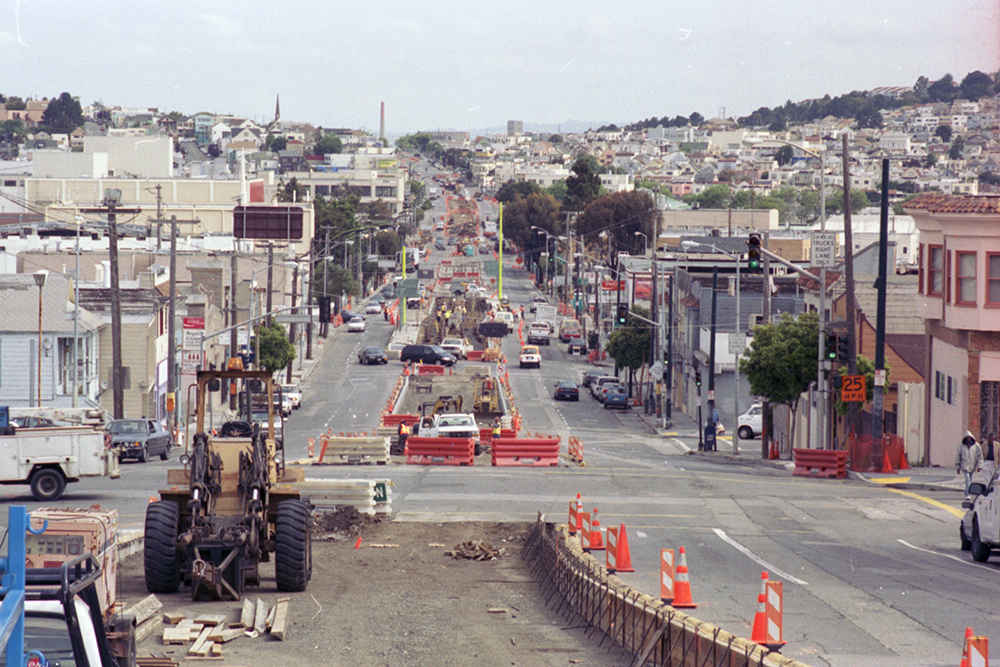
A long perspective view of a corridor showing the city's neighborhood skyline View north along 3rd Street at Jamestown Avenue during construction in 2004. 
T Third Phase 2: Central Subway 

Planning and outreach for Phase 2 of the T Line had already begun when the line opened in 2007. The Central Subway Project was created to address the transit needs of Chinatown, Union Square and South of Market. Construction would extend the T nearly two miles and build the first new subway in the city since the 1970s.

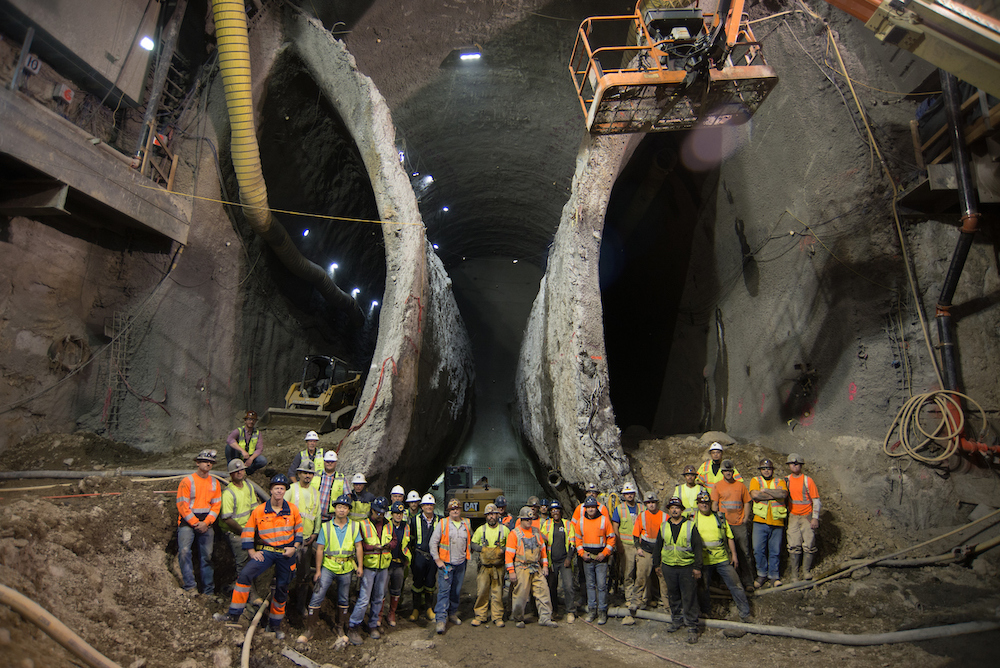
Construction and crew underground in a front of two boring entrances This 2016 photo, taken inside the excavation for Chinatown Station shows the massive scale of the Central Subway Project. 
Early proposals showed the Central Subway traveling north on 3rd Street and along Geary where it would turn up Stockton to end in Chinatown. Going south, the line would branch and exit the tunnel on 4th Street. The challenges of construction along 3rd and at Market Street resulted in a plan to run the line on 4th and Stockton streets. It was also decided to tunnel underneath the Market Street Subway/BART tunnels using special tunnel boring machines instead of more conventional construction methods. 

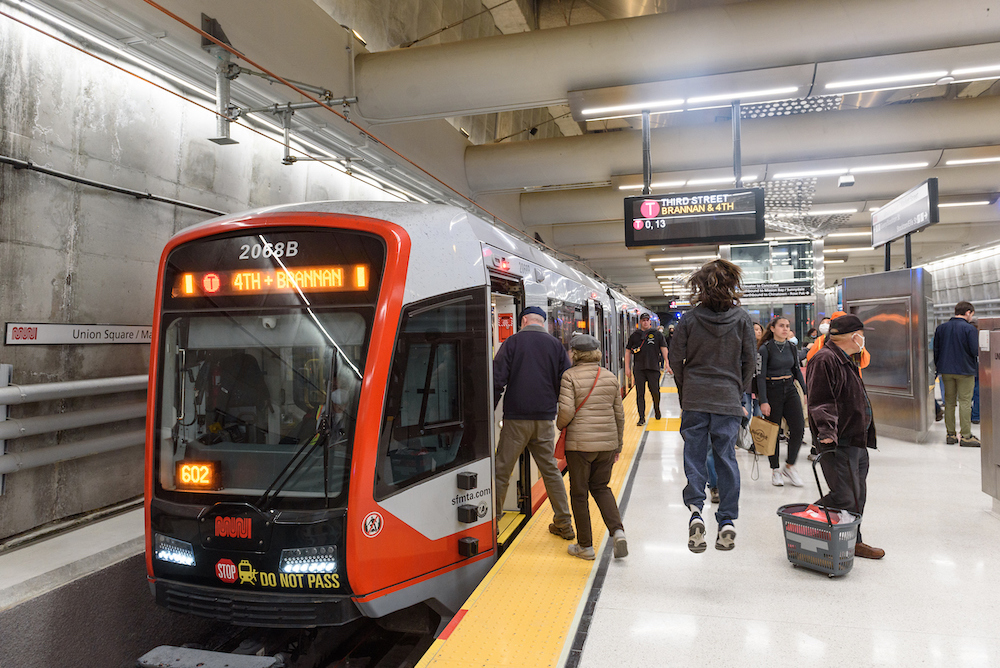
The official groundbreaking ceremony took place on February 9, 2010. The arduous process of building a subway with four stations through San Francisco’s densest neighborhoods began soon after. Despite an intensive construction period with project delays and cost increases, the Central Subway opened for service on November 19, 2022.  

Passengers boarding onto a train in a station on a busy platformOpening day of the Central Subway on November 19, 2022. Thousands of people came out to see and ride in the long-awaited subway. 

Over 30 years in the making, the T Third line follows in the footsteps of the first horsecars that ran over 160 years ago. However, this is not the end of the line for the T. Planning is already underway on the T Third Phase 3 extension. Aimed at expanding service beyond 3rd Street, this extension will mark yet another chapter in San Francisco’s transportation history. 


Published December 15, 2022 at 11:22AM
https://ift.tt/SZzMbnr