Wednesday, 15 March 2023

100 and Counting – More New Trains Join the SFMTA Fleet

100 and Counting – More New Trains Join the SFMTA Fleet
By Christopher Ward

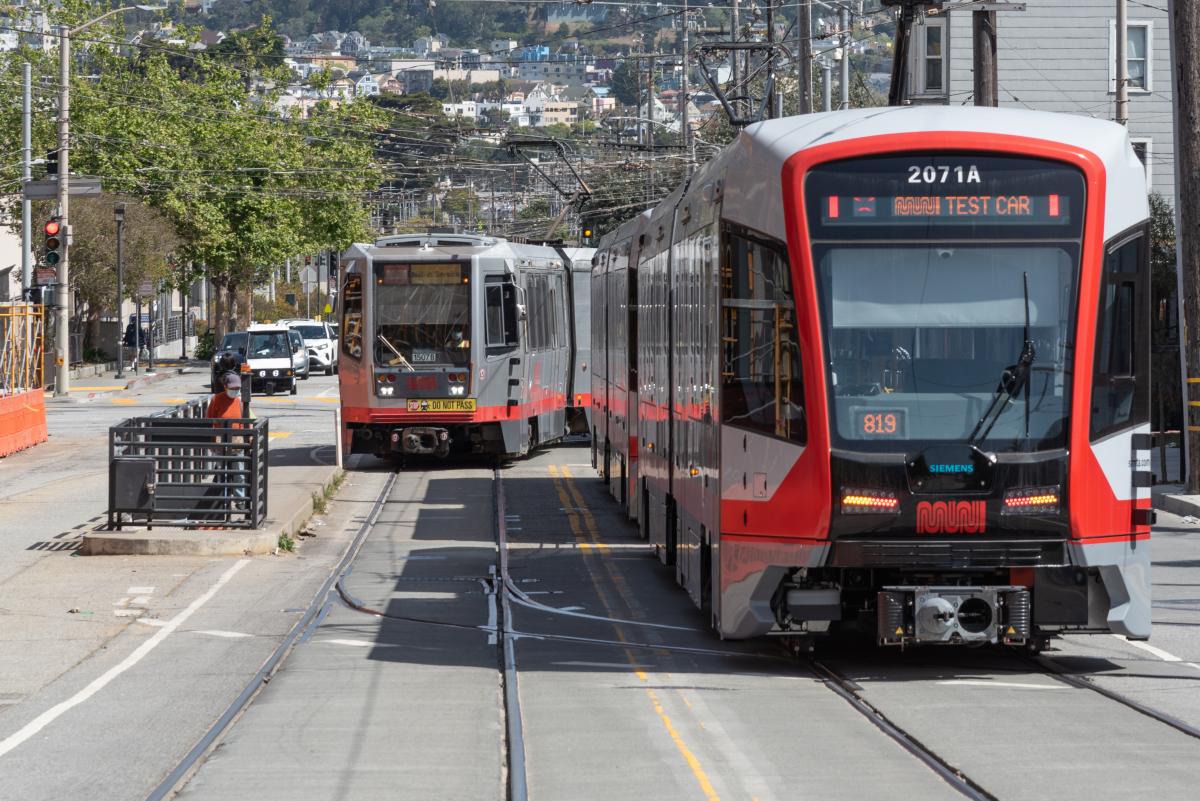
Photo of an older Breda model Muni Metro train on the street in the background, and a new LRV4 model Muni Metro train in the foreground.

Muni continues to expand its fleet with its 100th light rail vehicle four-series (LRV4) on San Francisco streets, broadening the reach of transportation in the city! 

The SFMTA received its 100th new LRV4 (light rail vehicle four-series) in December 2022, closing out a year of big accomplishments for the agency. This train represents a milestone in the continued progress of the LRV Fleet Replacement Program.  

The SFMTA is steadily expanding its fleet with about three new LRV4 train cars arriving every month. We expect 219 total cars to be delivered by 2025. This allows us to retire the aging Breda vehicles, which have been in use by the SFMTA since 1955. Compared to the mostly grey Bredas, the new LRV4 trains are easy to spot on the street, with their distinctive “red ribbon” that wraps around the front of the vehicle and down the sides.  

The new LRV4 trains are also far more reliable than the outdated Bredas. With better design and engineering, these trains have fewer breakdowns and require less maintenance. This makes them more reliable and less expensive to operate, which means better service for Muni riders. 

The new LRV4s have improved safety and service features. In response to customer feedback, the seats are color-coded – blue indicates priority seating for seniors and people with disabilities, and red indicates general seating. We also added more visible, yellow grab rails. The LRV4s also have digital displays that show information about upcoming stops and nearby alternate routes at transfer points. These same interior upgrades will be added to earlier LRV4 trains over the next year.  

Learn more about the history of LRVs, look into Muni Light Rail Through the Years and follow us on Instagram (Instagram.com/sfmta_muni). 


Published March 15, 2023 at 04:30PM
https://ift.tt/P2v7ibE

Monday, 13 March 2023

Tech Talk: Muni Predictions 101

Tech Talk: Muni Predictions 101
By Christopher Ward
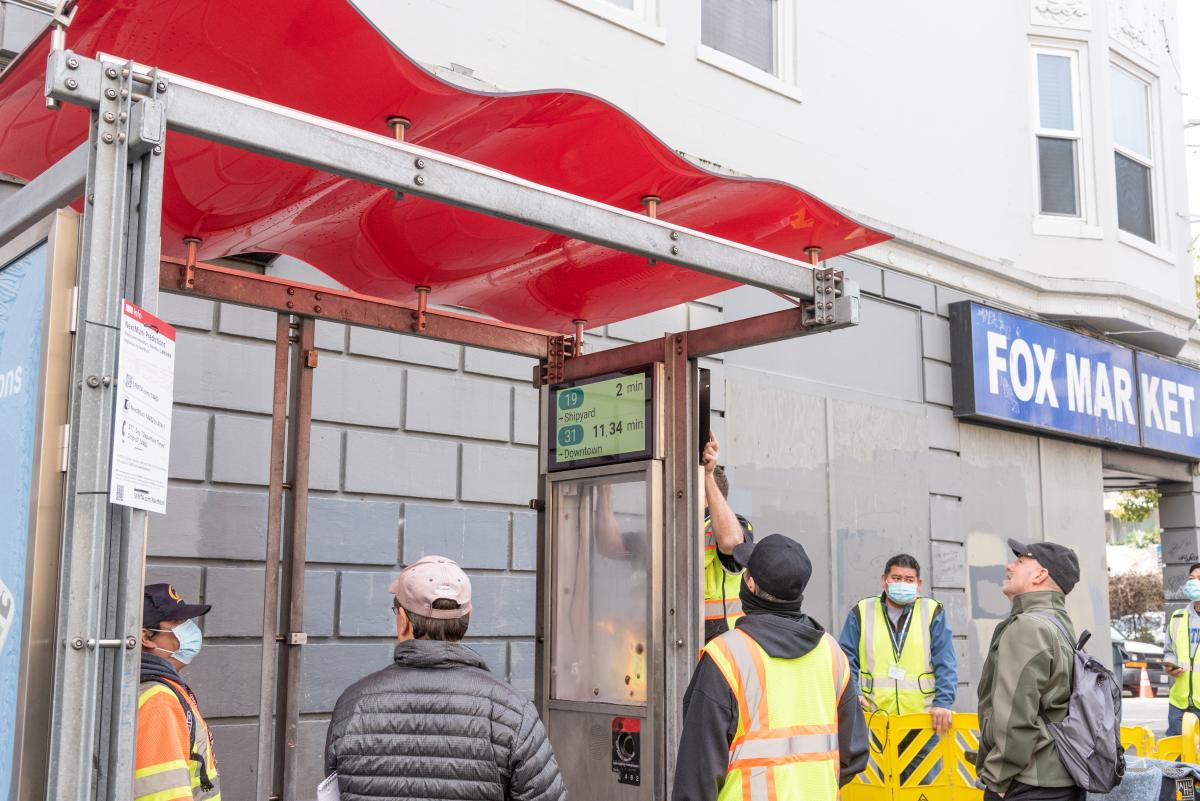
A picture containing contractors speaking with a Muni Rider as customer information displays are being installed in a transit shelter. New Customer Information Systems are being installed and causing customer curiosity! 

Got a burning question about the SFMTA’s Muni predictions that are made by our Next Generation Customer Information System (CIS)? We’ve got answers! Below are some of the frequently asked questions from Muni customers. Send us yours! 

Where do Muni predictions come from?  

Muni predictions come from data provided by multiple SFMTA systems including equipment on our vehicles. Real-time predictions are based on the real-time locations of Muni vehicles. A computer algorithm compares the real-time data to past travel times based on time of day, day of week, season and other factors that affect travel to predict future arrival times. Travel patterns in this historic data are applied to real-time data to generate accurate Muni predictions. 

When the system has no real-time information, it uses Muni schedules to make predictions. This often occurs at or near terminals and during service changes. However, schedule data isn’t as reliable as real-time data, particularly because the SFMTA has made Muni service more reliable by shifting away from using schedules to headway management, scheduling service at regularly spaced intervals to reduce gaps and bunching, rather than clock times. 

What factors impact predictions? 

The two main problems with predictions are 1) vehicles in service but not showing up in the Customer Information System (we call those “surprise vehicles”) and 2) predictions made from the schedule, but the vehicle doesn't show up (we call those “ghost vehicles”).  

A “surprise vehicle” is when a bus or train is running but it is not picked up by the real-time position data feed. This may be because of damaged equipment, a vehicle not signed into the system when it departs the division, or when changes are not entered into the system. When a vehicle is missing from the system, the wait times at stops appear longer than they actually will be. This happens because the prediction system does not “see” one of the vehicles. 

A “ghost vehicle” usually occurs at stops close to the start of the line. You might see this at the stop when looking at the prediction countdown. When the count gets to zero, no vehicle appears! This happens because the prediction system is not picking up any vehicles while they are at the terminal and before they start the route. This results in the countdown relying on the schedule, even if the vehicle is delayed. If a vehicle is scheduled but not coming, then the countdown will end and there will be no vehicle. The system relies on the vehicle data when it is available, otherwise it will show the schedule information that may not be accurate.  

The same problem occurs with trains as with buses but at an increased rate, because trains cannot pass each other like buses. Because of this, there are often service adjustments made at the control center to manage gaps that result in inaccurate predictions. 

Why do different apps have different predictions sometimes? 

The SFMTA generates vehicle information and shares this data openly for anyone to use cost-free. Third party apps like Transit, Google and Waze, as well as “mom and pop” apps, each have their own way of taking in and making use of the data that we provide. 

These third parties are independent of the SFMTA and we do not keep track of the quality of their predictions. If customers experience problems, we recommend reporting the problem directly to the third-party and checking the predictions at SFMTA.com/Routes. 

What does it mean when a Muni display says, “no predictions available?”  

The “no predictions” message displays when there is no real-time vehicle data to generate predictions, either because the system is down or a vehicle is not logged into the system. This does not mean that isn’t service. Buses and trains are still running. If there is a service issue affecting bus or train operation, the SFMTA will display relevant information, make audio announcements, send out email and SMS alerts and post on Twitter.    

What new features will be added and how can I learn more?  

The Next Generation CIS screens now display real-time vehicle locations on a map and real-time on-board vehicle capacity information, along with arrival prediction times. 

Some of the next features we plan to roll out are real-time alerts such as reroutes and elevator availability. We’re also improving terminal predictions, and we are working on multiple MuniMobile app upgrades.  

For more information visit our CIS project and System Updates websites! 


Published March 13, 2023 at 09:57AM
https://ift.tt/ZCQDSx0
Wednesday, 8 March 2023

Muni Safe Driver Awards 2023

Muni Safe Driver Awards 2023
By Sophia Scherr

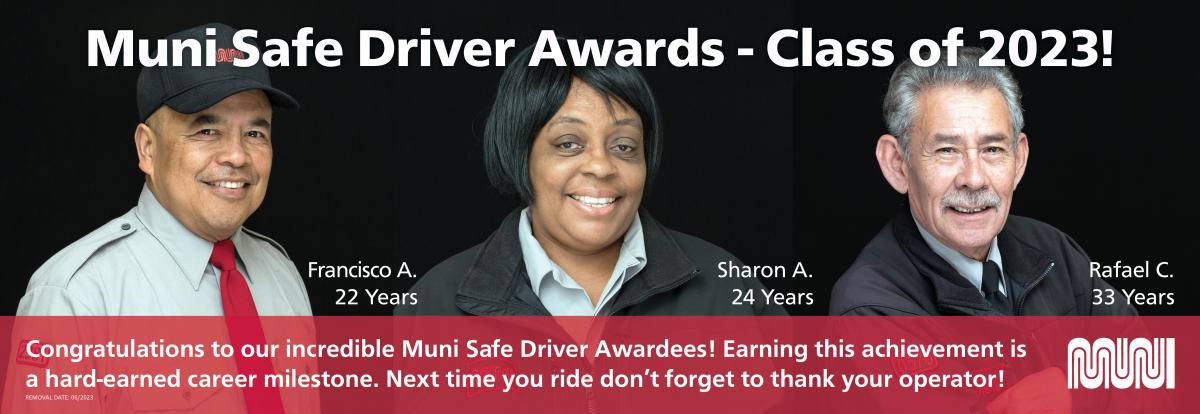
Title: "Muni Safe Driver Awards - Class of 2023! Highlighting Safe Drivers Francisco A. (22 years), Sharon A. (24 years) and Rafael C. (33 years). Text below: "Congratulations to our incredible Muni Safe Driver Awardees! Earning this achievement is a hard-earned career milestone. Next time you ride don't forget to thank your operator!" Muni logo

Keep an eye out for one of our Safe Driver Award PSA’s on your next Muni ride & don’t forget to thank your operator! 

Driving through San Francisco’s winding and hilly terrain in any vehicle is tricky. Doing so in a 40-foot bus, cable car or streetcar is not as easy as our operators make it seem. Despite these challenges, every day our Muni operators connect San Franciscans to where they need to go safely.  

This Saturday marks the 50th Safe Driver Awards, where we celebrate our transit operators who have put safety first in their efforts to deliver you to your home, work and communities. This year 249 operators earned the distinction of being a Muni Safe Driver. Receiving a Safe Driver award is a hard-earned career milestone — to achieve it, operators must have driven at least 1,952 hours during the past fiscal year (July – June) without a preventable incident or collision. Quite a few operators have maintained their Safe Driver status for several decades. Now that’s a dedication we applaud! 

This Saturday, we’ll recognize the following operators for 35+ years of continued safe driving:  

  • Oliverio V. – 48 years (Cable Car) 

  • Lonnie M. – 45 years (Green Division) 

  • Jason L. – 38 years (Green Division) 

  • Eddie C. – 35 years (Cable Car) 

  • Andrew M. – 35 years (Cable Car) 

“I can’t thank our operators enough. They show up to work every day with a commitment to keeping our riders safe. Those recognized at the Safe Drivers Awards ceremony display extraordinarily safe driving track records,” said Jeffrey Tumlin, Director of Transportation. “All our operators have worked throughout the pandemic and in very difficult driving conditions or challenging environments with safety as their top priority. They are the heroes that positively represent our agency daily and deserve the utmost praise for their service!”  

The SFMTA and our city rely on our Muni operators to keep the city moving by providing daily service to hundreds of thousands of riders throughout the Muni network. We not only honor these incredible 249 operators, but all the employees who work hard to make safety the standard by which we operate. Next time you ride, don't forget to thank your operator!  


Published March 08, 2023 at 10:19AM
https://ift.tt/69KJh0E

Thursday, 2 March 2023

Take Muni’s Safety Survey!

Take Muni’s Safety Survey!
By Greer Cowan

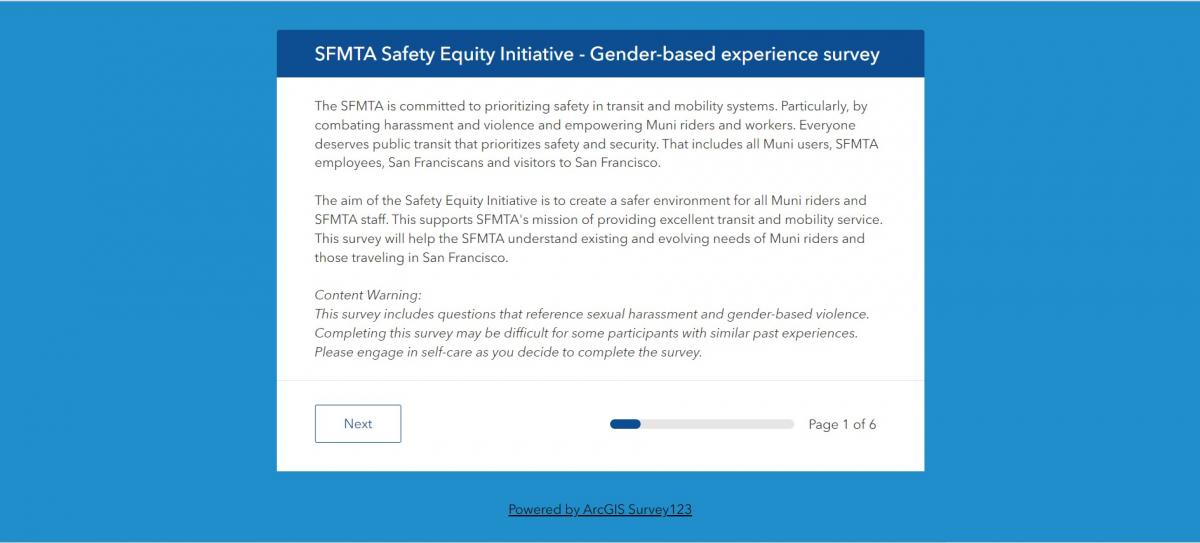
 "Image of the survey introduction. The accessible text of this introduction is available by following the links below.

Everyone should feel safe on Muni. Help make Muni safer by taking the SFMTA’s survey about personal safety and harassment in the Muni system.  

As part of the MuniSafe Safety Equity Initiative launched in August 2022, the SFMTA has partnered with the UCLA Institute of Transportation Studies to better understand Muni riders’ experiences and develop safety recommendations, tools and policies aimed at preventing harassment and assault on Muni. 

Take the 5-minute survey 

Survey information will also help the SFMTA understand Muni customers’ specific safety needs and challenges, and help us identify valuable trends and patterns so we know where, when and how harassment shows up in the Muni system. 

Incidents often go unreported, but the SFMTA is working to change that with new reporting options. As of October 2022, Muni customers can report incidents of  harassment by calling 311, using the 311 mobile app or using the Muni Feedback form at SFMTA.com/MuniFeedback. Each report is investigated by the SFMTA’s Safety and Security Division, and Muni operators are made aware as necessary. 

The SFMTA is committed to the safety, rights and dignity of all riders and working to combat the disturbing and unacceptable  violence we’ve seen on transit. In recent months, we have seen terrible incidents of anti-Asian verbal and physical violence, derogatory hate speech like racial and homophobic slurs, and increased anti-Semitism. In addition, gender-based harassment is one of the most expansive and persistent forms of violence. It is especially pervasive on transit, most often impacting women, girls and gender-expansive people of all ages, abilities, races and ethnicities, cultural and language groups. Studies show that women often feel unsafe on transit, which impacts how often they ride, when they ride and if they ride at all. This is especially true for women and girls from Black, Asian, Latinx, Indigenous and other communities of color. 

Harassment and safety issues on transit can cause women and gender-expansive people – people who don’t conform to traditional gender roles – to shift their travel behavior by traveling at different times of day, choosing longer routes where they feel safer or using rideshares or private vehicles when they can afford to. 

To learn more about the Safety Equity Initiative visit our project page at SFMTA.com/SafetyEquity.  


Published March 02, 2023 at 02:51PM
https://ift.tt/FRAGxf8

Tuesday, 28 February 2023

Black History Lost and Found: Dorothy Jaymes and Accessible Transit

Black History Lost and Found: Dorothy Jaymes and Accessible Transit
By Jeremy Menzies

We continue to celebrate Black History Month by sharing the stories of SFMTA staff whose revolutionary work helped pave the way for future generations of Muni riders. Today, we look at the incredible contributions of Dorothy Jaymes, who played a critical role in helping advance accessibility on transit in San Francisco at a time when little was being done.  

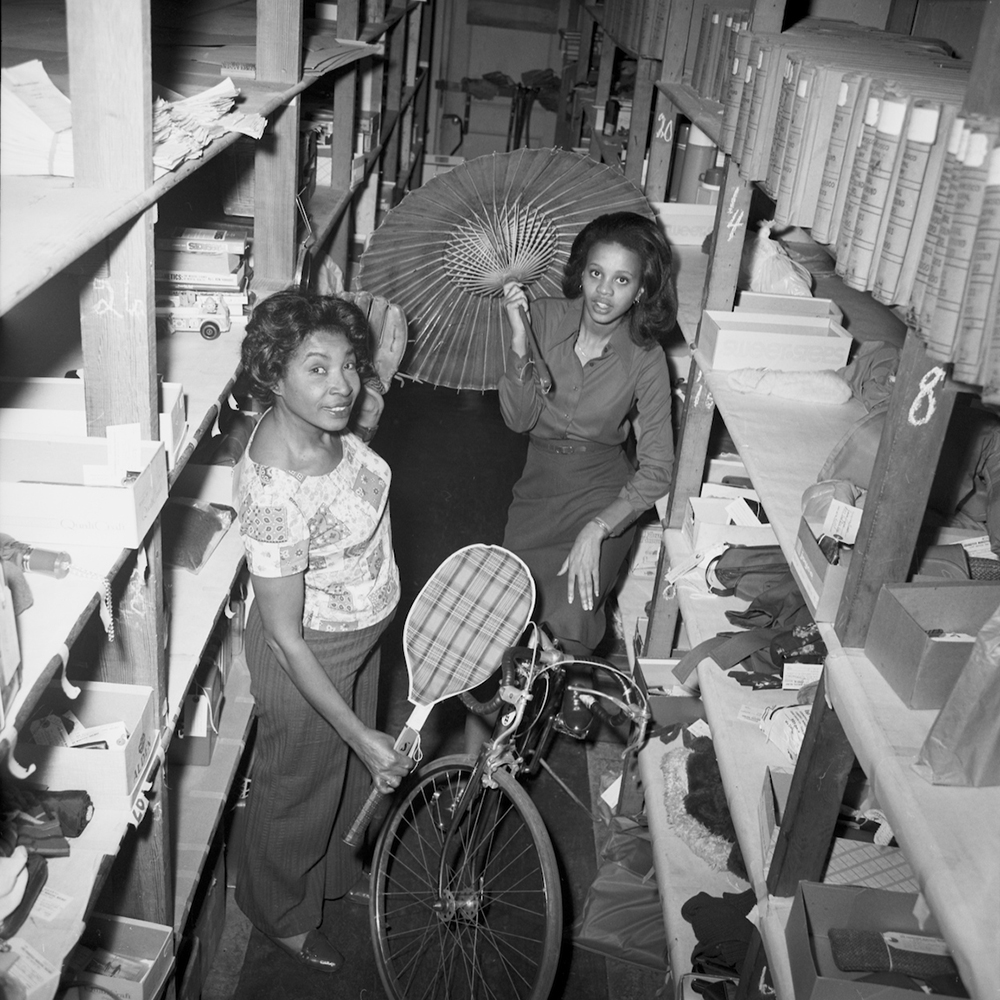
Employees standing in between shelving holding various items such as a umbrella, tennis racket and bicycles. The shelving is filled with additional various items.

Jaymes (left, holding tennis racket) with her assistant, Linda Westry in the Muni Lost & Found Department in 1977. 

Born in Lake Charles, Louisiana, Jaymes started her career in Muni’s Lost & Found Department in the 1970s. According to a 1977  article in the department newsletter, Trolley Topics, she took her job seriously, accounting for every lost item no matter how small or large. 

Around the same time, protests by local disability rights advocates exposed the issues of poor access to public transit to local officials. The city responded in part by seeking contracts for new buses with passenger lifts in 1978 and by establishing the Elderly & Handicapped Program, to which Jaymes was a foundational contributor. 

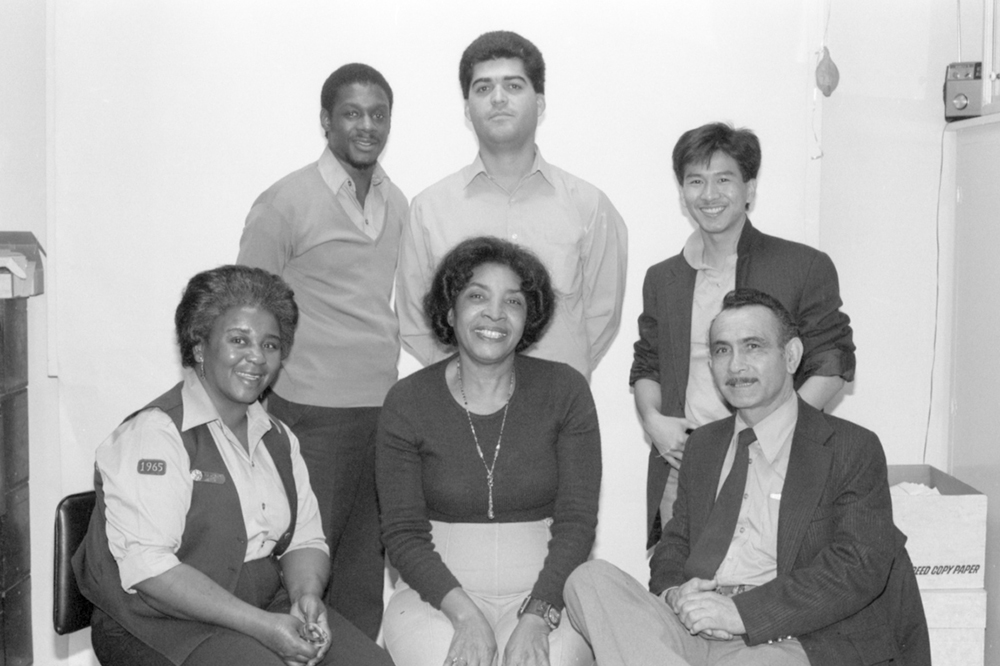
Group photo of employees. The back row of three staff is standing. The front row of three staff is seated. One emplyee is wearing a Muni work vest.

Members of Muni Elderly & Handicapped Office staff in 1985, with Jaymes at center. 

By October 1979, Jaymes headed up the E&H Office and was responsible for processing applications for discounted transit fare cards. An early version of the Free Muni for People with Disabilities Program, this program lowered the cost of transit for people who needed it most. 

Jaymes’ role in the office played a critical part in improving access to transit for all San Franciscans. 

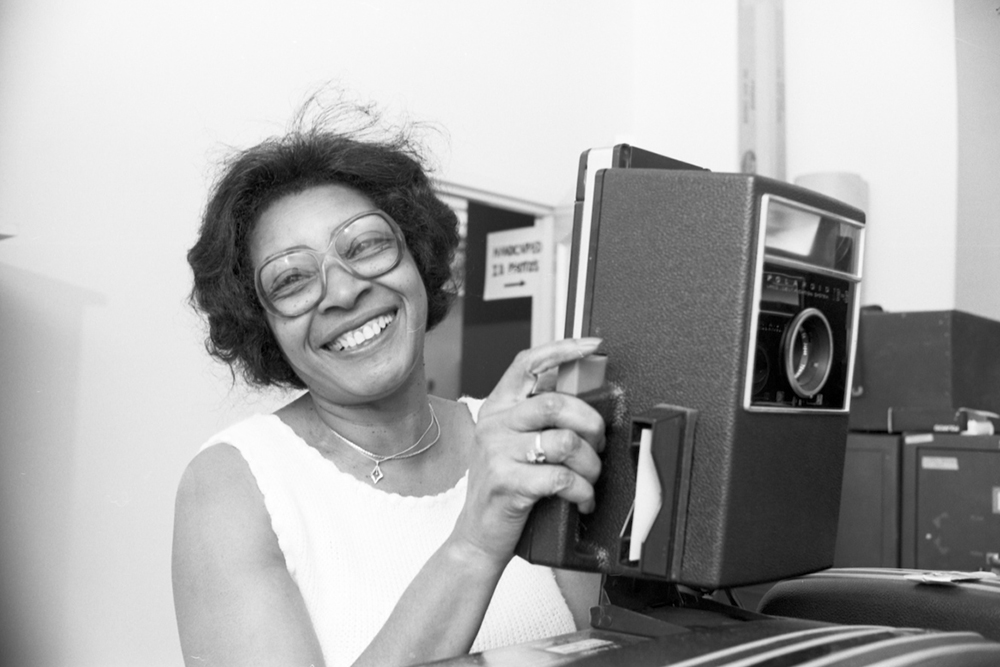
Employee smiling and holding a vintage card camera

Working out of a room in the Muni Photo Department, Jaymes wields an ID card camera in this 1979 photo. 

She left Muni in 1990 and finished out her career with the City of San Francisco at the Planning Department, before retiring in the early 2000s. Jaymes returned to Louisiana in retirement and passed away in 2015 at age 89. One of her former San Francisco co-workers remembered her as “a wonderful woman who was strong and always stood up for the workers.” 

So often, we only hear the stories of major figures and their brave breakthroughs in history. Capturing the full story begins with also celebrating and recognizing the contributions of our “unsung heroes,” whose daily work is still helping Muni riders today.  


Published February 28, 2023 at 09:31AM
https://ift.tt/PGWH9f5

Friday, 24 February 2023

N Judah Motorization Allows City Partners to Complete Critical Maintenance Work

N Judah Motorization Allows City Partners to Complete Critical Maintenance Work
By Jessie Liang

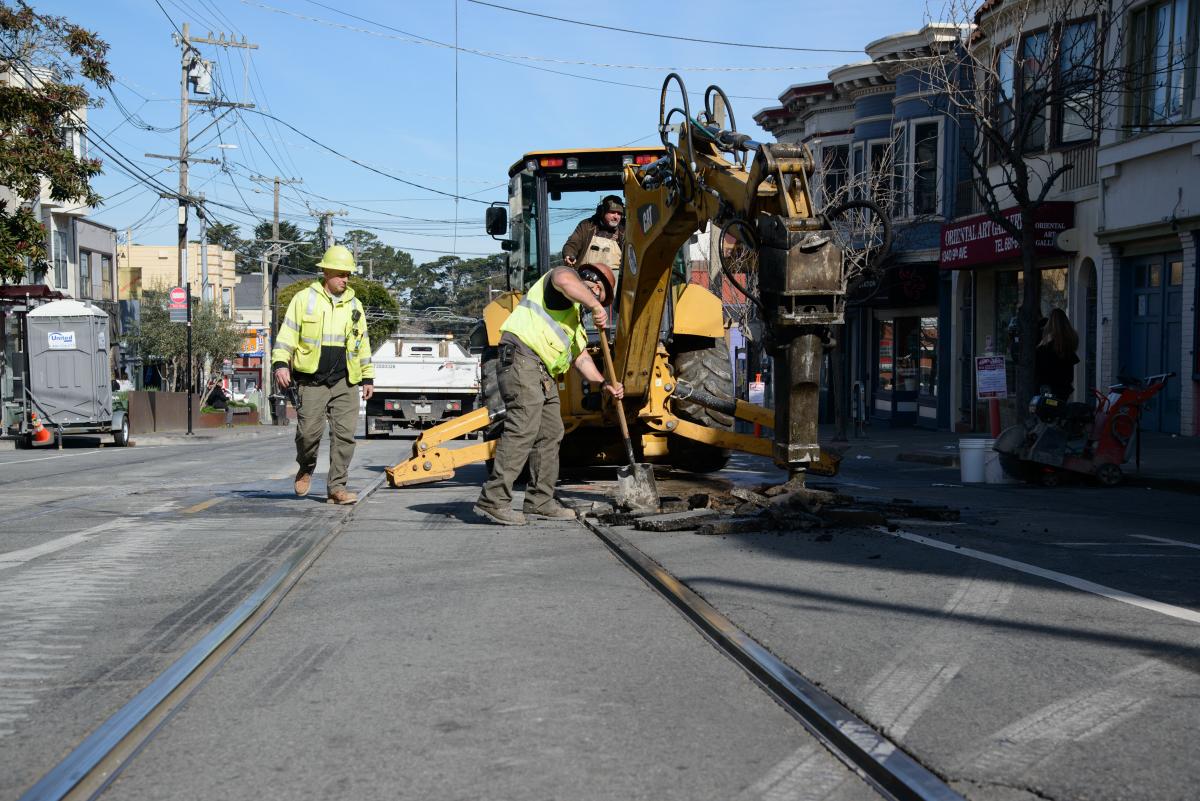
Crew member by the rail track and an excavator with a shovel along the street with houses lined along the side.

MOW Crew Repairing Damaged Pavement Around Tracks on 9th Avenue

Kudos to the SFMTA’s Maintenance of Way (MOW) teams for successfully completing critical work during the N Judah motorization on Feb. 18 and 19. The purpose of the motorization was to provide access for work to be done in Muni’s right of way by Public Works, PG&E and the SFMTA, including utility pole replacements at Cole and Carl, sewer investigation, repairs at 18th Avenue and Judah and 41st Avenue and Judah. The SFMTA was also making improvements to the J Church surface route between Duboce Park and the Balboa Park Station to increase service reliability, enhance street safety and reduce travel times. 

To maximize the benefits of the motorization, the MOW teams took advantage of the opportunity to complete project milestones and critical maintenance work  for traction power and overhead lines, mechanical systems, light rail track and signals. 

To ensure that our riders had the transit service they needed along this corridor, bus shuttles served as a substitute for N Judah rail service between Ocean Beach and Church and Duboce. Train service continued between Church and Duboce and Caltrain. The SFMTA’s communications team also helped to notify customers of the alternative service plan during the rail shutdown through printed, digital and audio messaging and wayfinding ambassadors.  

Muni maintenance initiatives such as these aim to make subway operations more reliable for customers and prevent future breakdowns. The coordination by our teams across divisions is building on the successful Fix It! Weeks we had last year, which have helped reduce major delays in the Muni Metro by more than 80 percent. We look forward to more to come at our first Fix It! Week scheduled for March 16 to 22.  

For updates, please visit SFMTA.com/NShuttle. For real time service advisories, please follow us on our Twitter at @SFMTA_Muni.  


Published February 24, 2023 at 05:25PM
https://ift.tt/fDdHo4Z

Wednesday, 15 February 2023

Scooter Permittees Receive Feedback from Students with Disabilities

Scooter Permittees Receive Feedback from Students with Disabilities
By Maddy Ruvolo

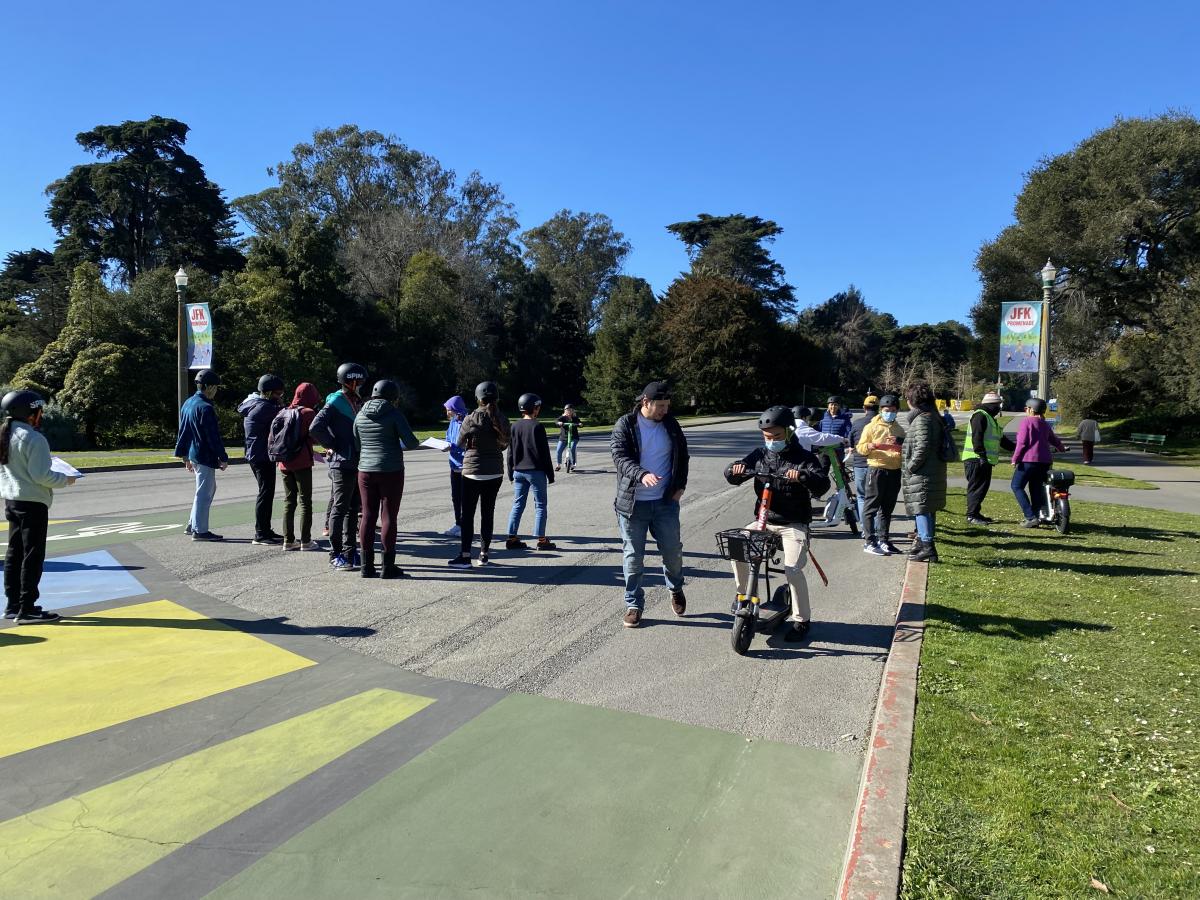
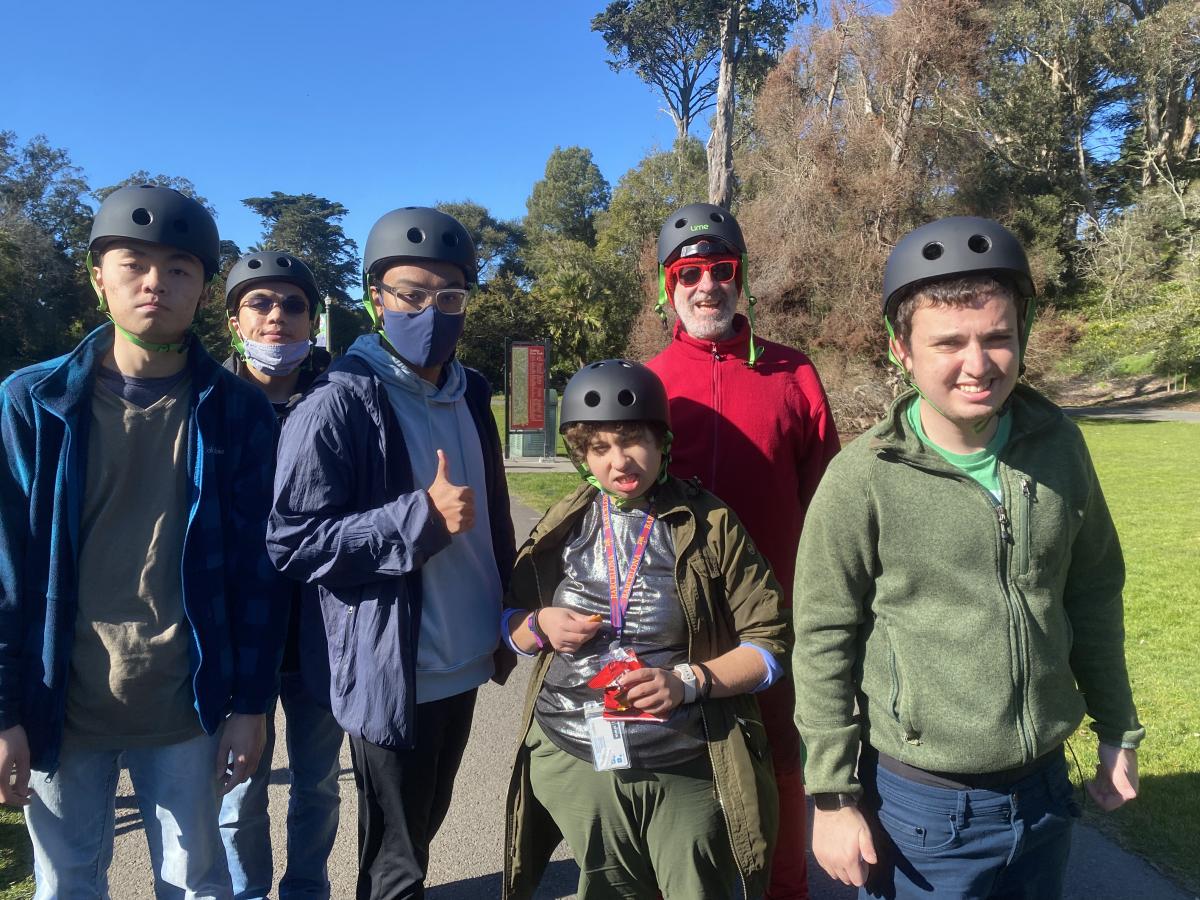
On a recent Monday in Golden Gate Park, 28 students and staff from AccessSFUSD gathered on JFK Drive to test-ride adaptive scooters. The group took turns riding adaptive devices from two scooter companies permitted to operate in the city, Lime and Spin. Adaptive devices are designed to meet the needs of riders with a variety of disabilities and provide additional stability features, such as a seat, a wider base, and an additional wheel. After trying the scooters, the students shared their feedback about a variety of design elements, including the wheels, seat, throttle, basket location, foot plate width, and the ease of getting started. 

A group of AccessSFUSD students and staff rides adaptive scooters on JFK Drive in Golden Gate Park Adaptive scooter demo in Golden Gate Park
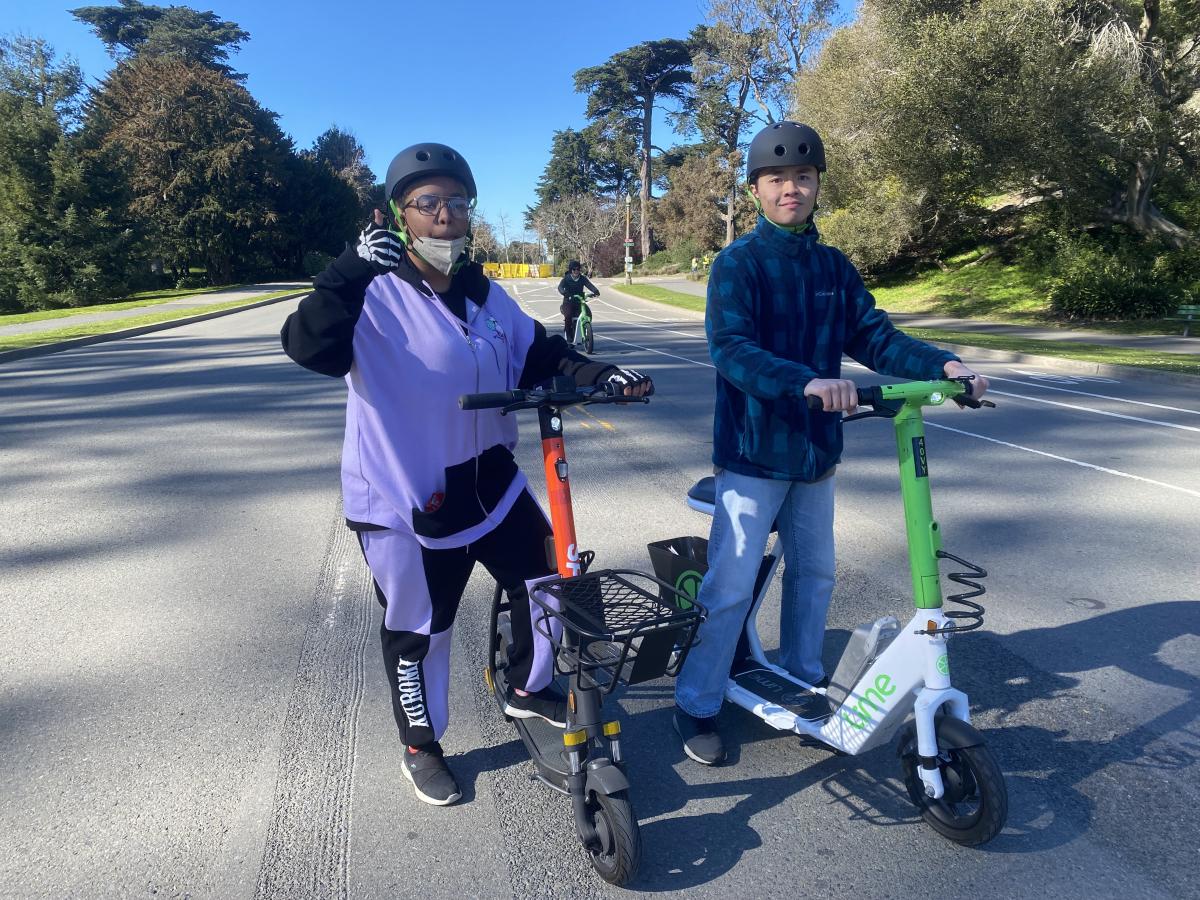
Students embraced the opportunity to ride scooters and provide feedback. AccessSFUSD is a community-based program for students 18-22 with disabilities. Located across 11 sites in San Francisco, the program focuses on teaching functional life skills within the community setting. Developing advocacy skills is a key component of the program, and students enthusiastically shared their input with the scooter companies. Heidi Seretan, Special Education Department Head at AccessSFUSD: The Arc said, “It was a glorious day to ride and advocate on car-free JFK in Golden Gate Park, San Francisco’s own backyard.”  

One student shared they had an “amazing first time” riding a scooter and described it as “the best.” Students also gave thoughtful constructive criticism, explaining when a particular seat height or device design didn’t work for them. And one student said that they “need more practice... but I'm getting the hang of it.”   

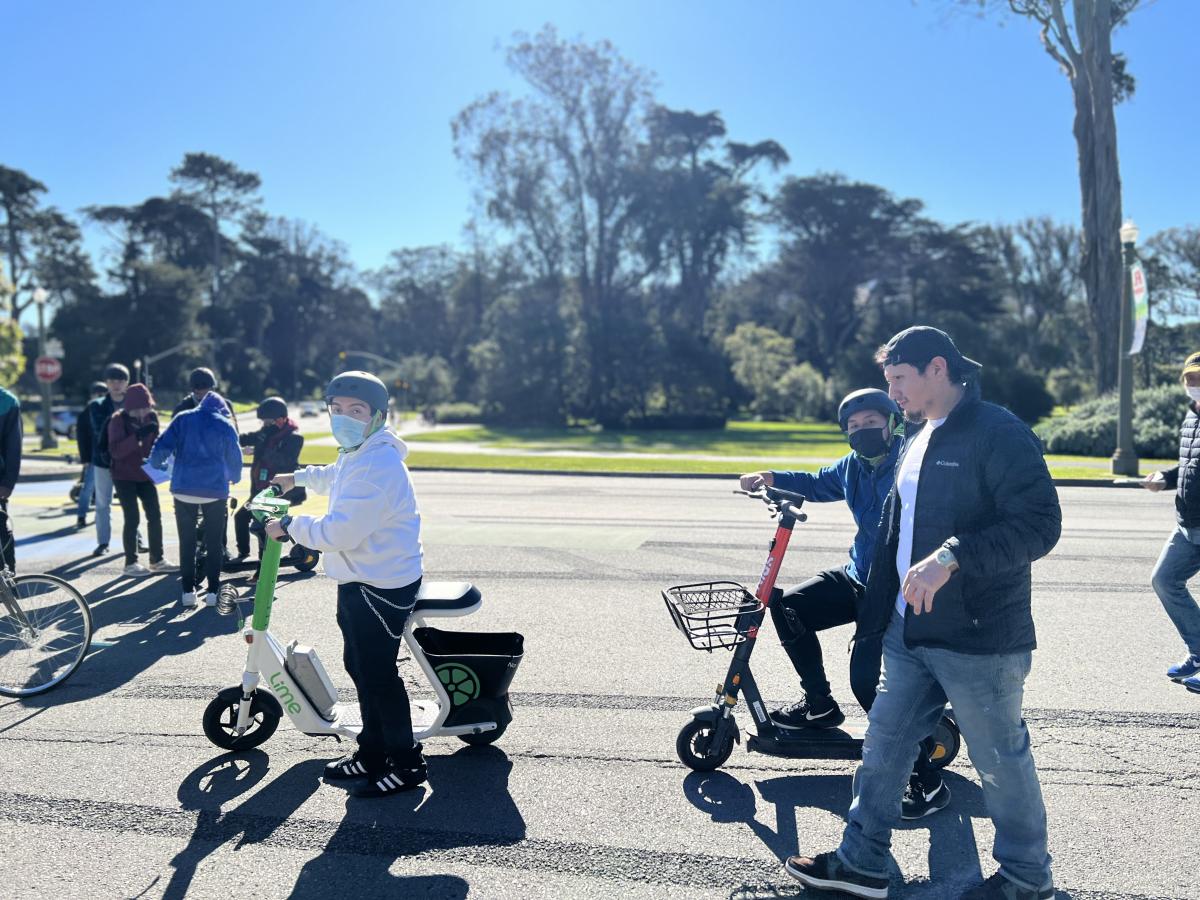
AccessSFUSD students standing with Lime and Spin scooters; one student is giving a thumbs upThumbs up to adaptive devices

Staff from Spin and Lime were on-hand to help students get rolling and to answer any questions. Both scooter permittees expressed their appreciation for the comments from AccessSFUSD students. Lime shared that they “enjoyed hearing directly” from the students and that their “hardware team has already begun reviewing students’ feedback to find ways to continue to refine our vehicles.” Spin echoed the importance of the students’ input, noting that “the direct feedback we gather from local San Francisco students and residents on our adaptive program is critical to continuously improving and more equitably serving the entire community.” 

AccessSFUSD students on Lime and Spin scooters in Golden Gate ParkAccessSFUSD students enjoying scooters 

This is the second time the SFMTA has partnered with AccessSFUSD and scooter permittees to host an adaptive scooter demonstration, with the first event held in fall 2021. Any organization interested in partnering on a similar adaptive scooter event should get in touch with Maddy Ruvolo with our Accessible Services team by emailing Maddy.Ruvolo@sfmta.com.  

A group of AccessSFUSD students wearing helmetsStudents ready to ride

The SFMTA has prioritized adaptive scooters as part of our Powered Scooter Share Permit Program. The three scooter permittees — Bird, Spin and Lime — are required to provide adaptive scooters as a minimum of 5% of their on-street fleet. The permittees also offer different types of adaptive devices through their Complementary Adaptive Programs, which provide longer-term adaptive rentals free of charge through scheduled drop-off and pick-up. We encourage all who are interested to try an adaptive scooter, and stay tuned for more scooter demonstration events coming later this year! 


Published February 15, 2023 at 09:24AM
https://ift.tt/fBpzAI3