Thursday, 14 December 2023

We all love Valencia Street. Let’s make sure it works for everyone.

We all love Valencia Street. Let’s make sure it works for everyone.
By Amanda Eaken

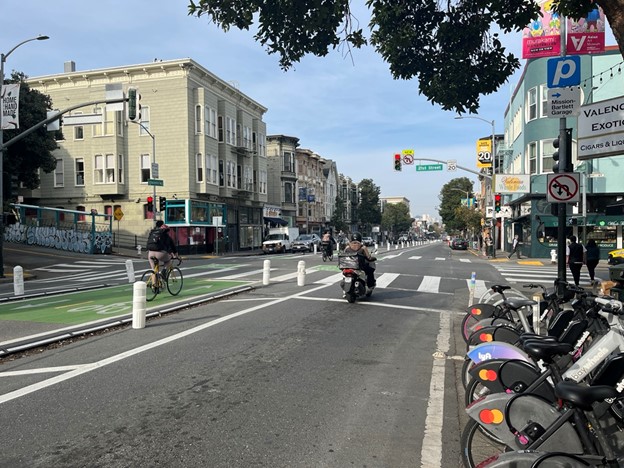
People bike down a center-running protected bike lane in the middle of a street with motorcycles and cars in the outer traffic lanes.

The center running bikeway installed in 2023 as part of the mid-Valencia pilot.

San Francisco is a high-density city. This helps neighborhoods like the Mission thrive because they are where people live, work, visit restaurants and shop at our small businesses. It’s where different communities intersect with different needs. It’s where we come together. It’s the best of urban living.

When we make decisions about improving our neighborhoods, we have to consider all of this. How can we advance goals that we all share, even when those goals conflict with each other? What’s happening right now on Valencia is a perfect example of this.

Valencia is one of our city’s amazing merchant corridors with incredible restaurants and retailers that draw people from all over San Francisco and beyond. It’s also a key artery for bicycle commuters – with thousands of bicyclists using Valencia every day to avoid the hills to the west and the bus and car traffic to the east. And it’s not particularly safe. Valencia is on our high injury network, which is the 12 percent of streets that account for 68 percent of severe and fatal traffic crashes.

To improve safety, we created a pilot program to use a center-running lane for bicyclists with a goal of advancing safety, but also preserving key support for our small businesses in the neighborhood. This pilot was developed in conversation with the merchants and residents after exploring other alternatives. 

Before the pandemic, our plan had been to create a protected bike lane running along the curb. But Valencia changed during the pandemic. The street now has a plethora of Shared Spaces parklets, which have been a huge benefit for our neighborhoods by creating economic opportunities and more vibrant streets. The merchants asked us to find another option because a curb running bike lane would require many of those parklets – and much of the parking -- to be removed.

As we talked with the community, we realized that the most underutilized part of the street was the median. A bike lane placed in the median would preserve most of the parking and loading spaces and ensure that the business parklets could remain in place.
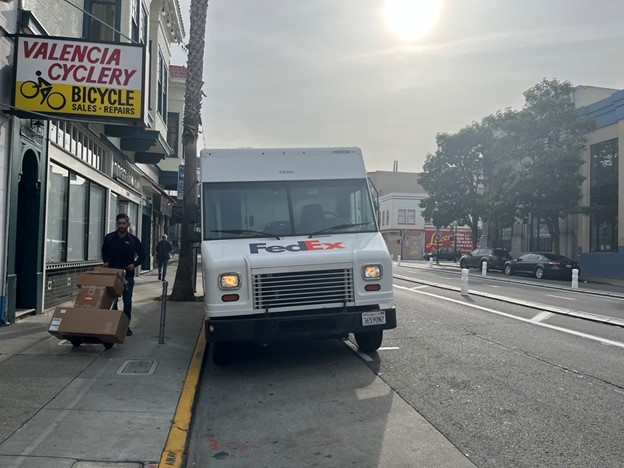
A FedEx delivery truck pulled to the side of the road with the driver moving boxes on a dolly loader.

Loading zones have been expanded on Valencia to support businesses in the corridor.

When we opened the new bike lane, we also added significantly more space for the loading that’s so important to the businesses – for taxis and ride-hail services and for delivery trucks. We added more than 30 metered spaces on side streets to support customer turnover. In response to merchant concerns that there still wasn’t enough general parking, we recently started to allow customer parking at over one-third of the loading zones at certain times in the afternoons and at most of them in the evenings.

While the pilot looks promising, we’re still analyzing the data we’ve collected to date. Meanwhile, Valencia Street businesses are telling us that the new design isn’t working for them or their customers. We’ve heard mixed reviews from bike lane users – some say they feel much safer than before and enjoy the new protected space, others say that it’s still not safe enough. 

The key point right now is that this is a pilot. We are trying something and seeing how it works. Pilots are meant to be evaluated and either adopted, adjusted, or redone with new information. So let’s look at what the potential options are for Valencia Street.

First, we could go back to the way things were. The problem with that is that it creates an unsafe street for bicyclists and will lead to collisions. Biking and driving on Valencia felt chaotic and unpredictable. Therefore, this option is not what we want to do.

Second, we could stick with the current pilot and keep making changes in response to community concerns. We’ll need to stay in close touch with the Valencia Street merchants and the bicyclists who aren’t excited about the center-running bike lane to make sure we’re being as responsive as they need us to be.

Third, we could go back to our original parking protected bike lane plan – meaning a bike lane running between the sidewalk and parked cars on the street. This design is more familiar to San Franciscans. The trade-off here is that this type of protected bike lane will require the removal of parklets and the loss of more than half of the curbside parking and loading. So that’s a conversation we’re starting to have.

There are no easy decisions when it comes to Valencia Street. So, we need to come together and be open minded as we discuss what’s best for the economic vitality of the neighborhood, for safety, and for the people who live and work on Valencia Street, as well as those who visit. That’s the work we are doing now, and we appreciate everyone who is involved and engaged in these conversations.

By continuing to listen and adjust, we can make sure Valencia succeeds as a place for people to be, to enjoy and to move. 


Published December 14, 2023 at 03:50PM
https://ift.tt/AIkeszi

We all love Valencia Street. Let’s make sure it works for everyone.

We all love Valencia Street. Let’s make sure it works for everyone.
By Jeffrey Tumlin

People bike down a center-running protected bike lane in the middle of a street with motorcycles and cars in the outer traffic lanes.

The center running bikeway installed in 2023 as part of the mid-Valencia pilot.

San Francisco is a high-density city. This helps neighborhoods like the Mission thrive because they are where people live, work, visit restaurants and shop at our small businesses. It’s where different communities intersect with different needs. It’s where we come together. It’s the best of urban living.

When we make decisions about improving our neighborhoods, we have to consider all of this. How can we advance goals that we all share, even when those goals conflict with each other? What’s happening right now on Valencia is a perfect example of this.

Valencia is one of our city’s amazing merchant corridors with incredible restaurants and retailers that draw people from all over San Francisco and beyond. It’s also a key artery for bicycle commuters – with thousands of bicyclists using Valencia every day to avoid the hills to the west and the bus and car traffic to the east. And it’s not particularly safe. Valencia is on our high injury network, which is the 12 percent of streets that account for 68 percent of severe and fatal traffic crashes.

To improve safety, we created a pilot program to use a center-running lane for bicyclists with a goal of advancing safety, but also preserving key support for our small businesses in the neighborhood. This pilot was developed in conversation with the merchants and residents after exploring other alternatives. 

Before the pandemic, our plan had been to create a protected bike lane running along the curb. But Valencia changed during the pandemic. The street now has a plethora of Shared Spaces parklets, which have been a huge benefit for our neighborhoods by creating economic opportunities and more vibrant streets. The merchants asked us to find another option because a curb running bike lane would require many of those parklets – and much of the parking -- to be removed.

As we talked with the community, we realized that the most underutilized part of the street was the median. A bike lane placed in the median would preserve most of the parking and loading spaces and ensure that the business parklets could remain in place.

A FedEx delivery truck pulled to the side of the road with the driver moving boxes on a dolly loader.

Loading zones have been expanded on Valencia to support businesses in the corridor.

When we opened the new bike lane, we also added significantly more space for the loading that’s so important to the businesses – for taxis and ride-hail services and for delivery trucks. We added more than 30 metered spaces on side streets to support customer turnover. In response to merchant concerns that there still wasn’t enough general parking, we recently started to allow customer parking at over one-third of the loading zones at certain times in the afternoons and at most of them in the evenings.

While the pilot looks promising, we’re still analyzing the data we’ve collected to date. Meanwhile, Valencia Street businesses are telling us that the new design isn’t working for them or their customers. We’ve heard mixed reviews from bike lane users – some say they feel much safer than before and enjoy the new protected space, others say that it’s still not safe enough. 

The key point right now is that this is a pilot. We are trying something and seeing how it works. Pilots are meant to be evaluated and either adopted, adjusted, or redone with new information. So let’s look at what the potential options are for Valencia Street.

First, we could go back to the way things were. The problem with that is that it creates an unsafe street for bicyclists and will lead to collisions. Biking and driving on Valencia felt chaotic and unpredictable. Therefore, this option is not what we want to do.

Second, we could stick with the current pilot and keep making changes in response to community concerns. We’ll need to stay in close touch with the Valencia Street merchants and the bicyclists who aren’t excited about the center-running bike lane to make sure we’re being as responsive as they need us to be.

Third, we could go back to our original parking protected bike lane plan – meaning a bike lane running between the sidewalk and parked cars on the street. This design is more familiar to San Franciscans. The trade-off here is that this type of protected bike lane will require the removal of parklets and the loss of more than half of the curbside parking and loading. So that’s a conversation we’re starting to have.

There are no easy decisions when it comes to Valencia Street. So, we need to come together and be open minded as we discuss what’s best for the economic vitality of the neighborhood, for safety, and for the people who live and work on Valencia Street, as well as those who visit. That’s the work we are doing now, and we appreciate everyone who is involved and engaged in these conversations.

By continuing to listen and adjust, we can make sure Valencia succeeds as a place for people to be, to enjoy and to move. 


Published December 14, 2023 at 03:50PM
https://ift.tt/AIkeszi
SFMTA Awarded Federal Grant for Safe Streets

SFMTA Awarded Federal Grant for Safe Streets
By Erica Kato

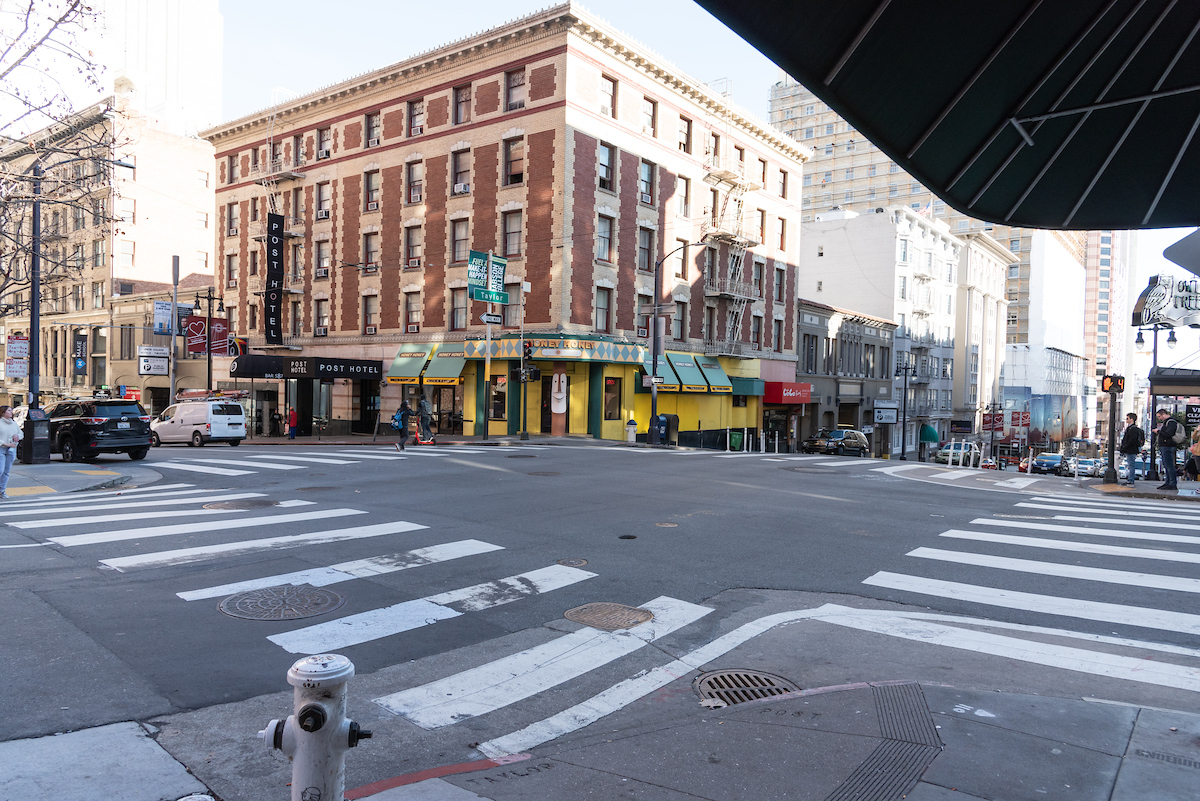
An intersection in San Francisco with crosswalks, surrounding tall buildings and trees as people walk towads the intersection.Street safety improvements are coming to San Francisco's Tenderloin with the help of a federal grant. 
We are thrilled to announce we are the recipient of an $8 million grant from the US Department of Transportation (US DOT) Safe Streets and Roads for All (SS4A) Grant Program. The funds will be used for street improvements that are part of the Tenderloin Traffic Safety improvements Project. We are thankful to Speaker Emerita Nancy Pelosi, Mayor London Breed and Supervisor Dean Preston for their strong advocacy and letters of support in our application.  

The Safe Streets and Roads for All (SS4A) Grant Program was established by President Biden’s historic infrastructure law, and provides $5 billion over five years for regional, local and Tribal initiatives — from redesigned roads to better sidewalks and crosswalks — to prevent deaths and serious injuries on the nation’s roadways.    

Larkin Street traffic signal modifications and left-turn phasing - $7M  

  • Traffic signal upgrades and left-turn phasing, including larger 12-inch signal heads and mast arms to enhance signal visibility and pedestrian signal improvements, like Pedestrian Countdown Signals, Accessible Pedestrian Signals, upgraded curb ramps and streetlighting.  

  • Up to 11 intersections with traffic signal modifications and left-turn phasing:  

  1. Larkin/Pine  

  2. Larkin/Bush  

  3. Larkin/Geary  

  4. Larkin/O’Farrell  

  5. Larkin/Ellis  

  6. Larkin/Eddy  

  7. Larkin/Turk  

  8. Larkin/Golden Gate  

  9. Larkin/McAllister  

  10. Polk/Golden Gate  

  11. Polk/McAllister    

Golden Gate Greenway - $1.05M  

  • This is a community-initiated project that was started by St Anthony Foundation and the 100 Golden Gate Greenway Coalition to reduce the 100 block of Golden Gate Avenue from two to one-lane of vehicle traffic, reconfigure the overhead trolley wires and to activate Shared Spaces on both sides of the roadway for community activities.   

  • During the COVID pandemic, St. Anthony’s closed the block daily to provide essential community services (i.e., food pantry, COVID testing), and this inspired them to think bigger about how this block can better serve the community permanently, thus the Golden Gate Greenway project.  

   Bikeway Protected Corners - $950K  

  • The project proposes bikeway protected corners at 6 intersections in the Tenderloin that are on the High Injury Network. Turk Street, Golden Gate Avenue and Polk Street are the main bikeways through the Tenderloin neighborhood.  

    • These bikeways will see newly constructed protected corners using concrete curbs and/or speed humps to slow turning traffic and create a safer, separated crossing for people on bikes. The protected corner physically separates people walking/biking and driving, and angles drivers so that it is easier for them to see and yield to people walking and biking.  

CBO-led communication and outreach - $1M  

  • Work with community partners to advance some of the Tenderloin Community Alternatives to Police for Traffic Enforcement (TLCAP) recommendations to traditional traffic enforcement work, including multi-lingual education campaigns and outreach around speeding and sidewalk safety campaign to high-risk populations.  

  • Work with community partners to deepen outreach to vulnerable road users such as seniors, people with disabilities and monolingual populations to raise awareness of proposed street design/engineering work.  

  • Fund education and communications’ consultant to design and develop all education materials, and purchase and coordinate any campaign media buys, translations and printing to reach large members of the public to increase awareness, build support and promote a culture that prioritizes traffic safety.  

For more information, please visit the Tenderloin Traffic Safety Improvements Project webpage (SFMTA.com/TenderloinSafety). 


Published December 14, 2023 at 02:05PM
https://ift.tt/YPCVuwq

‘Muni Is My Ride’: A Celebration of Muni Riders and Operators

‘Muni Is My Ride’: A Celebration of Muni Riders and Operators
By Sophia Scherr

Muni is more than just a system of buses, trains, streetcars and cable cars. It's a living entity that pulses through the streets of San Francisco, connecting riders to the neighborhoods and people that they love. In the vibrant pages of "Muni Is My Ride," artist Keith Ferris and writer Lia Smith invite readers to celebrate the soul of Muni.  

The project began as a collection of sketches depicting interesting passengers that caught Ferris’ eye. After a few years, he realized those sketches were something special: a mosaic of people who make up the heart of Muni. Ferris and Smith, who are both passionate about the transit system, found inspiration in each other as the project unfolded. What started as a passenger showcase grew to include portraits of Muni operators.  

Ferris and Smith then embarked on a journey (during COVID no less!) to capture the essence of riding and operating Muni. The pair conducted in-depth interviews and lightning-fast portrait drawing sessions with Muni operators whenever and wherever they could. The interviewing process wasn’t easy at first, as some operators were not eager to open up. However, through word of mouth, a handful of operators agreed to share their stories. The diversity of the operators’ backgrounds and perspectives adds more layers to the narrative of what Muni means to people.  

Ferris and Smith found unexpected joy and serendipity as they were creating the book, making new friendships and improving their marriage, highlighting the magic of Muni in facilitating connections.  

As readers make their way through the pages of "Muni Is My Ride," Ferris and Smith hope they’ll develop a deep appreciation for our system and its dedicated operators and staff.  

“Muni is more than just a mode of transportation,” says Smith. "In a world that can feel increasingly individualistic, Muni offers a chance for people to interact with one another, fostering a sense of community and shared humanity”.  

The authors also encourage readers to recognize the humanity of the operators who provide our city with such an essential service. Ultimately, the book is intended to serve as a reminder of the shared responsibility that binds San Franciscans to their public transit system and to inspire readers and riders to take pride in Muni.  

 “Muni Is My Ride” is the perfect gift for the Muni or public transportation lover in your life this holiday season, as it offers readers a glimpse into the people that make our system so unique. You can find it at the following locations: 

  •  Local independent bookstores Bird & Beckett, Christopher's, Dog Eared Books, Fabulosa, Green Apple on the Park, the Market Street Railway Museum, Medicine for Nightmares and the Russian Hill Bookstore 

  • Online book sales through The Green Arcade

  • The San Francisco Public Library 


Published December 14, 2023 at 10:23AM
https://ift.tt/ZjgKV6s

Wednesday, 13 December 2023

“120 years: SFMTA Photo Archive 1903-2023” Exhibit Opens Dec. 16

“120 years: SFMTA Photo Archive 1903-2023” Exhibit Opens Dec. 16
By Jeremy Menzies

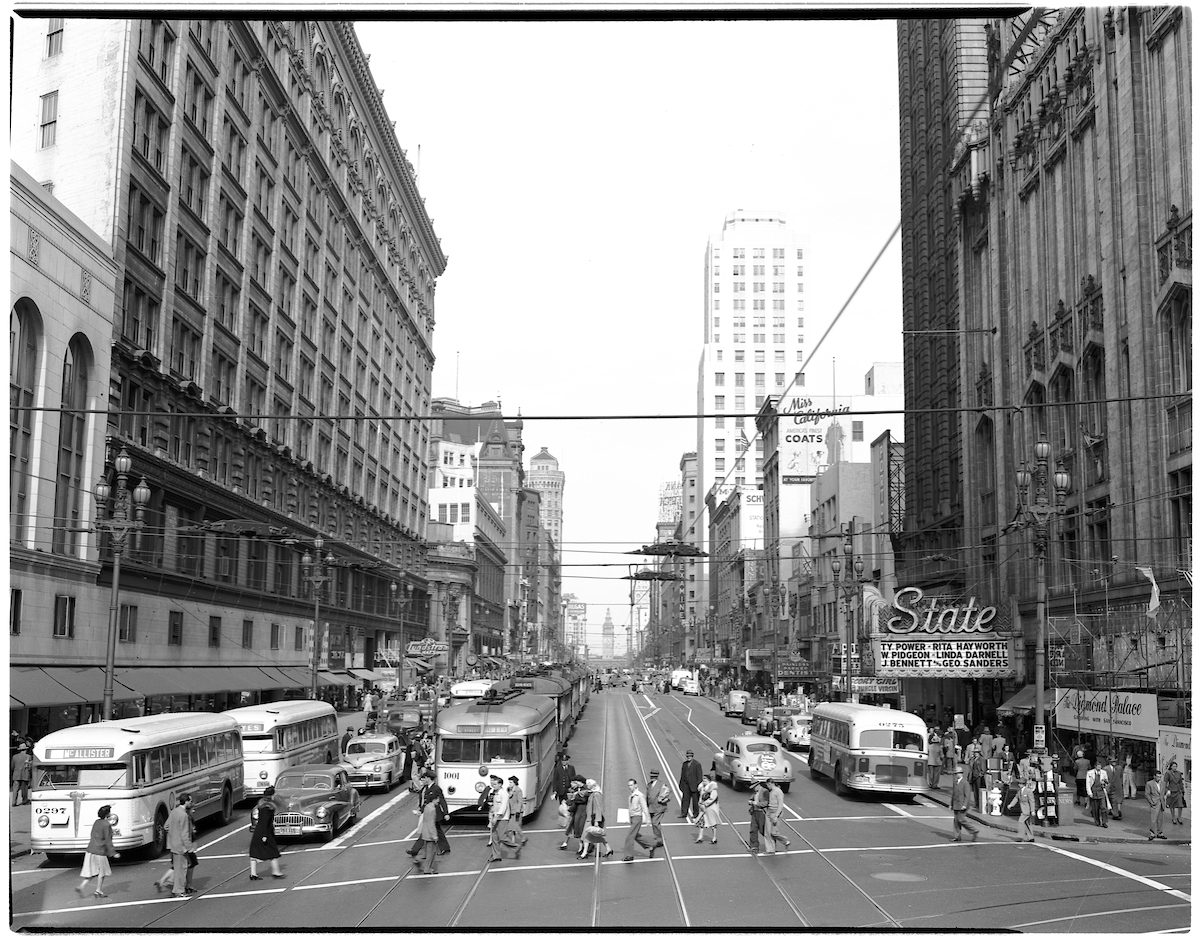
On Saturday, Dec. 16, a new exhibit featuring photographs from the SFMTA Photo Archive is opening at the Harvey Milk Photo Center with a reception from 2 – 5 p.m. The show,“120 years: SFMTA Photo Archive 1903-2023" taps into twelve decades of image making by photographers working for our city’s transit agencies.  

A black and white vintage photo of a busy street with buses and people crossing the street.View east towards Ferry Building on Market Street from 4th Street, October 1, 1948.
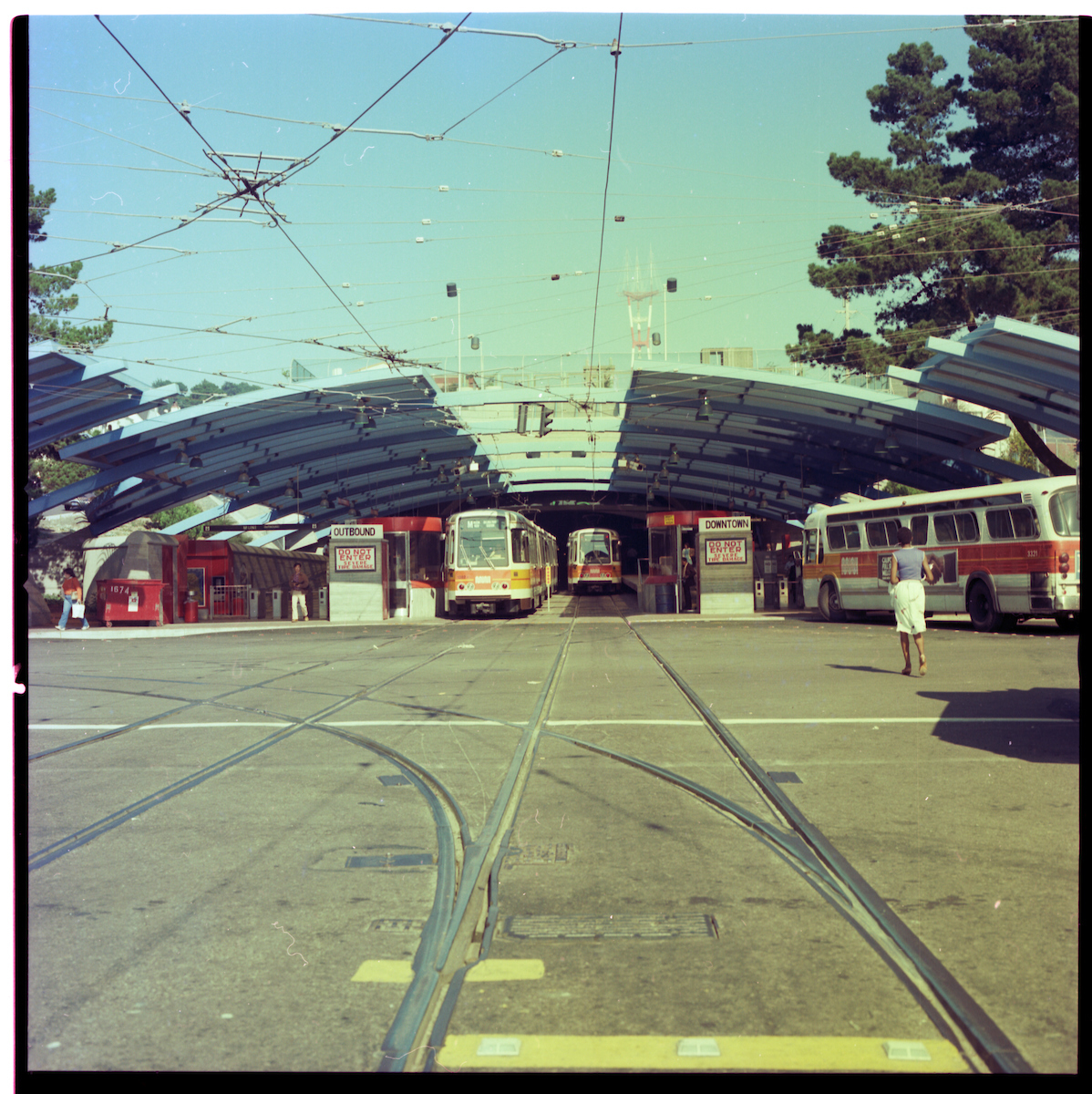
Since 1903, the development of San Francisco has been documented through the lens of our transportation system by more than two dozen people. Today, these photographs make up the vast collections in the SFMTA Photo Archive. With well over 100,000 images, the archive is one of the largest repositories of photos focused on our transit network. 

A colorized vintage photo of two subway trains at the tunnel entrance of West Portal station in San FranciscoWest Portal Station with new Light Rail Vehicles at platform, February 18, 1982. 
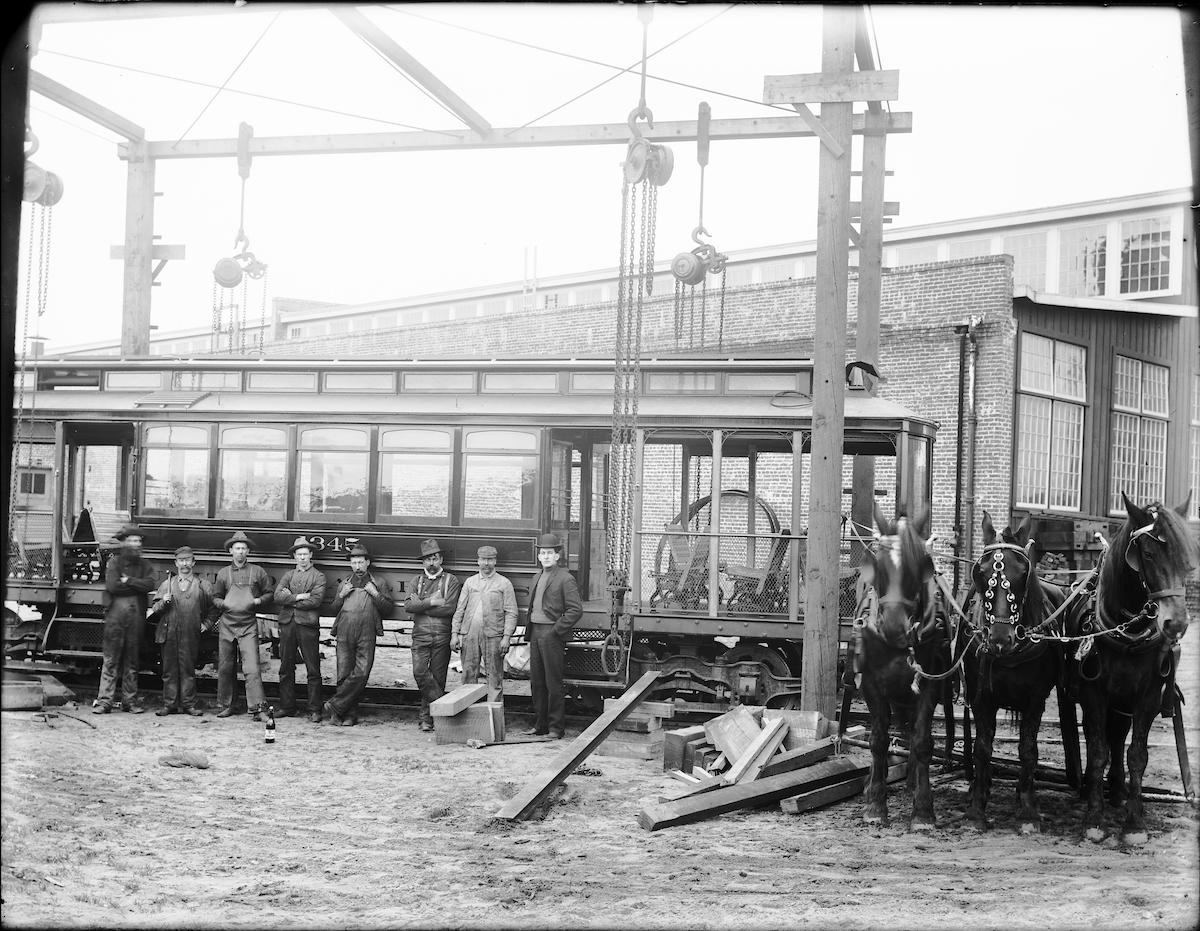
From glass plate negatives to digital image sensors, the tools of the trade may have changed, but the work of capturing our city’s ever-evolving transportation system still is much the same. Everyday scenes of San Franciscans traversing the streets, historic moments in our local history and inexplicably beautiful views of normally mundane subjects come alive through the black and white and color prints on display in the exhibit. 

A black and white photo of an early 20th Century streetcar surrounded by a work crew and horses.Shop crew with new streetcar and team of horses at Southern Pacific Railroad yard, January 1904.
120 years: SFMTA Photo Archive 1903-2023 runs from Dec. 16, 2023, through Feb. 3, 2024. The gallery is located at 50 Scott Street on the west end of Duboce Park and is open Tuesday-Thursday 3:00pm-8:30pm and Sat 11:00am-4:30pm. Take Muni Metro, (N Judah, J Church, K Ingleside or M Oceanview), 22 Fillmore, 6 Parnassus, 7 Haight/Noriega or 37 Corbett to get to the gallery. 


Published December 13, 2023 at 09:54AM
https://ift.tt/Dnfa4jB

Monday, 11 December 2023

SFMTA Pilots a New Artistic Way to Store Bikes

SFMTA Pilots a New Artistic Way to Store Bikes
By Jason Hyde

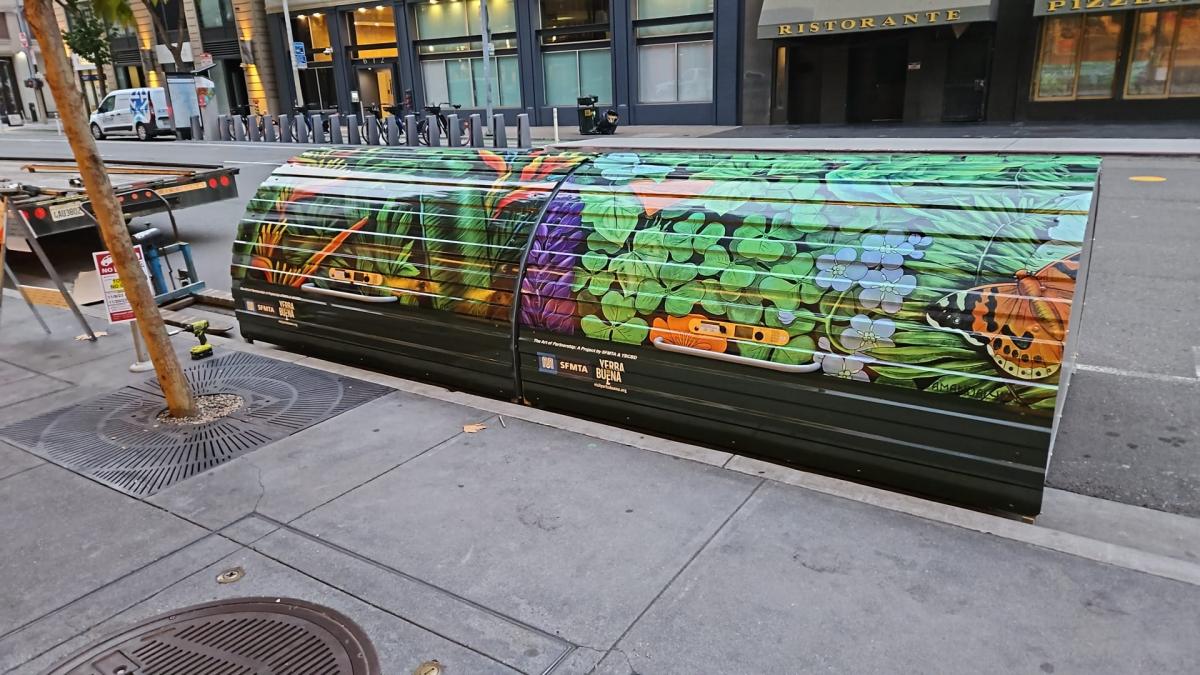
A picture of the new bike hangar storage method by the SFMTA. The hangar is decorated with artwork of plants, and is on the side of the street next to the curb.The SFMTA’s new bike hangar storage. 

Are you looking for a more secure, and affordable new way to store your bike around town? The SFMTA recently installed two new eye-catching bike hangars decorated by local artists with room for up to 12 bikes per hangar for just 5 cents per hour.  

These hangers are a two-year Mayor-directed pilot intended to provide secure, medium-term bike storage. Hangars have limited, monitored access to make them more secure than our short-term bike racks.  

We have partnered with the Yerba Buena Community Benefit District (YBCBD) and eLock/BikeLink on this pilot. Customers will need to download the BikeLink app to use the hangars and are encouraged to use their own bike lock inside them for added security. The hangar doors are designed with a hydraulic assist to facilitate opening and closing.

We will assess whether the bike hangars are a good fit for San Francisco based on usage (number of rentals per day, average rental length), security, turnover and more. We’ll also be asking for feedback to evaluate user experience and identify improvement opportunities. 

The hangars are located at 4th & Minna streets near the Metreon and Howard & 2nd streets. They should be available to the public by early next year after some additional testing.  

More information will be available prior to the public launch at our Bike Parking page (SFMTA.com/BikeParking).  


Published December 11, 2023 at 12:12PM
https://ift.tt/o4rNnA7

Monday, 4 December 2023

New MuniMobile® App Available Today!

New MuniMobile® App Available Today!
By Kharima Mohamed

A person holds a smartphone using the new MuniMobile app.

The SFMTA has released a new version of the MuniMobile® app, providing enhanced trip planning, service alerts and real-time transit predictions. The mobile app will continue to offer mobile ticketing people can access on their smartphones.  

Meanwhile, the original version of the MuniMobile® app will be phased out and shut down on Monday, Jan. 15, 2024.  

What does that mean for MuniMobile customers? 

MuniMobile® customers now can now download the new app to their smartphone. Customers will need to create a new user account with the new MuniMobile® app as accounts are not transferrable. Anyone with active tickets on the previous MuniMobile® app can use those tickets until they expire or until Jan. 15, whichever comes first.  

However, as of today (Dec. 4, 2023), customers using the previous MuniMobile® app will not be able to buy new tickets. In order to ensure an easy transition before your next Muni trip, please take a moment to download the new MuniMobile® app and set up your new user account.  The new app also includes a short tutorial, so be sure to check it out.  

Have questions? See the MuniMobile® FAQ page to help refresh your memory on MuniMobile policies and information. 

You can also visit our fares page (SFMTA.com/Fares) for more information on discount programs available only with Clipper and our partner agencies.  


A logo that says Download on the App Store with the Apple company logo to the left of the text.A logo that says "Get It on Google Play"


Published December 04, 2023 at 09:13AM
https://ift.tt/FoSh6Tn