Thursday, 28 May 2020

Shelter-in-Place Allows Muni to Analyze Sources of Delay

Shelter-in-Place Allows Muni to Analyze Sources of Delay
By Bonnie Jean von Krogh
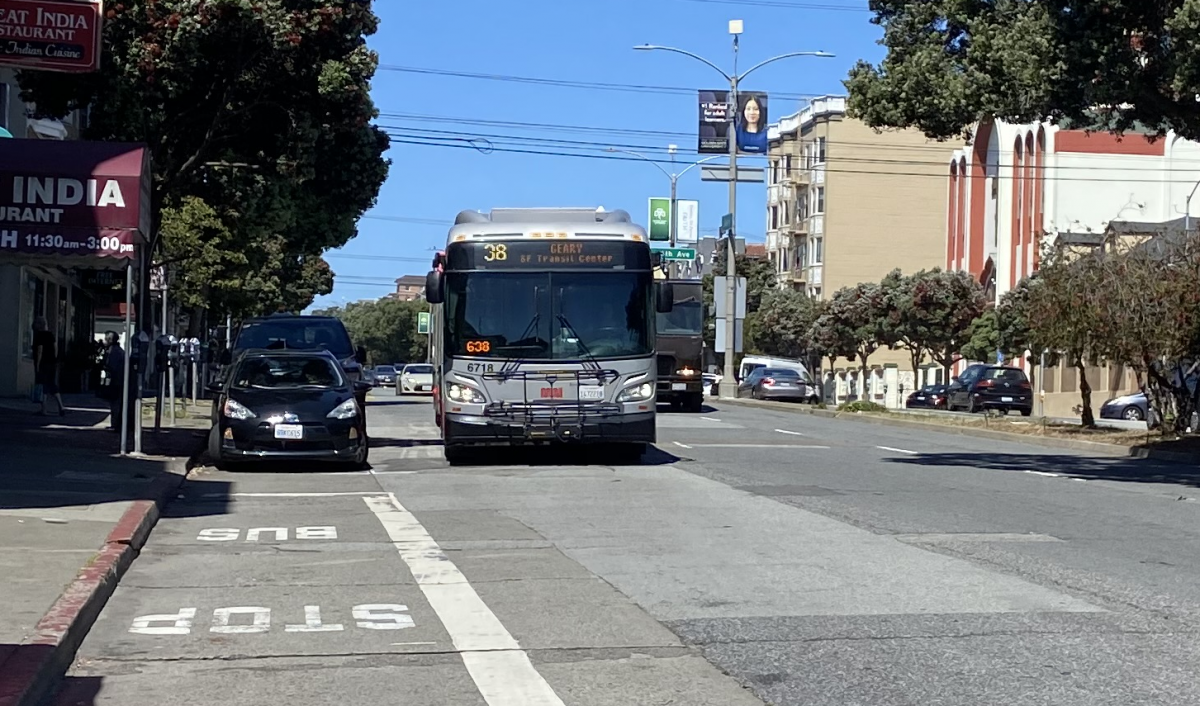
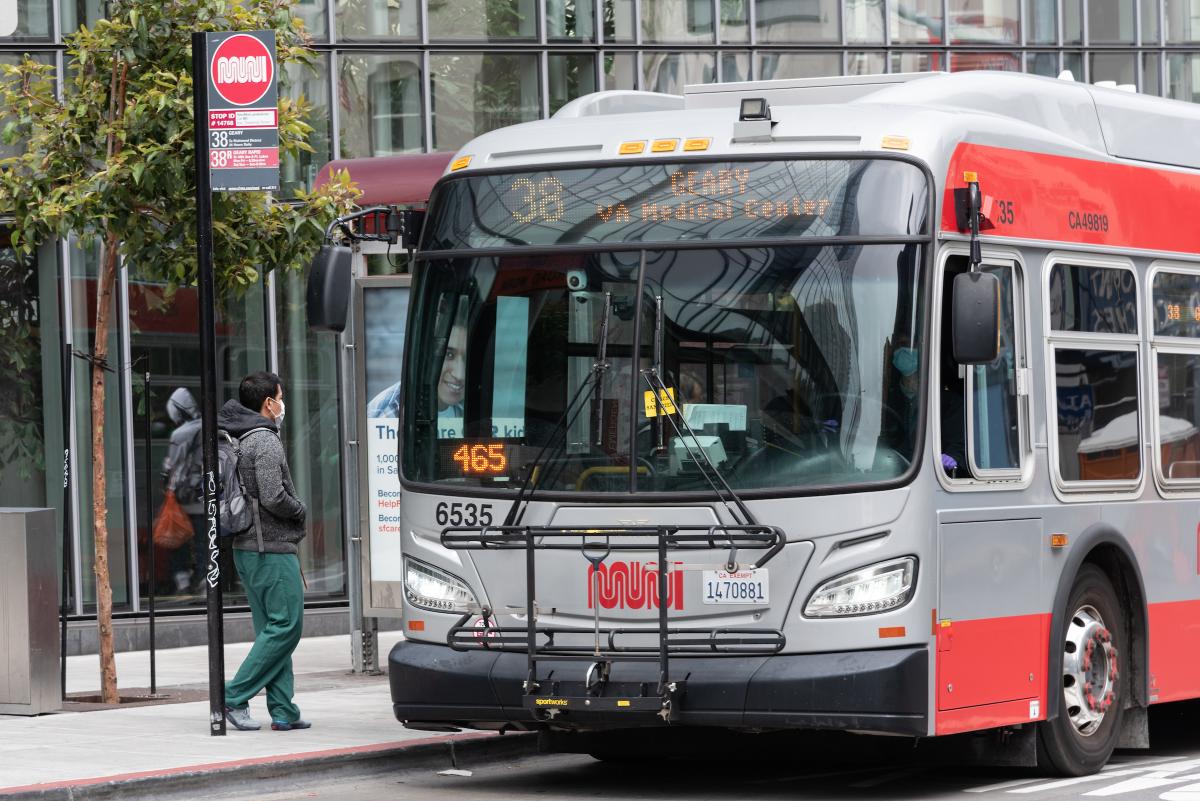
38 Geary travels on east Geary Boulevard

During shelter-in-place, San Francisco has set the pause button. Besides essential workers, people have stayed home, causing daily traffic congestion to feel like a distant memory. Over these months, Muni has continued to serve approximately 100,000 passengers a day for essential trips on a network of core routes. As traffic has virtually disappeared, Muni delays have disappeared with it.  

These highly unusual circumstances allowed the SFMTA to analyze data for Muni travel times and key sources of delay in ways that would otherwise be impossible. By monitoring Muni travel times during shelter-in-place, we were able to quantify the impacts congestion has on Muni service during normal times. What we’re learning can help bring back our transit system in a way that addresses past problems, as the city begins to recover.  

With fewer cars on the road, peak Muni travel times were reduced citywide by an average of 15% compared to pre-COVID-19. Most travel time savings came from reduced traffic delay, with less than 5% coming from fewer people getting on and off the bus. Specific transit corridors saw much higher time savings. For instance, the 28 19th Avenue line experienced some of the most dramatic travel time reductions with peak time savings of up to nearly 50% in some areas. But many heavily-traveled Muni corridors throughout the city saw significant travel time reductions, as shown in the map. This data underscores that much of Muni’s delay and reliability issues are caused when buses are stuck in traffic congestion. 
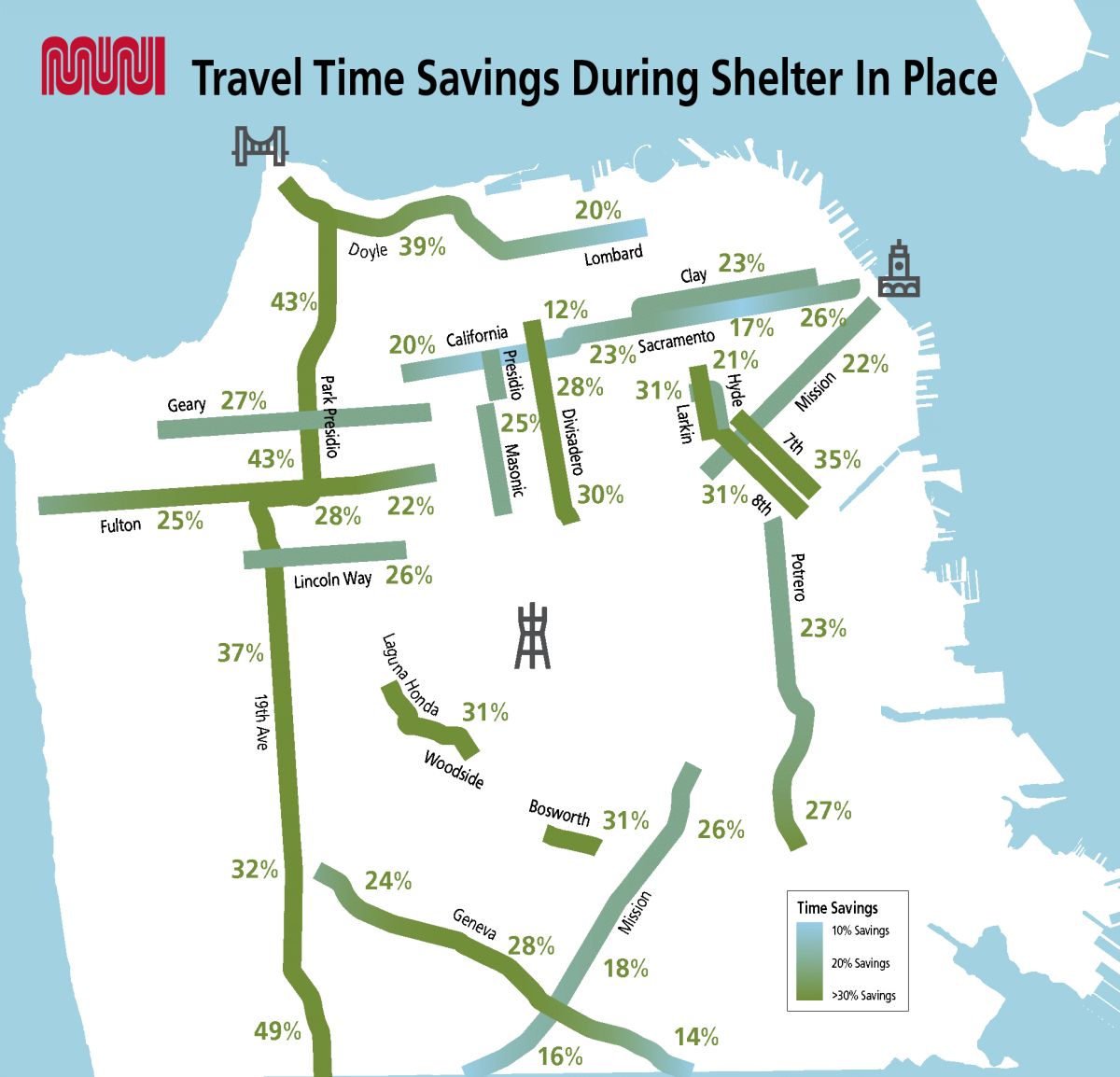
Map of San Francisco showing Muni travel time savings on corridors throughout the city.

Time savings represent greatest percent reduction observed in each segment across all directions and times of day (AM or PM Peak).

Perhaps most notably, corridors with existing transit lanes had very different results. During shelter-in-place, most bus lines traveling in transit lanes saw little change in travel times because those lanes already allow Muni to avoid traffic congestion. This data tells the success story of our Muni Forward program: where we’ve made targeted investments in transit priority, we’re seeing results. 

As Muni continues to provide service for essential trips during this crisis, the importance of saving time on routes is more critical than ever. Physical distancing requirements mean that Muni’s passenger capacity is cut in half from pre-COVID levels. With Muni buses at reduced capacity, there is a higher risk of crowding at stops and on buses as people wait for a bus that has room. Faster travel times mean buses can complete trips in less time and turn around back into service more quickly, increasing frequency with the same number of buses. This increased frequency allows Muni to serve more people to address crowding and maintain better physical distancing on buses. In addition, shorter travel time means passengers spend less time on the bus, reducing their risk of exposure. 

As our local economy restarts, San Francisco has an unprecedented opportunity to purposefully rebuild our transportation system to facilitate a resilient recovery. Public transit is at the foundation of San Francisco's economy, connecting workers to their jobs. Congestion is expected to return quickly, likely above pre-COVID levels, after stay-home-orders are lifted and more businesses re-open. While traffic delay is a burden for all road users, it affects transit riders the most right now because it increases the risk of exposure to COVID-19 by elongating trips. We are working deliberately to update the Muni network to support the city’s new normal and address transportation needs that have been amplified by the health crisis. 


Published May 28, 2020 at 12:21PM
https://ift.tt/3epWlGr

Tuesday, 26 May 2020

A Data-Driven Transportation Recovery

A Data-Driven Transportation Recovery
By Bradley Dunn

Responding to the Covid-19 public health crisis has radically changed our transportation system. No one wants a disaster to put lives at risk and disrupt everyday life. Data is guiding the SFMTA, not just during our reaction to the crisis, but how we will thoughtfully recover. 

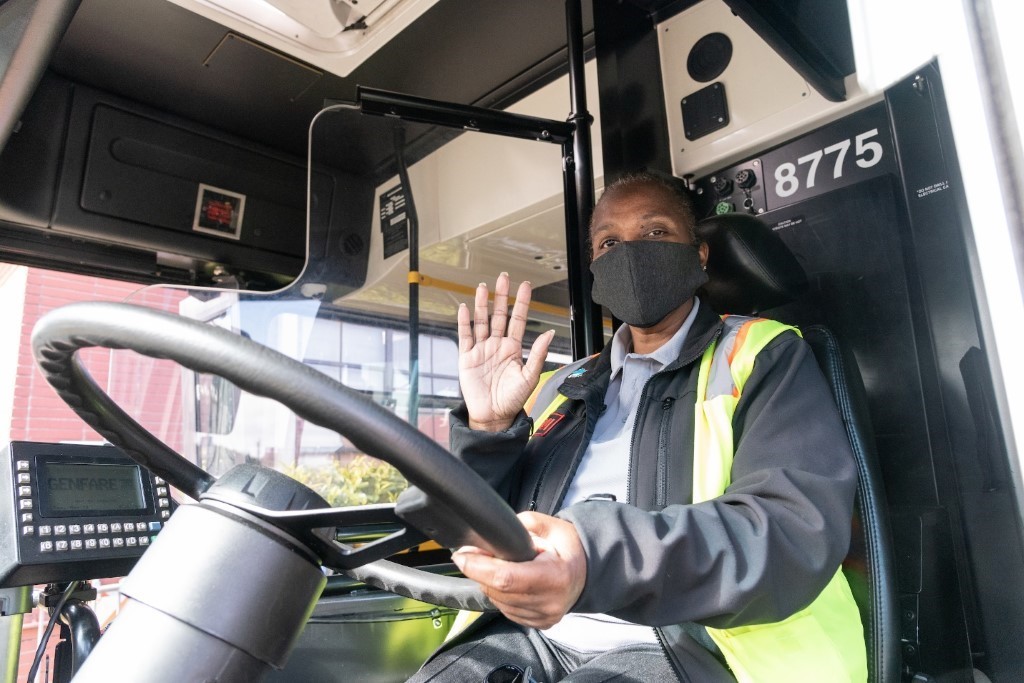
 Operator


Transit’s Recovery


When shelter-in-place began and the SFMTA was forced to reduce Muni service, we identified how to focus our service reductions using data. Our Muni Core Service Plan prioritized our available resources based on locations of medical facilities, Muni’s Equity Strategy and data from shifting customer travel patterns observed during the first weeks of the COVID-19 shelter-in-place order. Our service plan kept all of San Francisco within one mile of an active Muni stop. As additional resources have become available, guided by the same data as well as additional information from our operators, riders, and city leaders, we have increased frequency and returned some additional routes to service. 

As more people return to working in retail and manufacturing, there will be an increased demand for transit, even as physical distancing still limits Muni’s capacity.  If we cannot get the thousands of employees who rely on Muni to work, San Francisco cannot recover economically.  

Preventing crowding and everyone wearing masks is key to our recovery. Generally, as the activities allowed by the public health order expand, we are keeping the core service routes and increasing capacity and frequency. The increased frequency helps limit crowding and promote physical distancing. 

As congestion increases with more movement, we also need to use data to help us identify solutions that keep our buses from being stuck in traffic. With fewer cars on the road, San Francisco’s shelter-in-place simulates the street conditions across the city that are normally seen only on routes with transit lanes. On average, peak Muni travel times have been reduced by about 15% across the Core Service network during the shelter-in-place period. These time savings will inform how we can use transit priority improvements, like transit-only lanes, as we expand Muni service in a way that better serves our customers and supports economic recovery. 

When our buses are stuck in traffic, it decreases the frequency that buses pick people up at stops. With less frequent pickups, more people gather at stops making it harder to move all the people that need to board our buses while maintaining physical distancing. When buses complete their trips faster, they can return to service more quickly to reduce crowding and support distancing. Deploying transit-only lanes could also enable Muni to reduce customer’s travel times and help reduce agency costs in the face of lost revenue and budget cuts. 

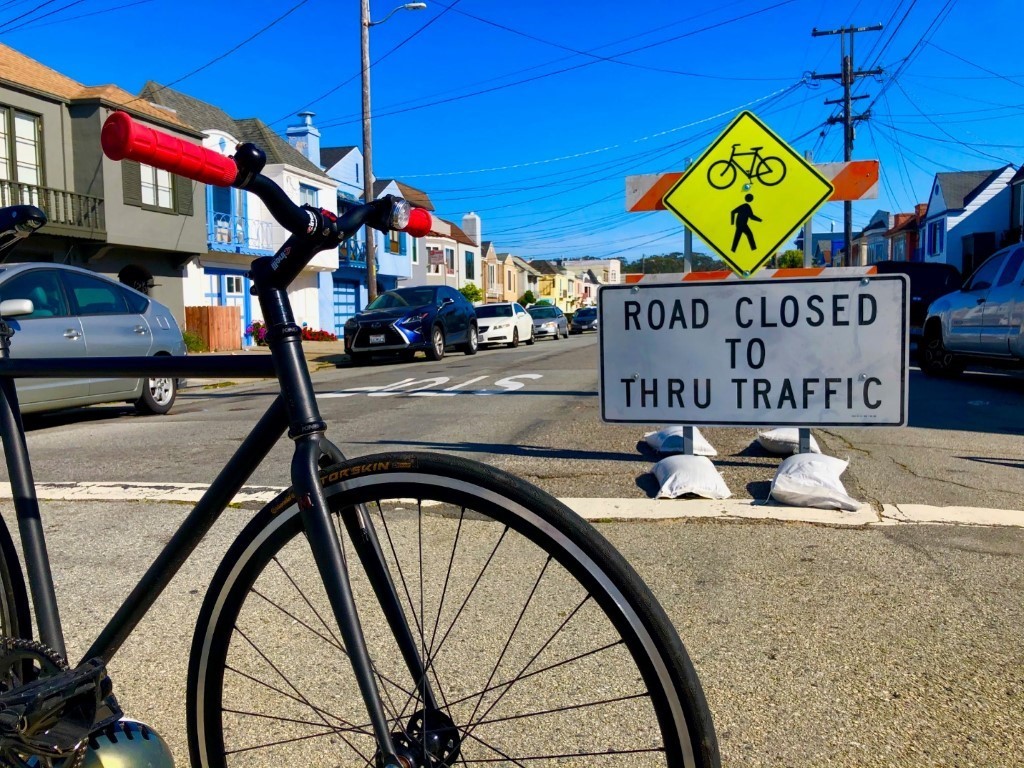
 Bike


Data-driving dedicated space for biking  


With Muni being reserved for essential trips only, walking and bicycling have become more important than ever during this pandemic. Streets that are calm and welcoming support newer bike riders, helping to reduce demand for Muni trips. We are using public feedback and pre-existing data to implement our Slow Streets traffic calming program and support walking and biking opportunities. 

SFMTA staff gathered suggestions from conversations with members of the Board of Supervisors and community groups about locations for Slow Streets. They analyzed these inputs along with the 1,800 responses to our on-line, multilingual survey to identify the most frequently identified corridors. Streets were then screened for topography, surrounding land use, conflicts with Muni service, primary public safety routes and commercial loading zones.  

When fully implemented, there may be over 34 miles of Slow Streets in San Francisco. We will analyze the effectiveness of the program by tracking the mode share of people driving, walking or biking on the streetchanges before and after implementation. Staff are also tracking side streets to see if there is substantial diversion of traffic. 

As we move forward towards recovery, we expect bicycling to continue to serve trips that would otherwise be made on Muni or create traffic congestion in a private automobile. Our bicycle trip counters in some locations like the Panhandle path have shown massive increases. To be responsive and help provide more space for safer more comfortable riding, we are planning to add a protected bike lane on Fell Street. We will continue improving San Francisco streets through the data-informed approach to Vision Zero , build-out previously approved protected bike lanes and expand bike-share to provide access in more neighborhoods.  

These are truly challenging times and the needs of San Franciscans are changing. We do not know everything that the future will bring but efficiently moving people around our city will always be a top priority. To do that, we must utilize data to adapt our transportation system to this crisis as well as use transportation as a tool to spur our city’s recovery. 


Published May 26, 2020 at 03:27PM
https://ift.tt/2yyQRtx

Friday, 22 May 2020

Celebrating the life and legacy of Harvey Milk

Celebrating the life and legacy of Harvey Milk
By Sophia Scherr

Today we celebrate and remember the life of San Francisco LGBTQ+ advocate and icon, Harvey Milk. One of our city’s most revered politicians, Milk's legacy as the first openly gay San Francisco supervisor and elected official in California helped in breaking down discriminatory barriers and usher LGBTQ+ politicians in government positions. Milk also advocated for equitable transportation, as he rode Muni exclusively since he did not own a car. He was a firm believer that affordable mobility was important in creating a thriving and livable city.

Below is Harvey Milk with Curtis E. Green, General Manager of the Municipal Railway promoting Muni’s “Fast Pass”. Mr. Green was a barrier-breaking figure in his own right, by becoming the first African American appointed to Muni's top position from his beginnings with the Agency as a bus operator. With his 1974 appointment, Green also became the first African American to serve as top executive for a major city transportation agency nationwide.

Muni General Manager Curtis Green Demonstrating the New Muni Fast Pass with Supervisor Harvey Milk

As we commemorate the 40th Anniversary of Muni Metro, Castro Station and Harvey Milk Plaza, we’re excited to bring improvements to the plaza as part of the Castro Station Accessibility Improvement Project. These much-needed improvements include a new glass elevator in compliance with the Americans with Disabilities Act (ADA) and an additional second elevator will be added to provide continuous access to the station.

We take a moment to recognize and thank trailblazers like Harvey Milk and others - who fought against systematic oppression, discrimination and bigotry. Let’s take inspiration from Milk and others to continue this hard and important work. We can all be changemakers and make San Francisco and the communities we all live in more inclusive.


Published May 22, 2020 at 09:27AM
https://ift.tt/2ZuHeYa

Thursday, 21 May 2020

With Memorial Day Around the Corner Muni is Still for Essential Trips

With Memorial Day Around the Corner Muni is Still for Essential Trips
By Erin McMillan

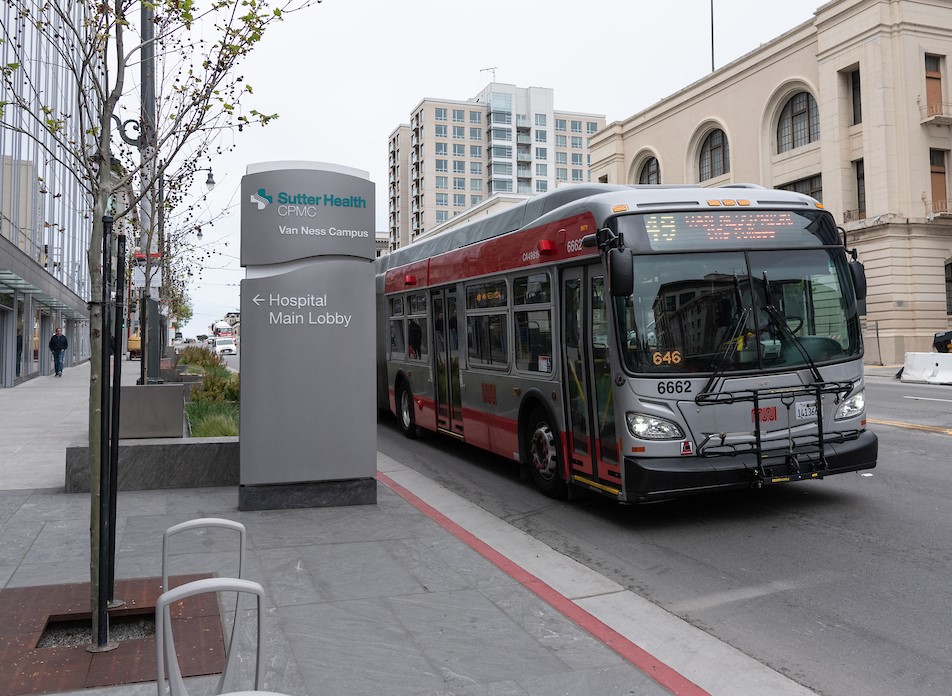
49 to medical center

With Memorial Day weekend right around the corner, many of us are eager to get outside and enjoy the sunshine and wide open spaces. But as we enter the biggest holiday weekend since the shelter-in-place order, it’s still important to be acutely aware of how our individual actions can and will affect our communal ability to address the impacts of COVID-19.

While we hopefully will arrive at a new normal soon, the shelter-in-place order is still in effect and it’s still important as ever that we remember to physically distance ourselves while out in our neighborhoods and to only make essential trips.  

In early April, we temporarily reduced Muni service to our Core Service network which serves the highest ridership lines and supports essential trips to places like hospitals, healthcare facilities, grocery stores, restaurants and other essential services. Thanks to increasing staffing availability, we were able to increase service over the past few weeks. We did this using ridership data and customer feedback. We are now providing as much as our resources allow, while providing adequate physical distance for customers and operators.

While we start to see slow changes that move us toward the lifting of the shelter-in-place order, it’s important to remember that Muni service is still only supporting essential trips that cannot be made in other ways. We are asking all San Franciscans to help us maintain adequate space on buses for physical distancing by staying at home except for essential trips. When essential trips are necessary, walking, biking, taking taxis or driving instead saves a seat on Muni for those that don’t have other options. These customers are largely hospital workers, social service providers, grocery store workers and other essential workers. Any time you take another mode of transportation for your essential trip, you save a seat for those who rely on Muni.

Muni still serves approximately 100,000 passengers a day – getting nurses, cooks, custodians, and other essential workers to their jobs. We continue to ask for San Franciscans’ help by a) complying with the shelter-in-place directive, b) only making essential trips, and c) using alternatives to Muni for essential trips whenever possible.

To encourage customers to give each other space on and off Muni, you may see ambassadors asking customers to wait for the next bus if there isn’t enough space for adequate physical distancing. Operators have been instructed that they may also skip stops if the bus is already more than half full to maintain appropriate physical distancing onboard. In addition to supporting physical distancing, you may also see ambassadors reminding customers that wearing a face covering is now required on Muni as well.  

While it continues to feel odd to discourage San Franciscans from riding Muni if you have an alternate option, we’re starting to see the light at the end of the tunnel that will lead so many of us back to the bus. So, let’s stay on track and save those Muni seats for the folks who need it most right now.


Published May 21, 2020 at 05:36PM
https://ift.tt/2Zq1ude

Tuesday, 19 May 2020

Moving San Francisco Forward

Moving San Francisco Forward
By Jeffrey Tumlin

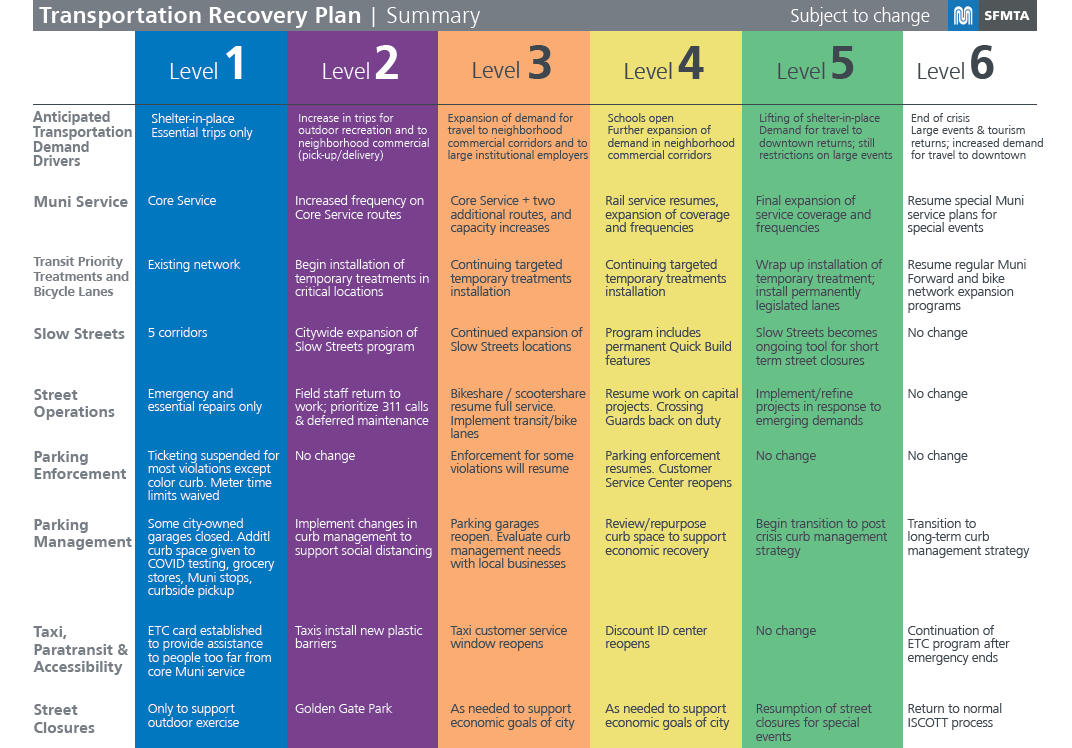
Transportation Recovery Plan

Your city transportation leaders are focused on caring for this city while we fight the coronavirus pandemic. And, we’re also busy strategizing on what comes next. The city needs to be able to move in order to function.

San Francisco must take this moment to rebuild our transportation system purposefully and facilitate a resilient recovery. The SFMTA has been working with city leaders and public health officials to devise how best to do that in our new fiscal and public health reality.  

The SFMTA is developing a Transportation Recovery Plan which includes a series of levels that coincide with future allowances of economic activity by state guidance and our local public health officials. For each level, there are associated service and operational strategies. We will expand Muni service intentionally to address past problems, like subway crowding. Our plans actively respond to ridership data and community input and feedback. This is a data-driven plan to help not only us, but the city, succeed in our shared efforts.

For the first couple levels, the Transportation Recovery Plan maintains the current Core Service routes with increased capacity and frequency. We have seen significant travel time savings due to reduced congestion during this public health emergency, which also equates to lower costs, as compared to buses sitting in traffic. We’ll be looking to expand our network of transit lanes to preserve these gains and protect riders from feeling the effects of budget cuts due to the economic impacts of the COVID-19 crisis.  

Transportation Recovery Plan

Making the streets safer to accommodate walking and biking as we emerge from Shelter-in-Place is pivotal to limiting a potential surge in traffic congestion. Our Slow Streets program, implemented during the shelter-in-place order, will continue as part of our recovery-- giving people more space to walk and bike for essential trips with appropriate physical distancing. Expanding Slow Streets supports more people walking and biking instead of driving or taking Muni. Additionally, we are investigating low-cost, reversible street treatments known as Quick Build to add bike lanes and safety improvements to certain streets that connect bicyclists to businesses.

One part of the plan I am personally committed to is ensuring that the SFMTA supports local business recovery. We are closely following the work of the Economic Recovery Task Force and are ready to offer solutions – this could mean things like providing street or curb space to requesting businesses where possible. These, among other services delivered by the SFMTA, will roll out in coordination with the broader work of our city partners. 

Above all, the health and security of our employees will always be at the forefront of our plan. Safeguarding our employees is both the right thing to do and fundamental to our ability to serve the public. We are proud we have been able to maintain some of the lowest rates of COVID-19 cases among major American transit agencies. This is not by luck or happenstance. From increasing vehicle cleanings to an early and on-going procurement of protective equipment for frontline staff, we have been proactive about employee health, which in turn promotes community health.  

While Muni ridership has hit unprecedented lows over the last few months, we’re grateful to those who’ve stayed home to slow the spread of COVID-19 or taken non-Muni trips to allow those who had no other option to get to essential jobs and services. As more businesses re-open and more services become available, it is critical that the SFMTA support the city’s new normal. We also need to bear in mind the limited resources of the agency and unique needs of mitigating risk in an environment with an invisible virus.  

San Franciscans have historically adapted to change very well, and the residents of our city have always been on the forefront of not only accepting but advocating for positive and meaningful change. If we are going to bring back our transportation system better than it was before COVID, we are going to have to engage in some discussions about trade-offs. For example, with reduced revenue, do we provide less service or do we provide service more efficiently by strategically dedicating road space to transit?   

We are incredibly thankful to all San Franciscans for your resiliency and your contributions to flattening the curve thus far. The SFMTA will continue to be here to support you in ways that will feel familiar, but also in new ways that may feel a little different as we operate in a new era. We would be remiss without thanking Mayor London Breed for her leadership during this time. Members of the Board of Supervisors and other stakeholders have provided valuable partnerships. We are also incredibly grateful for our congressional delegation, which advocated for relief funding that has helped us avoid layoffs and continue service during the pandemic.  

With continued support from regional leaders and continued patience from San Franciscans, we will emerge from this stronger and more resilient. 


Published May 19, 2020 at 03:03PM
https://ift.tt/2TlESH0

Reimagine Potrero Yard with Us – Spring 2020 Update

Reimagine Potrero Yard with Us – Spring 2020 Update
By Adrienne Heim

Potrero Yard.jpg_conceptual design sketch

During this difficult time, we must do everything we can to maintain our health and wellness. In response to COVID-19, many of our city services have been temporarily transformed, but despite this pandemic, it’s important that we continue to invest in our infrastructure to keep current and future generations moving throughout San Francisco. Potrero Yard, one of Muni’s oldest bus yards, is indeed an essential project that will continue to move forward.

Improvements proposed through the Potrero Yard Modernization Project offer solutions to ensure we maintain our fleet of buses as efficiently as possible, accommodate our new buses that will be delivered in the next six years, enhance our resilience to climate change and natural disasters, and ensure our staff is able to perform their work in a safe and efficient way.

Potrero Yard Today

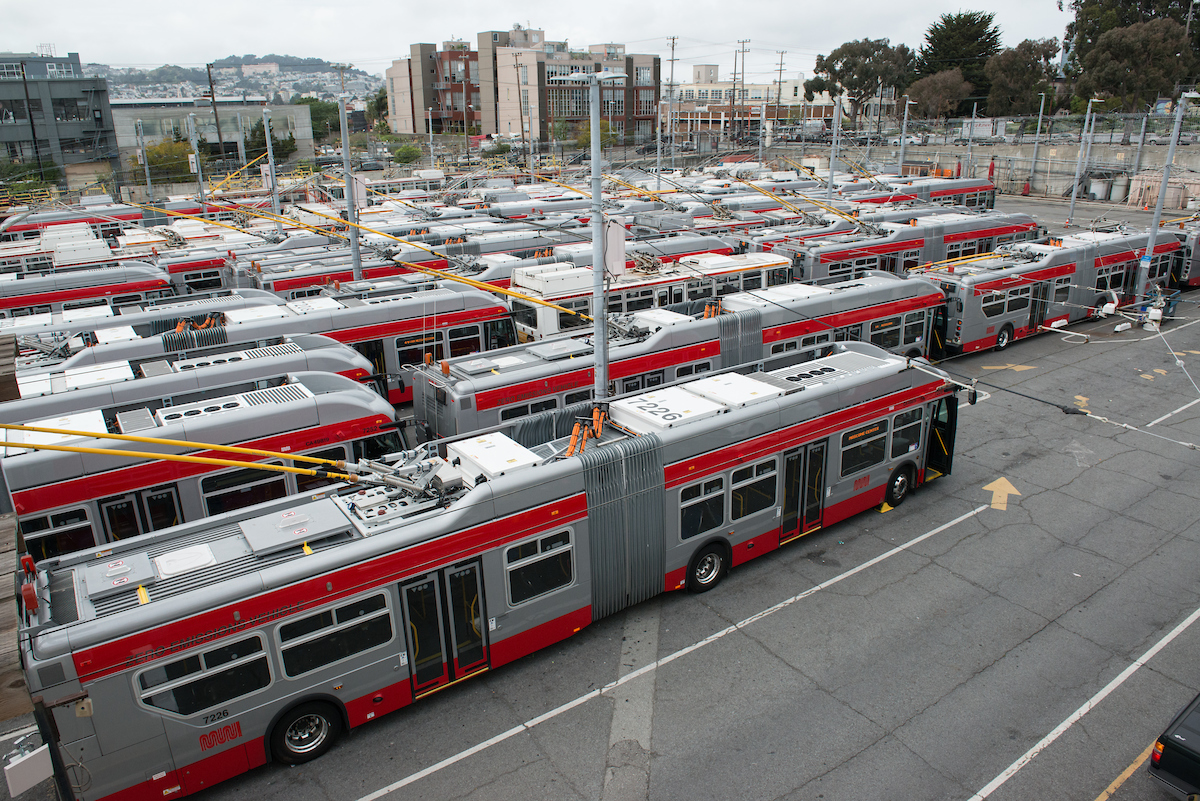
Coaches in the Potrero Yard

Potrero Yard operates 24 hours a day, 7 days a week, to support six Muni routes (5 Fulton, 5R Fulton Rapid, 6 Haight/Parnassus, 14 Mission, 22 Fillmore, and 30 Stockton) that carry 14% of Muni’s total ridership per day. 

Due to the building’s age and changes in bus fleet technology, major improvements are needed to ensure we continue operating this facility for the next 100+ years.

The Project Concept

Last October, we hosted an Open House to present the draft project concept and hear your feedback. Over an 18-month period of community engagement, a draft project concept was developed for a new Potrero Yard that serves the community, supports our workforce, and reflects the values of the neighborhood.

The modern yard will be able to store 213 buses, increasing capacity by approximately 50%.

In addition, the facility will include the following features:

  • LEED Gold Certification
  • Built to an elevated structural and seismic standard
  • Infrastructure for battery-electric buses
  • Centralized location for Street Operations - Muni’s “first responders”
  • Centralized, modern space for Muni operator training
  • Ground floor active uses on Bryant and possibly 17th streets

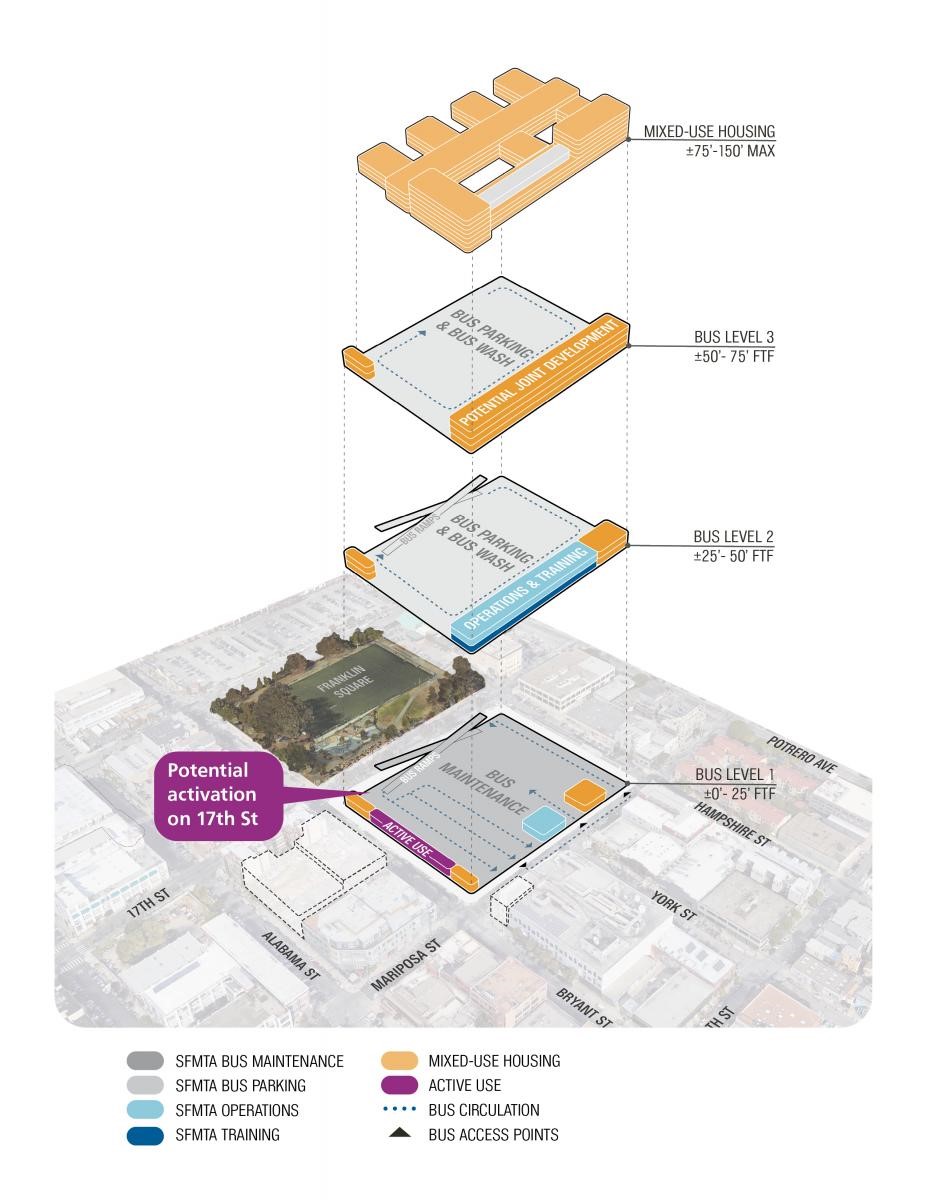
housing diagram showing how the yard will be laid outHousing on Top of the Yard

We partnered with other City departments (SF Planning Department, Public Works, Mayor’s Office of Housing and Community Development, and Office of Economic and Workforce Development) to explore how the land can be used to accommodate housing above Potrero Yard. Guided by input from the community, the SFMTA has concluded that housing is a feasible, compatible use on the site.

The SFMTA is proposing a range of 525 to 575 housing units with a goal that 50% of the total units are affordable. Many factors informed the proposed project’s size and unit count, such as building height, massing, financial feasibility, and shadow considerations.

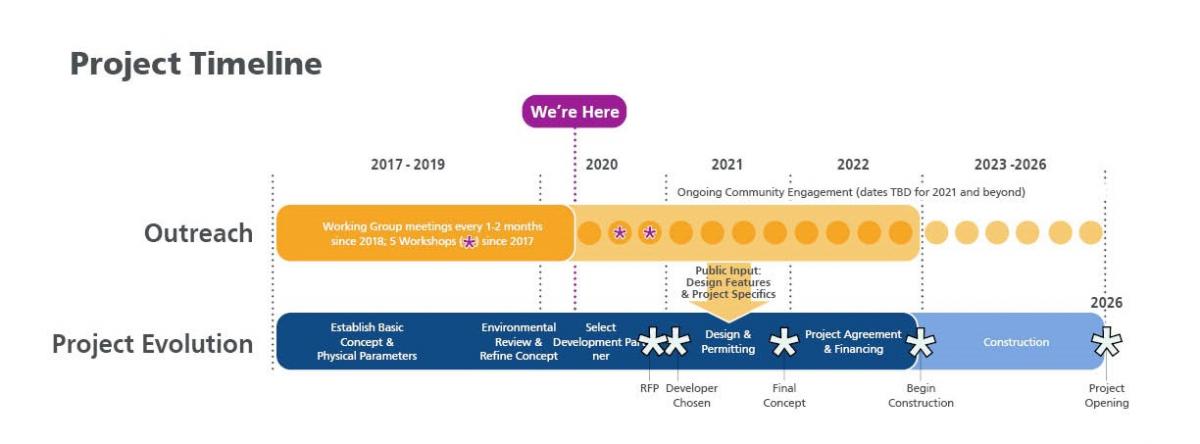
Where we Are Now

project timeline

The environmental review process is underway, and we are developing a Request for Qualifications (RFQ) for a joint development partner to design and build the project. We are also introducing legislation to the Board of Supervisors that will enable the SFMTA to deliver the project following a continued public process and environmental review and approval process.

Since November 2019, we have been working with the Planning Department on the environmental review process (CEQA) that will analyze potential environmental impacts and identify strategies for mitigating those impacts.

At the same time, we are working on the RFQ and RFP to procure a joint development partner to finance and build the project. The RFQ process will evaluate the qualifications of proposed project teams and determine the top three responders based on an evaluation of their relevant experience and qualifications. Those top three responders would then be invited to submit a full proposal through a subsequent RFP process. We hope to release the initial RFQ in early June to develop the shortlist of qualified firms. We will then issue an RFP to shortlisted firms in late summer.

Join the Conversation

We recently sent out a spring 2020 update brochure through the mail and email to residents who live near Potrero Yard, Muni employees, and community stakeholders who are generally interested in the project.

Participate in virtual conversations and telephone events:

Saturday, June 6, 11 AM to noon (English), Call 877-229-8493 and enter 119593#

Saturday, June 6, 1 PM to 2 PM (Spanish), Call +1-669-900-6833 and enter 81568997301#

We hope you can join us!

You can also provide input by participating in a phone-based survey by texting “Potrero” to (415) 599-8662 in English or “Potrero” to (415) 707-5406 in Spanish

Learn more about the project and subscribe to project updates by visiting www.sfmta.com/PotreroYard.

Also visit Talking Headways Podcast: Housing on the Bus Yard to hear the project team discuss the project. 

For more information, please email PotreroYard@sfmta.com or call us at 415.646.2223.


Published May 19, 2020 at 09:16AM
https://ift.tt/3bK9JTZ

Thursday, 14 May 2020

Select Increases to Muni Service Frequency Starting May 16

Select Increases to Muni Service Frequency Starting May 16
By

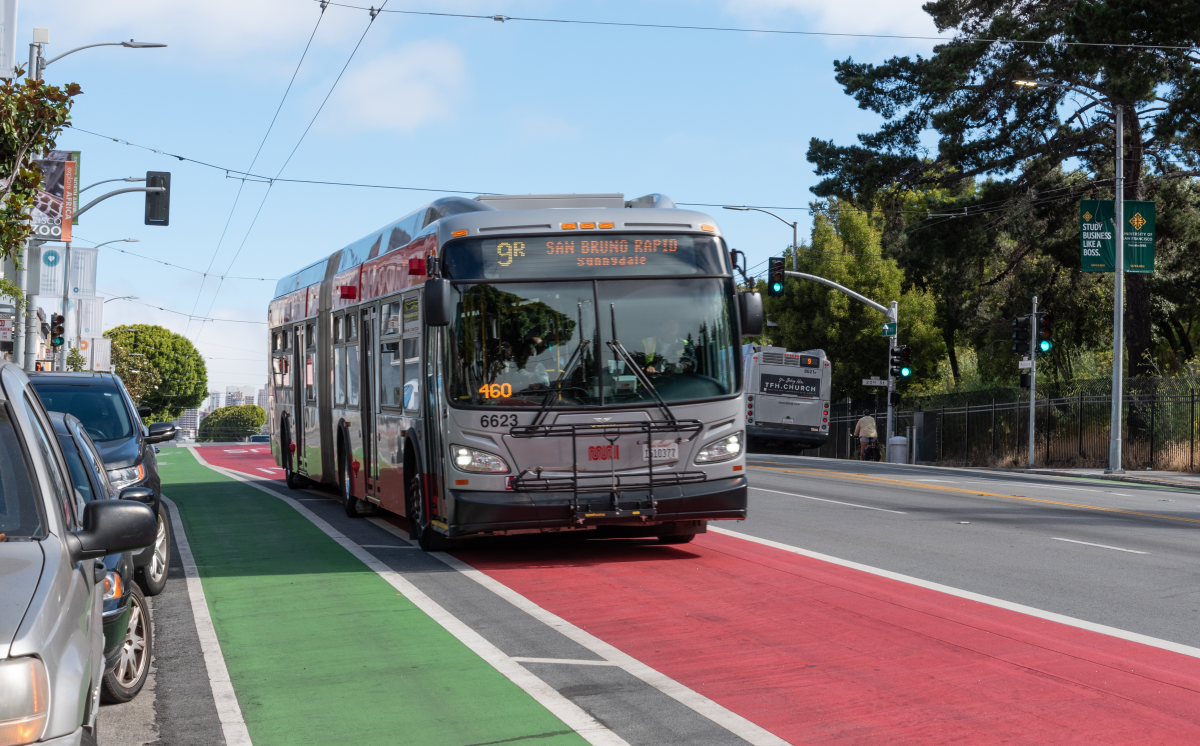
9R San Bruno Rapid travels on Potrero Avenue

Beginning Saturday, May 16, the SFMTA will increase the frequency on a number of lines in Muni’s existing COVID-19 Core system and reinstate the 9R San Bruno Rapid. This more frequent service will continue to support essential trips in San Francisco and address crowding in several of our routes, allowing for better physical distancing.  

We are able to deliver these changes because our staffing availability has improved, and we have implemented additional bus cleaning programs. These changes allow us to make service frequency increases to our COVID-19 Core service network

Public health orders require Muni to limit capacity on our vehicles to provide enough space onboard to physically distance from others. By having buses arrive more frequently on routes experiencing higher passenger volumes, we can provide customers more room to physically distance. These improvements allow Muni to continue to support essential trips that cannot be made in other ways.  

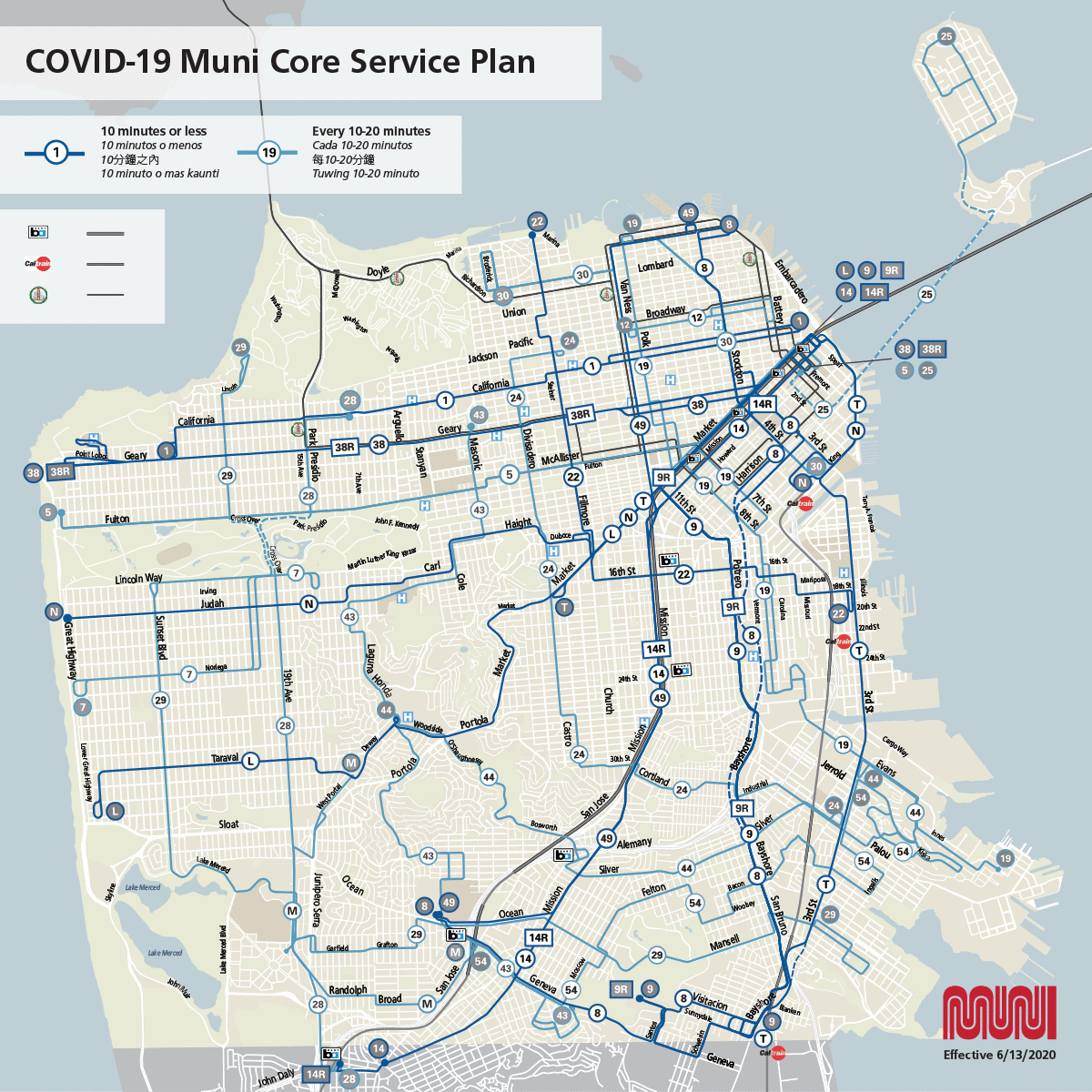
Ridership data is facilitating precise decision-making about where to increase the frequency of Muni service.  Weekday frequencies on the following routes will be improved by two to four minutes, and they will all operate at frequencies of 10 minutes or less:  

  • 8 Bayshore 
  • 14R Mission Rapid 
  • 22 Fillmore
  • 38R Geary Rapid 
  • 49 Van Ness/Mission 
  • N Bus  
  • T Bus 

The 14 Mission Owl frequency will be improved by 10 minutes for both weekday and weekend service and will operate approximately every 20 minutes from 10:00 pm to 5:00 am. 

On weekdays, the 9R San Bruno Rapid will also be restored to support physical distancing, help alleviate crowding on the 9 San Bruno line and add more frequent service to Zuckerberg San Francisco General Hospital. The 9R San Bruno Rapid and 9 San Bruno lines will resume their regular routing. When the 9R San Bruno Rapid is in service to McLaren Park on weekdays from 7:00 am to 6:00 pm, the 9 San Bruno will terminate on Bayshore at Visitacion. At all other times, the 9 San Bruno will go to McLaren Park. Further details will be provided as transit and travel updates when available

  • 9R San Bruno Rapid: Frequency approximately every 10 minutes from 7:00 am to 6:00 pm (Weekdays only) 

  • 9 San Bruno: Frequency approximately every 10 minutes from 5:00 am to 10:00 pm (Weekdays and weekends) 

COVID-19 Muni Core Service Map

The modified COVID-19 Core Service Plan is in support of essential trips that cannot be made in other ways. All San Franciscans are helping us maintain adequate space on buses for physical distancing by continuing to stay at home except for essential trips. If you need to make an essential trip, please use an alternate form of transportation whenever possible – walking, biking or driving – to save a seat on Muni for those who don’t have other options.  

If you do need to travel on Muni, give yourself extra time. You may need to wait longer for a bus with available space for physical distancing. Masks or face coverings are required on Muni. To avoid getting passed up, cover your nose and mouth with a mask or other facial covering and give the operator a friendly wave to be sure they see you. Remember, your trip may now include transfers and a longer walk, and your fare is good for two hours across multiple buses. 

Visit SFMTA.com/COVID-19 for the latest information about Muni routes in service or to explore other ways to get around the city. 


Published May 14, 2020 at 09:41AM
https://ift.tt/2WQ70mA