Tuesday, 29 September 2020

The First Step to Battery Electric Muni Buses

The First Step to Battery Electric Muni Buses
By Bradley Dunn

Starting in early October, the SFMTA will take a big leap forward in implementing its Sustainability and Climate Action Program by installing nine new charging stations at Muni Woods Division to power the agency’s first battery electric buses after significant progress in battery technology in recent years. The project will kick off the pilot program to determine the SFMTA’s future charging methods for new zero-emission e-buses.
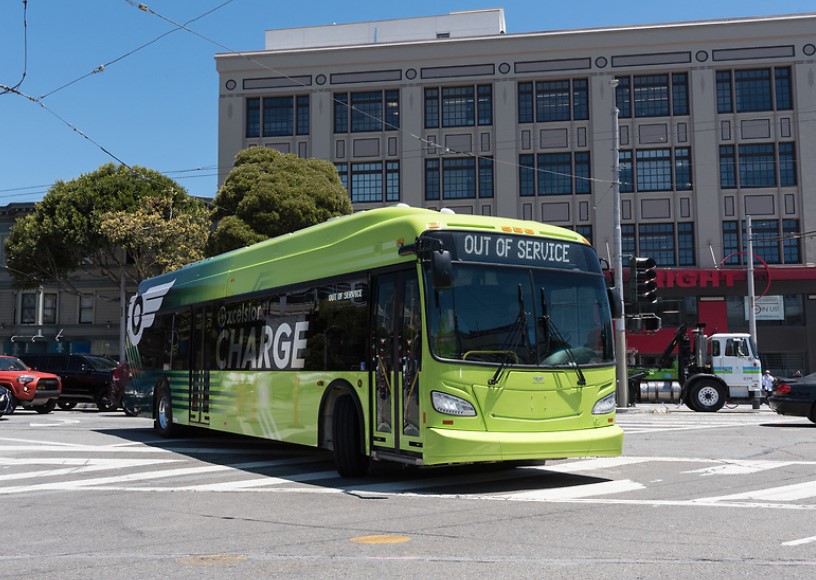
A battery electric bus turns from Mission on to South Van Ness

A battery-electric bus turns from Mission on to South Van Ness

To find out if battery electric bus technology is ready for San Francisco, the SFMTA is implementing an 18-month battery-electric bus pilot program. The SFMTA will procure three 40-foot buses each from three different manufacturers to test their performance in revenue service for 18 months. The first three battery electric buses are expected to arrive in spring 2021 as part of the pilot program.

Questions remain about whether battery electric buses can handle San Francisco’s heavy transit ridership and hilly routes. Before deploying battery-electric buses, they must deliver the same reliability and service as our current hybrid-electric and electric trolley bus fleets.

As of 2018, 45 percent of San Francisco’s greenhouse gas emissions are generated by the transportation sector which is heavily reliant on carbon-intensive fossil fuels. This reliance on harmful fossil fuels is changing the earth’s climate and contributes to extreme weather events, increased fire risk and sea level rise. The SFMTA is a leader in providing safe and sustainable transportation options as it continues to implement its Sustainability and Climate Action Program.

The SFMTA’s energy-efficient Muni fleet contributes less than two percent of the transportation sector’s emissions and moves approximately 700,000 people every day. Today, the SFMTA operates the greenest transit system of any major city in North America.
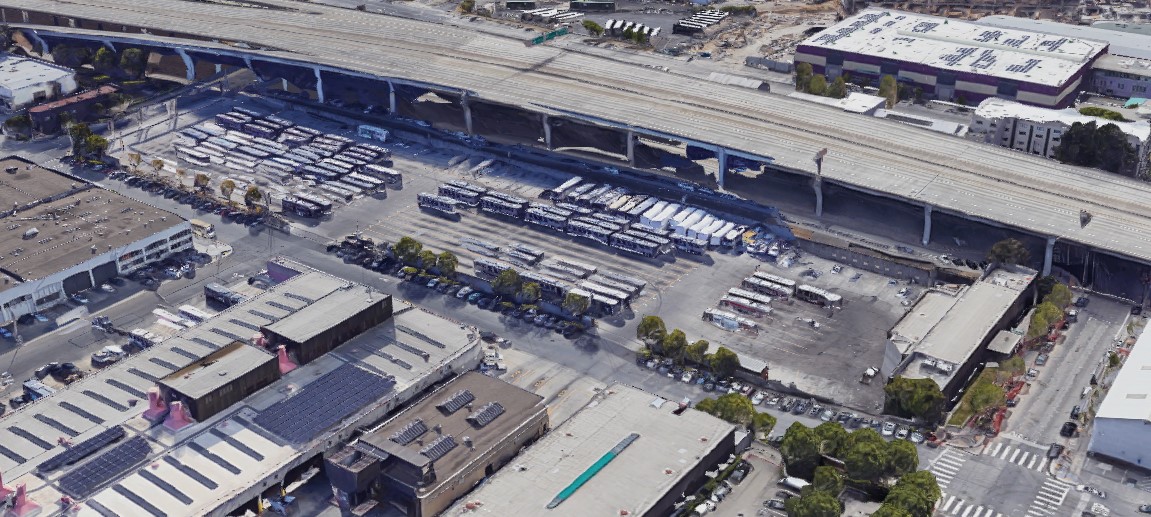
The Woods Bus Yard where the new charging infrastructure will be installed.

The Woods Bus Yard where the new charging infrastructure will be installed.

Electric Bus Pilot Program

The installation of the new chargers will take approximately nine months to complete. In addition to the battery-electric bus chargers, the updated infrastructure includes electrical support equipment, such as switchgear, switchboard, transformers, power cabinets and conduit.

  • Construction hours are Monday through Friday, 9 a.m. to 5 p.m.
  • Bus operation at Woods will operate as usual without interruption.
  • Work will be contained in the bus yard and will not impact traffic or transit service to the public.
  • Measures will be taken to control noise and dust during work hours. 

Installing these chargers is the first step in making the greenest transit fleet in North America even more environmentally sustainable. Battery electric buses will further reduce harmful emissions and air pollution.

For more information on electric mobility, please visit SFMTA Electric Mobility Page


Published September 29, 2020 at 10:44AM
https://ift.tt/3kX90DV

The First Step to Battery Electric Muni Buses

The First Step to Battery Electric Muni Buses
By Jay Lu

Starting in early October, the SFMTA will take a big leap forward in implementing its Sustainability and Climate Action Program by installing nine new charging stations at Muni Woods Division to power the agency’s first battery electric buses after significant progress in battery technology in recent years. The project will kick off the pilot program to determine the SFMTA’s future charging methods for new zero-emission e-buses.

A battery electric bus turns from Mission on to South Van Ness

A battery-electric bus turns from Mission on to South Van Ness

To find out if battery electric bus technology is ready for San Francisco, the SFMTA is implementing an 18-month battery-electric bus pilot program. The SFMTA will procure three 40-foot buses each from three different manufacturers to test their performance in revenue service for 18 months. The first three battery electric buses are expected to arrive in spring 2021 as part of the pilot program.

Questions remain about whether battery electric buses can handle San Francisco’s heavy transit ridership and hilly routes. Before deploying battery-electric buses, they must deliver the same reliability and service as our current hybrid-electric and electric trolley bus fleets.

As of 2018, 45 percent of San Francisco’s greenhouse gas emissions are generated by the transportation sector which is heavily reliant on carbon-intensive fossil fuels. This reliance on harmful fossil fuels is changing the earth’s climate and contributes to extreme weather events, increased fire risk and sea level rise. The SFMTA is a leader in providing safe and sustainable transportation options as it continues to implement its Sustainability and Climate Action Program.

The SFMTA’s energy-efficient Muni fleet contributes less than two percent of the transportation sector’s emissions and moves approximately 700,000 people every day. Today, the SFMTA operates the greenest transit system of any major city in North America.

The Woods Bus Yard where the new charging infrastructure will be installed.

The Woods Bus Yard where the new charging infrastructure will be installed.

Electric Bus Pilot Program

The installation of the new chargers will take approximately nine months to complete. In addition to the battery-electric bus chargers, the updated infrastructure includes electrical support equipment, such as switchgear, switchboard, transformers, power cabinets and conduit.

  • Construction hours are Monday through Friday, 9 a.m. to 5 p.m.
  • Bus operation at Woods will operate as usual without interruption.
  • Work will be contained in the bus yard and will not impact traffic or transit service to the public.
  • Measures will be taken to control noise and dust during work hours. 

Installing these chargers is the first step in making the greenest transit fleet in North America even more environmentally sustainable. Battery electric buses will further reduce harmful emissions and air pollution.

For more information on electric mobility, please visit SFMTA Electric Mobility Page


Published September 29, 2020 at 10:44AM
https://ift.tt/3kX90DV
Friday, 25 September 2020

Unclog Fog City

Unclog Fog City
By Bradley Dunn

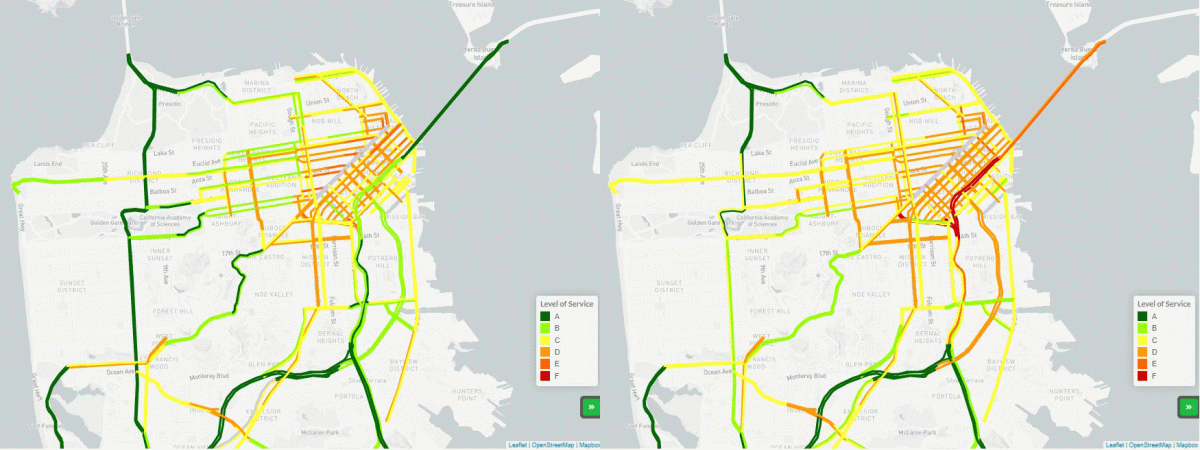
A map showing increased congestion between March 2020 and September 2020

Congestion has increased between March 2020 and September 2020. Find out more about congestion with the San Francisco Congestion Tracker

Before the pandemic, congestion in San Francisco was the worst it has ever been.  As the economy has been reopening, traffic congestion has begun to climb. Our partner agency, the San Francisco County Transportation Authority (SFCTA), has released a digital game where you can help manage this traffic congestion by pricing it. 

Curbing congestion 

As congestion returns, commutes get longer and severe and fatal collisions and climate emissions increase. Low-income communities and communities of color- with high use of public transit, and living in areas with high rates of traffic collisions and air pollution-bear the brunt of the burden of congestion’s impact.   

In 2019, the city started to investigate how reduce congestion and congestion’s unwanted and inequitable outcomes by using pricing . Congestion pricing is a tool that has been used successfully by cities around the world to reduce congestion. Like those cities, San Francisco could use congestion pricing to keep traffic moving, increase roadway safety, clean the air and advance equity. 

How should congestion pricing work in San Francisco? 

The city  wants your help to determine the best way to design congestion pricing by providing feedback about potential fees discounts, exemptions or incentives.  They are also asking about how you would invest revenue generated by congestion pricing. 

To share your thoughts you can:  

Play Unclog Fog City  
Play a digital game that lets you design your own congestion pricing program. 

Complete a survey via text message 
For English: Text TRAFFIC to 415-449-4214 
For Spanish: Text TRAFICO to 415-449-4214  
For Chinese: Text 交通 to 415-449-4214 
For Filipino: Text TRAPIK to 415-449-4214 

Share with your Friends 
Share these opportunities to get involved on Twitter, Facebook, and LinkedIn

To learn more about the effort visit the Downtown Congestion Pricing Study webpage and sign up to receive email updates. 


Published September 25, 2020 at 04:46PM
https://ift.tt/3kT0xBP

Thursday, 24 September 2020

Rolling Out a Car Free Path to the Beach

Rolling Out a Car Free Path to the Beach
By Benjamin Barnett

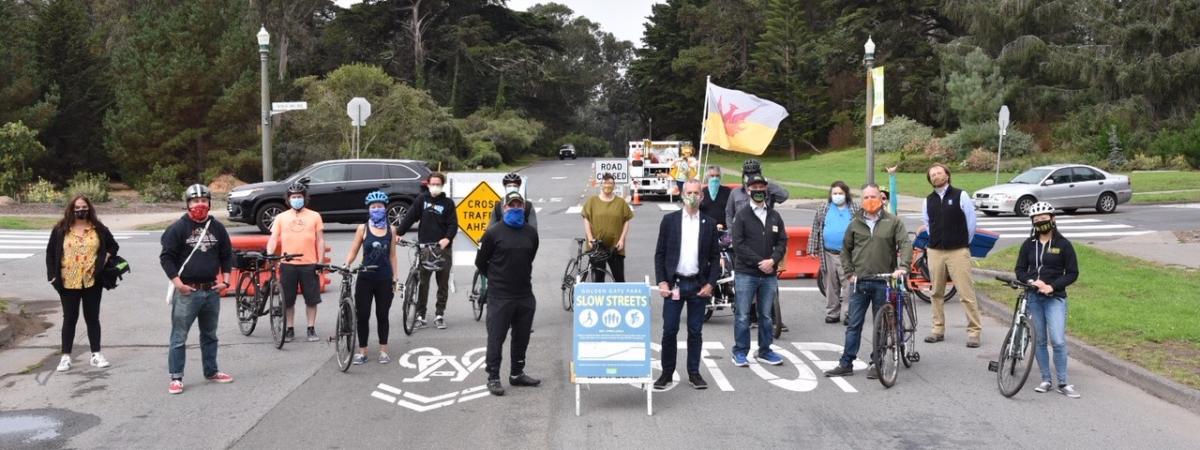
Slow Streets Golden Gate Park Opening Day

Last week, the Golden Gate Park Slow Streets Expansion opened to the public. People walking, biking, running and skating can now enjoy a nearly car-free route from the Panhandle all to the way to Ocean Beach.

Connecting the City 

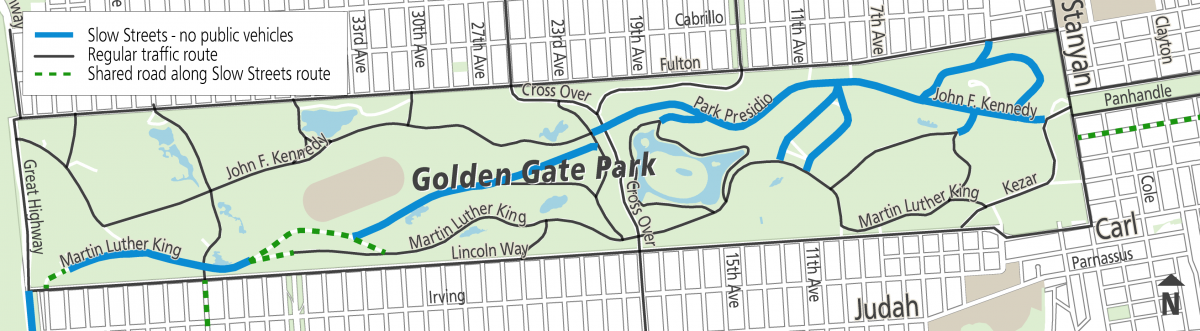
Golden Gate Park Slow Streets are a collaboration between the SFMTA and the Recreation and Park Department. These new Slow Streets provide the last link in a route prioritized for people on bikes stretching from the Ferry Building to the ocean by connecting to the network of bikeways, Slow Streets, and streets previously closed during the health emergency. Starting from the Ferry Building you may now head down a Car-Free Market Street, then up the hill on the Page Slow Street connecting you to Golden Gate Park's newly expanded network.  

Golden Gate Park Slow Streets will begin at Stanyan Street and John F. Kennedy Drive East on the park’s eastern edge and connect with the stretch of JFK from Kezar Drive to Transverse Drive. The route then continues onto Overlook Drive, then Middle Drive and  Martin Luther King Jr. Drive to Ocean Beach, where it connects with The Great Highway. The Great Highway has also been closed due to the pandemic, and this connection creates a continuous, family-friendly path from the Panhandle to the San Francisco Zoo. 

Map of Golden Gate Park Slow Streets program

Not Entirely Car-Free 

To keep nearby traffic moving and maintain access for those that need to access the park in a car, a few areas are not entirely car-free: 

  • A 200-foot portion of the route on Transverse Drive, between JFK Drive and Overlook Drive 
  • An approximately half-mile portion of the Metson/Middle Drive/MLK Drive loop near the south end of the Polo Field 
  • The intersection at MLK Drive and Chain of Lakes Drive/41st Avenue 
  • A 500-foot stretch of MLK Drive near Lincoln Way 

In addition, authorized vehicles intended for park maintenance and ranger patrols will use the roads along the route when necessary. Motorists can still drive through the park from north to south using Transverse Drive, Chain of Lakes Drive, and 25th Ave/Crossover Drive/19th Ave/Park Presidio, as usual. 

New Traffic Flows 

Drivers will be rerouted from some east and westbound roads during Golden Gate Park Slow Streets, including: 

  • The west portion of MLK Drive west of Sunset Boulevard, specifically from the Middle Drive/MLK loop to Lincoln Way, is closed to regular traffic. This includes Bernice Rodgers Way, between MLK Drive and JFK Drive. 
  • Overlook Drive and Middle Drive, between Transverse Drive and the Metson/Middle Drive/MLK loop, will be closed to traffic. However, Middle Drive between Transverse and Overlook will remain open and available for street parking. 
  • JFK Drive, between Kezar Drive and Transverse Drive, will remain closed to traffic. This portion of the road had previously been closed during the City’s initial COVID-19 response. 

Golden Gate Park Slow Streets and the SFMTA Slow Streets initiative have the common goal of making San Francisco more welcoming and accessible for people who want to travel on foot, bicycle, wheelchair, scooter, skateboard or other forms of micromobility. Slow Streets are critical infrastructure that attracts users of the full array of neighborhood demographics—including children, older adults, people with disabilities and people of color. 

More information on Golden Gate Park including driving directions to your favorite spots, attractions or museums can be found here. 


Published September 24, 2020 at 04:05PM
https://ift.tt/3408X3c

Wednesday, 23 September 2020

September 24th: Bike to Work Day is now Bike to Wherever Day

September 24th: Bike to Work Day is now Bike to Wherever Day
By Sophia Scherr

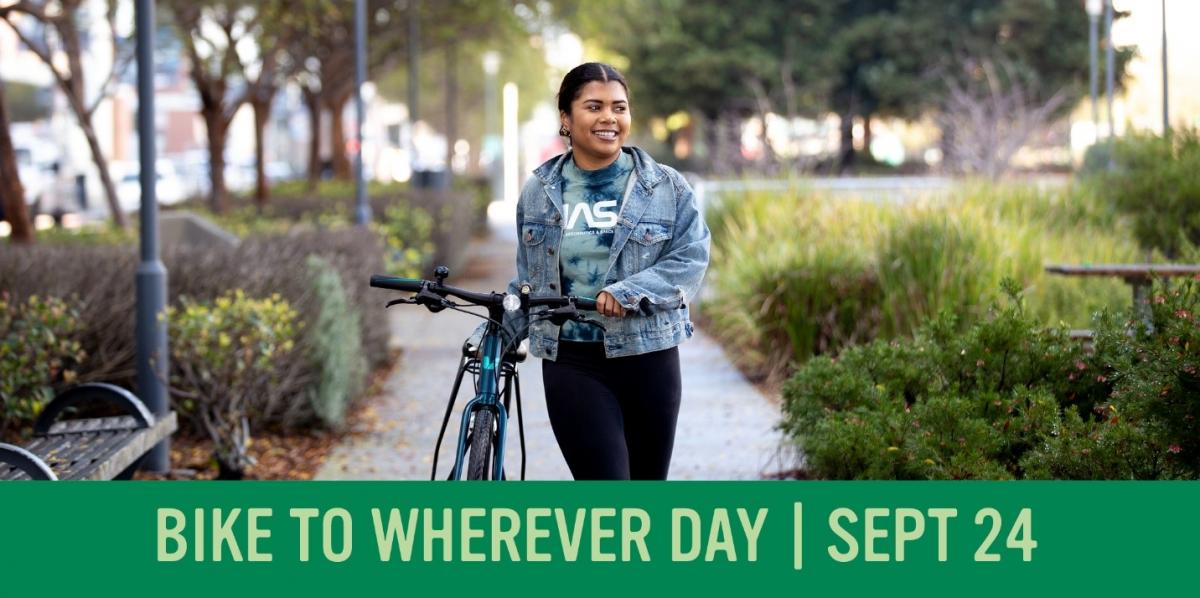
A picture of a woman walking her bicycle above text reading "Bike to Wherever"

Many things are different in 2020, including Bike to Work Day. With fewer people going into work, September 24 is now Bike to Wherever Day reminding people that bicycle trips aren’t just for commuting. Thanks to our new Shared Spaces program you can go to even more places.

Riding your bike helps the environment, reduces traffic congestion and is a green way to see San Francisco. As Muni is still only for essential trips, adopting alternate modes of transportation as biking helps.

To get involved with this event, on September 24th, share why bike to wherever is special to you and reward yourself with a free Bike to Wherever tote bag at one of many curbside pickup locations.

Here are the details:

  • Grab a FREE canvas tote bag via curbside pickup: pedal by the Bike to Wherever Day curbside pickup or stop by a participating bike shop to grab the classic #BTWD tote bag. 
  • Volunteer to flyer your neighborhood: help distribute bicycle safety tips to residents across San Francisco. 
  • Compete in the Bike to Wherever Days virtual challenge: throughout the month of September, as you bike to run errands, recreation, or for whatever, log the miles you ride. Compete individually or create a team among friends or coworkers for some friendly competition. Every time you pedal, you earn points and the chance to win cool prizes.

Are you new to bicycling or could you use a refresher on the rules of the road? The San Francisco Bicycle Coalition is a great resource for new and seasoned bike riders of all ages, as they offer a variety of free educational workshops, including how to ride and navigate safely on San Francisco streets. We’re excited to continue our partnership with the San Francisco Bicycle Coalition and celebrate biking as a healthy, environmentally friendly way to get around.


Published September 23, 2020 at 02:23PM
https://ift.tt/361JhGf

Tuesday, 22 September 2020

Fare Inspection Reimagined

Fare Inspection Reimagined
By Kimberly Burrus

As Muni’s Transit Fare Inspectors return to service, the SFMTA is excited to share a new approach that we have for how we will check for fare payment and interact with our customers. Rather than focusing solely on enforcement, the priority will shift to helping customers comply with fare policies. To support this new approach, our Transit Fare Inspectors will be returning over multiple phases this fall and they will have a new look.

At the beginning of the public health emergency, Muni fare inspectors took on disaster service worker duties, but Muni never stopped collecting fares. Muni customer fares provide approximately 20% of our revenue and we depend on fares to provide transit service.

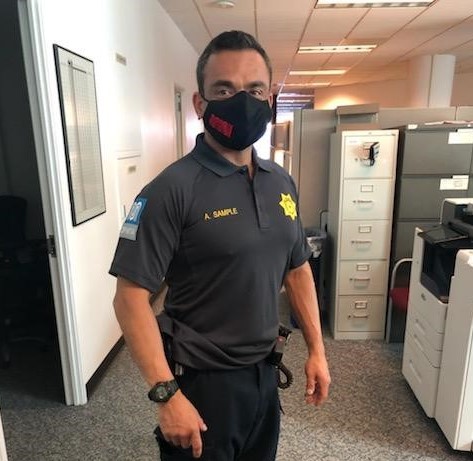
A Transit Fare Inspector wears a new uniform and Muni face covering.
A Transit Fare Inspector models their new uniform.

Phased-in Return

This week Muni fare inspectors have joined SFMTA’s larger ambassador program to provide customer assistance throughout the system. This is the start of the phased-in process for Muni to resume fare inspection.

  • The first phase includes providing Muni customers with service information, fare programs, kiosk location, physical distancing assistance and mask distribution when needed at stops and stations throughout the system.
     
  • For the second phase, fare inspectors will return to being on Muni vehicles to continue providing customer assistance of phase one and conducting fare inspections without issuing citations. This is expected to begin in the latter part of October.
     
  • The third and ultimate phase will see the inspectors continuing to provide the customer service assistance of phase one and with a return to full fare inspections, including issuing citations as needed later this year.

Inspectors have always been part of our incident response when direct customer service was needed, either during an emergency or a large public event, like a parade. Now, that customer service approach will be integrated into our inspectors’ daily work.

Fare inspectors will work to ensure quality customer service, a safe experience and support for our customers. In light of the COVID-19 public health emergency, inspectors will remind customers that masks are required while customers are waiting to board and to maintain physical distance.

We will be:

  1. Leveraging our innovative community-based Muni Transit Assistance Program as a model for our system-wide inspectors
  1. Reorganizing the Proof of Payment unit. The new approach will allow inspectors to:
    • Support and coordinate better with each other and Muni operators
    • Spend more time on vehicles
    • Cover more of the city

Muni’s Proof of Payment system means that if you are onboard a vehicle or on a station platform, you are expected to have a tagged Clipper Card®, a transfer, a subway ticket or an active MuniMobile ticket – proof that you have paid your fare.

The changes we’re making to the Proof of Payment program will allow for larger reach and presence on the system. It will help us ensure that when there are inspections, they apply to all customers and that we prioritize visibility and compliance over enforcement.

Compliance Instead of Enforcement

As the Transit Fare Inspectors return, our inspectors’ priority will be helping customers comply with fare policies. They will eventually issue citations again, but the focus will be on service and compliance. The compliance model will help support our operators while helping to ensure that all our customers have financial access to Muni.

Here’s a summary of our new fare compliance approach:

  • Data will inform fare inspector deployment. Inspectors will be deployed on routes with high ridership across the city—both those with few incidents of fare evasion and those with higher incidents. So, if you see Muni inspectors in the Mission, you will also see them in the Presidio. If they are on the 14 Mission, they will also be on a line like the 1 California.
     
  • Inspectors will enter the vehicle in groups of three at the beginning of the line, or at a rest stop, and ride a segment of the line. One inspector will check on the operator while the other two will be in the passenger area for customer support and fare compliance reminders.
     
  • Inspectors will remind customers to tag or show fare media as they enter the vehicle. This replaces the past practice of fare inspectors making an announcement, inspecting everyone onboard and removing customers that don’t have proof of payment. Inspectors will also have handouts to provide to customers about our discounted fare programs.
     
  • We will be conducting periodic full inspections of all customers onboard a vehicle, including inspection announcements. This style of inspection will occur on a random schedule at most transfer points.

Please Tag!

Once fare inspectors are on vehicles and assisting customers to ensure compliance, you will see the same dedicated professionals in less formal uniforms. They will still ask to see proof of fare such as paper transfers, MuniMobile tickets and other types of Muni fares. They will also be looking for customers to tag their Clipper(R) cards as they board. Although you won’t get a citation for simply forgetting to tag your Clipper Card with your Muni Pass on it, tagging gives fare inspectors a less disruptive way to determine if you have paid your fare.

Perhaps even more important is the fact that tagging helps us make Muni better. We use the data from Clipper tagging to better understand the changing travel patterns in the city and the changing needs of Muni customers.


Published September 22, 2020 at 03:45PM
https://ift.tt/3kGmt2R

Tuesday, 15 September 2020

Muni Transit Recovery and Measuring the Transportation Recovery Plan’s Progress

Muni Transit Recovery and Measuring the Transportation Recovery Plan’s Progress
By Bradley Dunn

As the economy takes further steps to reopen this month, the SFMTA remains committed to transparency. Today, we are releasing our Muni: Transit Recovery (Recuperación de Muni Transit, 恢復公交服務, and Pagbawi ng Muni Transit) report along with new data dashboards that help us evaluate the SFMTA’s overall response during COVID-19. Taken together, these reports give a window into what we are doing and how we plan to move forward.

Muni: Transit Recovery Report (Recuperación de Muni Transit, 恢復公交服務, and Pagbawi ng Muni Transit)

This report explains how we are adapting to meet San Francisco’s changing transportation needs and what our customers and the public can expect from Muni. It also reminds our customers of both what they need to do to ride Muni and what we’re doing to minimize the risk of transmission while getting essential workers where they need to go. 

Examples include:

  • What we are doing to minimize transmission risk for our staff, especially operators and other frontline workers
  • How we’ve stepped up sanitizing our vehicles
  • How we’re providing service with the agency’s COVID-driven budget crisis
  • How we are delivering service to people who need it the most
  • What we are doing to be transparent, share data and conduct outreach to the public

Our Muni Transit Recovery (Recuperación de Muni Transit, 恢復公交服務, and Pagbawi ng Muni Transit) report represents key customer-facing initiatives associated with our Transportation Recovery Plan (TRP).  The TRP is guided by the following goals: 

  • Protect the health and safety of SFMTA employees and the public.
  • Support a strong economic recovery
  • Promote sustainable alternatives such as walking and bicycling.
  • Advance the SFMTA’s equity, environmental sustainability and customer service goals;
  • Adapt transportation infrastructure and services to best serve San Francisco in the long term.

Transportation Recovery Plan Dashboards: See the Data Driving Recovery

We have designed an evaluation framework for the TRP that is nimble and representative of the recovery goals above. Today we’ve published our TRP Evaluation Dashboards so that you can track our progress.

These dashboards provide a holistic view across the programs within the TRP so anyone can track our progress toward our goals. Our evaluation framework identifies high-level objectives aligned with the goals of the TRP and trackable metrics. These allow us to monitor progress on the TRP’s most prominent strategies including COVID-19 Muni Core Service, Temporary Emergency Transit Lanes, Slow Streets, and the multiagency Shared Spaces program.

SFMTA relies upon pre-pandemic data and along with data made available by the implementation of our recovery solutions and programs to make strategic decisions and address trade-offs. Individual dashboards will be updated either weekly or monthly, based on data availability. Additionally, as our recovery efforts are ongoing, additional data will be made available as we refine and expand our evaluation efforts.

We are working hard to meet San Franciscans' changing transportation needs during this pandemic. New programs and initiatives require that the public trust us as we act quickly to try new approaches and work to refine and improve our efforts. Publishing this data helps members of the public see much of the same data that we use to make our decisions.


Published September 15, 2020 at 01:30PM
https://ift.tt/33tZbq5