Thursday, 30 December 2021

The Infrastructure Bill and the SFMTA

The Infrastructure Bill and the SFMTA
By

What the infrastructure bill means for the SFMTA

On December 20, Speaker of the House Nancy Pelosi joined Mayor London Breed and US Representative Mark DeSaulnier to promote the Infrastructure Investment and Jobs Act that was signed into law in November. They held an event at the corner of Second and Howard Streets to explain how the bill will benefit California and show the type of street improvements it can pay for to improve pedestrian safety. These include things like wider sidewalks, protected bike lanes, transit boarding islands and ADA-compliant curb ramps. It’s through these types of improvements that San Francisco will be able to reach its goal of eliminating traffic fatalities.

The Metropolitan Transportation Commission (MTC), which coordinates Bay Area transportation financing, estimates that the infrastructure bill will provide about $4.5 billion in funding to the region over the next five years via formula funds that the MTC allocates. This is $1.1 billion more than was available than during the last five-year funding cycle.

The MTC will decide how to divide up the infrastructure bill formula funds among Bay Area transit agencies. It can go toward State of Good Repair needs such as fleet replacement and rehabilitating cable cars and historic streetcars. It can also be used to fund “guideway” needs like replacing rails and overhead cables. If the MTC follows its historic pattern of formula funding distribution, the SFMTA can expect 27% more in additional funds for Fleet Replacement and 49% more in additional funds for Fixed Guideways than during the last funding period.

The infrastructure bill also includes about $140 billion in competitive grant funding that will be administered throughout the country by the U.S. Department of Transportation. The SFMTA is in a good position to compete for these funds, which are available for capital investments; low-emission and no-emission vehicles and infrastructure; and safe streets projects like the one that was highlighted at Speaker Pelosi’s Dec. 20 event. But, since these funds are available through a competitive process, nothing is guaranteed. For example, the safe streets funding is the first nationally competitive program of its size, so we anticipate that competition for it will be strong.

As great as it is that the SFMTA and other transit agencies will receive extra funding through the infrastructure bill, it’s not enough money to eliminate all the agency’s financial needs. The infrastructure bill doesn’t provide any funding at all for operating expenses, which increase every year because the cost of parts, labor, fuel and living in the Bay Area just keep going up. It also doesn’t make a sizeable dent in our State of Good Repair needs and our funding needs for major capital projects.

Additionally, almost every source of federal funding requires a match of 20% from local sources, and in many cases, it requires more than that. The federal government wants to see that local policymakers prioritize the transportation needs the feds are being asked to support. This is where the Muni Reliability and Street Safety General Obligation Bond proposed for the ballot in June 2022 comes in. It could be a source of local matching funds for some of the federal funding the SFMTA is going to apply for. GO Bond funding could also support projects that the infrastructure bill is less likely to fully fund, such as facility replacement.

While funding facilities may not be as exciting as funding zero-emissions buses, the two are inextricably linked. Several SFMTA facilities will need to be fully replaced to be able to store and charge the new buses once we transition completely to battery-electric buses. Upgrading our facilities is also essential to providing a safe and healthy working environment to our staff. Some of our facilities are so old that they don’t have heat and aren’t ready for a major earthquake. Providing our staff with safe working conditions is crucial for the functioning of transportation in San Francisco.


Published December 30, 2021 at 08:30AM
https://ift.tt/3mHFUM0

Wednesday, 29 December 2021

Muni Highlights in 2021: More Service to More Destinations

Muni Highlights in 2021: More Service to More Destinations
By Jonathan Streeter

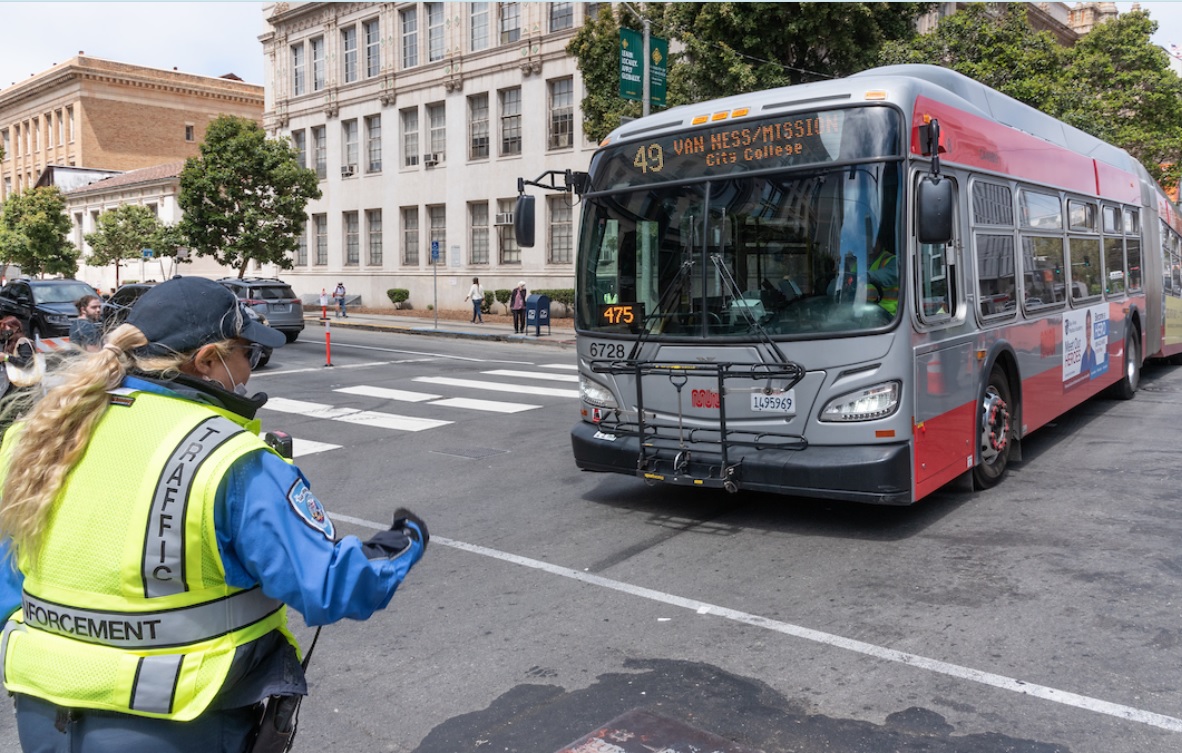
Photo of a traffic control officer guiding a 49 Van Ness bus through an intersection

Our goal for Muni in 2021 was to match the service we offer with the changing travel patterns of an unpredictable era, as San Franciscans grappled with a second year of the COVID-19 pandemic.  To achieve this, we expanded on the core routes that formed the nucleus of our early 2020 pandemic network by adding and improving service in key areas throughout San Francisco. We focused on access in neighborhoods where essential workers live, as well as on adding service in busy corridors and even creating new lines.

At the beginning of the year, even with our reduced schedule, 91% of San Franciscans were within two or three blocks of a Muni stop. This included 100% of residents in San Francisco’s neighborhoods identified by the Muni Service Equity Strategy. By summer 2021, we added enough additional service so that 98% of San Franciscans were within two or three blocks of a Muni stop.

To the relief of many, and as an early sign of the city’s return to some sense of normalcy, we brought back Muni Metro service in the subway in May 2021, with access to all stations from Embarcadero through to West Portal. The SFMTA worked to address longstanding subway congestion issues that were a major cause of delay pre-pandemic by exclusively running two-car trains in the subway, including a combined KT Ingleside Third, and as-needed shuttle service. In doing so, we were able to increase capacity and improve on-time performance over the course of the year. The J Church is scheduled to return to the subway in February 2022 while efforts to address longtime subway service challenges continue.

To help support the economic recovery of the city, local tourism and small businesses we also brought cable cars back to the hills of San Francisco in September 2021 after extensive maintenance and testing. These iconic cars not only serve as a symbol of our city, they also provide an important link on steep streets between downtown and Fisherman's Wharf, as well as to Cathedral Hill.

On the street, San Francisco traffic returned to near pre-pandemic levels. To keep transit service fast and reliable for essential workers and those with the fewest transportation choices, we implemented temporary emergency transit lanes (TETLs). These lanes are dedicated to Muni vehicles to help keep our customers moving, as well as helping other buses and, in most cases, taxis.

Of the nearly 10 miles of lanes initially implemented, almost six miles of these transit lanes have been made permanent because of their success in protecting transit travel-time savings. That’s the fastest expansion of transit lanes in the city’s history! These transit lanes give nearly two-thirds of Muni riders priority on congested streets and improve the speed and reliability of bus service; getting you to your destination faster.

A significant aspect of transportation in 2021 was the continued shift by Muni riders toward using buses and trains for essential trips and to stores, appointments, schools and recreational destinations rather than to downtown for office work. We responded to these changes by modifying routes.

For example, we launched the temporarily combined route the 36/52 Special which served the hilltop neighborhoods of Forest Hill, Miraloma and Sunnyside in a loop between Forest Hill Muni Station and Glen Park BART Station before service was restored to the 36 Teresita and 52 Excelsior in August. As travel patterns shifted over the year, SFMTA’s transit planners developed creative solutions to meet San Francisco’s evolving transportation needs with available resources.

The SFMTA continued to face resource limitations in 2021 that curtailed our ability to bring service back to our original network. Without enough operators and other key staff, we had to make tough choices about which lines to serve and how much frequency to provide. Muni ridership has also not fully recovered. As of December 2021, ridership throughout the network is still at about only half of pre-pandemic levels.

We asked San Franciscans in fall 2021 what we should prioritize when we’re able to add more Muni service in 2022. Based on feedback from meetings, emails, phone conversations and more than 4,500 survey responses, we developed a plan that focuses on restoring connections and meeting the needs of all San Franciscans, especially people with disabilities and seniors. We also heard a call for increased frequency to reduce crowding and wait times on high ridership Muni lines.  That proposal was approved by the SFMTA Board of Directors on December 7, 2021. 

Throughout the year, Muni customers have shown that they are increasingly ready to return to riding buses and trains and are eager for our network to serve all their desired destinations in San Francisco. We are grateful for the cooperation of the public with revised schedules, mask mandates and other changes that the pandemic has necessitated. We are also incredibly grateful to the people who drive our vehicles through city streets with professionalism, courtesy and safety every single day.

To read more about how we “met the moment” review our 2021 Annual Report.


Published December 29, 2021 at 02:45PM
https://ift.tt/3qCDUpy

Monday, 27 December 2021

Free Muni for New Year’s Eve

Free Muni for New Year’s Eve
By Stephen Chun

2021 marks the 22nd consecutive year that we will offer free rides on New Year’s Eve. Starting at 8 p.m. on Friday, December 31 and going through 5 a.m. on Saturday, January 1, all trips on Muni will be free. This program supports San Francisco’s Vision Zero goals to eliminate all traffic fatalities and serious injuries as well as promotes safe and responsible transit during the New Year’s festivities.  

Please note that face masks are still required by federal law while riding Muni, in Muni stations, on paratransit and in taxis. Violations can result in denial of boarding or removal from Muni and may carry federal penalties. 

Ride Muni Free New Year’s Eve includes all Muni lines and routes. Clipper Card customers should NOT tap their cards to make sure they don’t get charged a fare. Muni Mobile passes will not be necessary. Metro fare gates will be open that night. 

New Year’s Eve Muni Service:  

  • Complimentary Muni service from 8 p.m. Friday, December 31 to 5 a.m. Saturday, January 1. 

  • Please do not tag your Clipper® card. If you tag it, you will be charged. 

  • Please do not activate a Muni Mobile ticket. Metro fare gates will be open. 

  • Extra Muni Metro service: 

  • Between West Portal Station and 4th & King from 9 p.m. until 1:45 a.m. 

  • Between West Portal and Embarcadero stations from 1:45 to 2:15 a.m. 

  • Extra service on the OWL Network, from 9 p.m. to 5 a.m.: 

  • Bus Substitutions 

  • Service on the F Market & Wharves historic streetcar line is provided by buses all day 

At midnight on New Year’s Eve, a city-sponsored fireworks show from a barge off The Embarcadero, south of the Ferry Building, will take place. Motorists should anticipate delays in the area from approximately 11 p.m. to 1 a.m. Beginning around 10 p.m., Muni will reroute around the Ferry Building area due to the anticipated crowd. For reroutes, please visit New Year's Eve Free Muni and Extra Service. Service will return to normal once the streets are clear.  

BART, with full fare pricing still in effect, will run standard Friday service, but with an extended closing time to allow people to enjoy fireworks in San Francisco or other festivities ringing in the New Year. For those celebrating in downtown San Francisco, the last East Bay bound train running through Downtown San Francisco will be at around 1:30am and the last Southbound train heading toward Millbrae will run through Downtown San Francisco at 2:10am. See the full details about New Year's Eve service.   

Caltrain service will be free after 8 p.m. on New Year’s Eve until the last special post-event train departs San Francisco. Trains will run past midnight until 1:30 am or until full.  

SamTrans will offer free rides on all buses beginning at 8 p.m. on December 31 until 5 a.m. on January 1.  


Published December 27, 2021 at 09:20AM
https://ift.tt/3pv8j9W

Thursday, 23 December 2021

Central Subway Revenue Service Update

Central Subway Revenue Service Update
By Enrique Aguilar

Central Subway Finishes Year on a High Note

As we say goodbye to 2021 and bring in the new year, construction crews for the Central Subway remain laser-focused on the finish line and are working towards completing items in our substantial punch list. It includes testing and certifying elevators and escalators, installing all ticket vending machines and completing small tasks that need to be addressed before the start of service, anticipated for October 2022.

Early next year, construction work will continue on the surface near 4th and King streets to install overhead wire and support systems connecting the Central Subway to the existing Metro system. Train and traffic signaling work and installation of new street lighting between Bryant and Townsend will also resume on 4th Street.

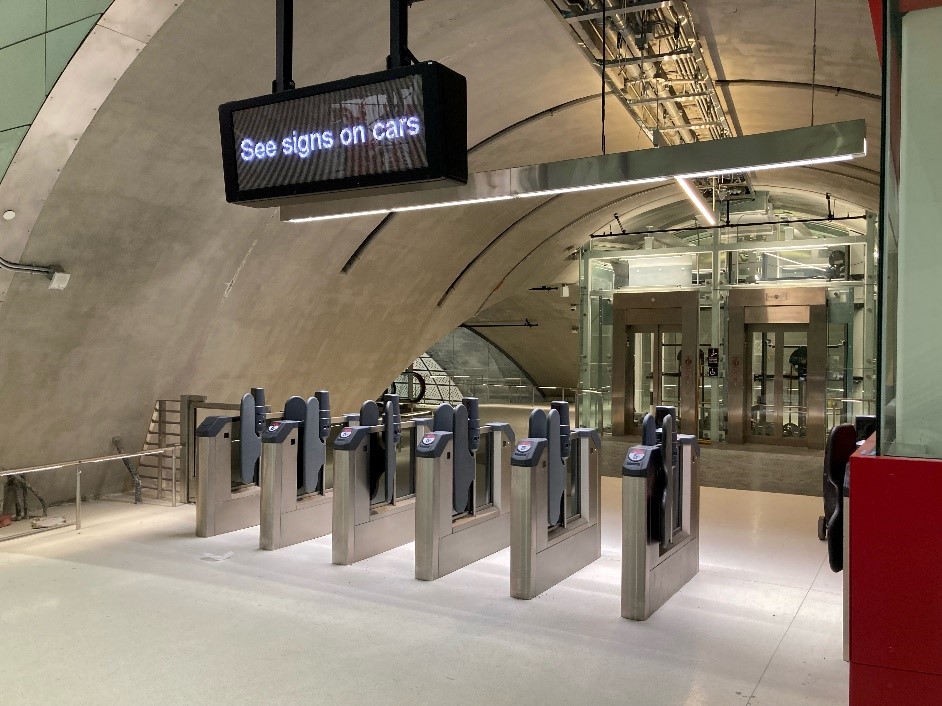
Now that station elevators and escalators are fully functional and tested, equipment must be certified to meet local and federal safety requirements. Fare gates have been installed at all stations and we expect to complete the installation and testing of ticket vending machines In January. With train testing in full gear since August, we anticipate concluding operational testing in the summer of 2022.

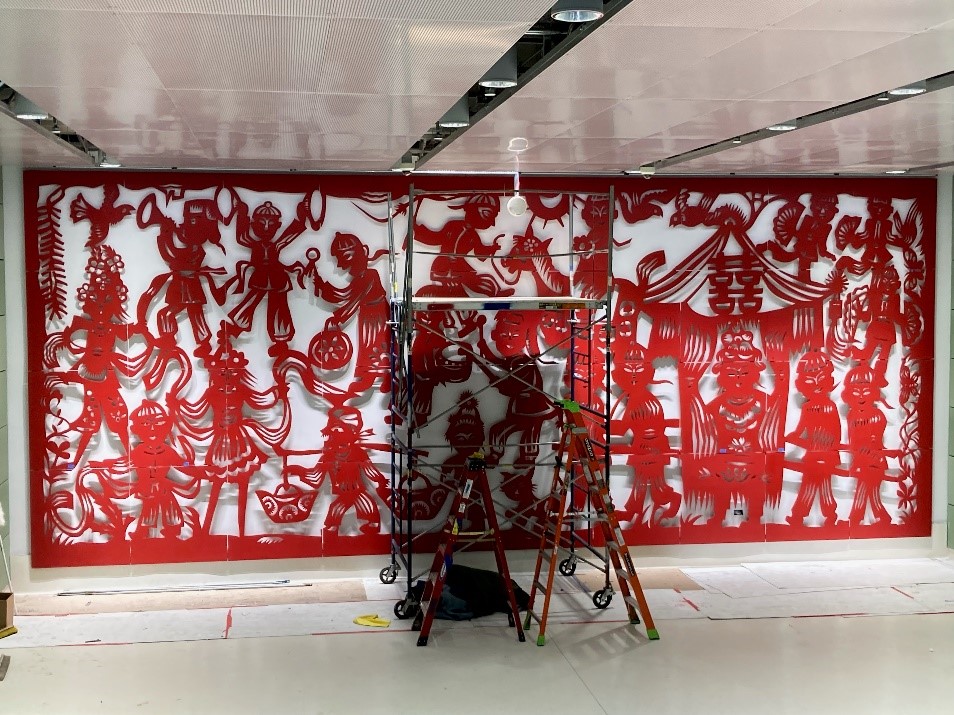
Artwork by Yumei Hou is being installed in Chinatown/Rose Pak Station. The artwork consists of two large-scale metal installations based on Yang Ge (Sprout Dance), a folk dance originating in Northeastern provinces in China. Artwork installation in the mezzanine landing is complete and we hope to have artwork in the ticketing hall in full display by the end of the month.

We will continue to bring you updates and share the good news as we prepare for Central Subway’s grand opening and celebrate this historic moment for San Francisco. For project updates, please visit https://www.sfmta.com/projects/central-subway-project.

Recently installed fare gates at Chinatown/Rose Pak station

Recently installed fare gates at Chinatown/Rose Pak station

Artwork by Yumei Hou at Chinatown/Rose Pak Station

Artwork by Yumei Hou at Chinatown/Rose Pak Station

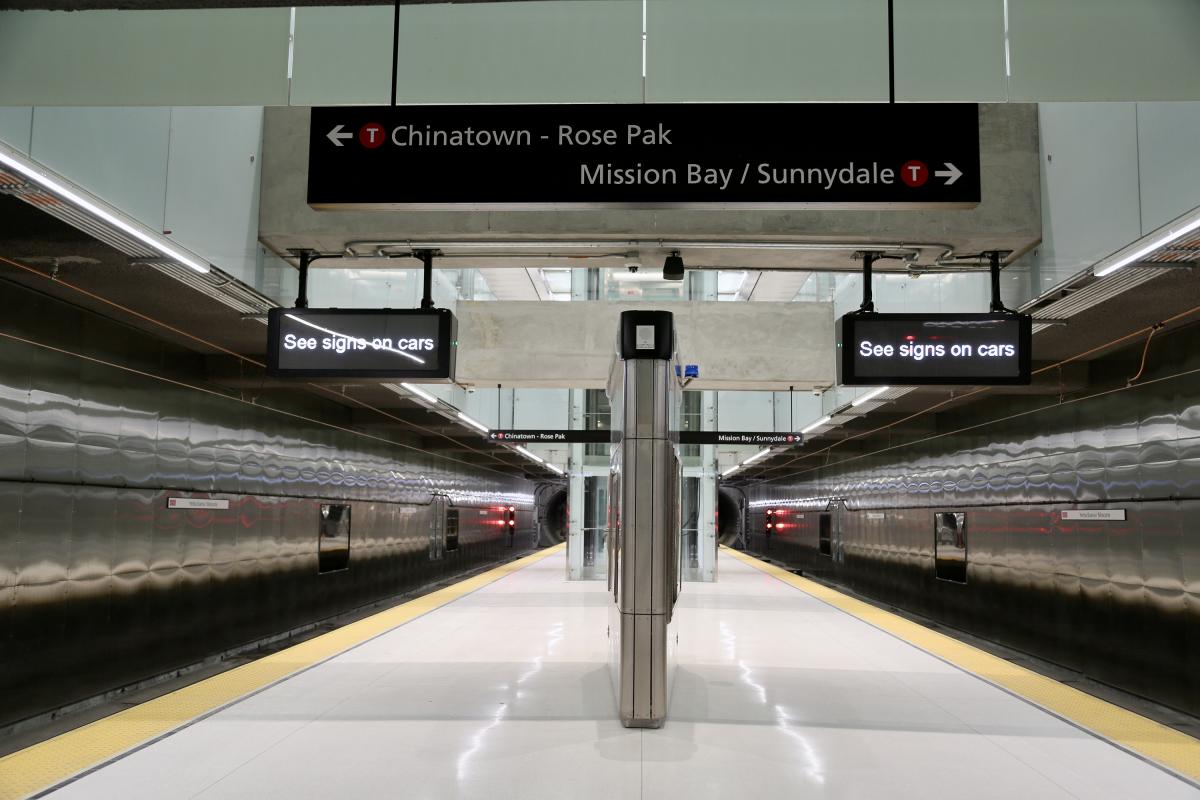
Platform at Yerba Buena Moscone Station

Platform at Yerba Buena Moscone station


Published December 23, 2021 at 10:26AM
https://ift.tt/3qoHNOG

Wednesday, 22 December 2021

Year-End Review of History Uncovered in 2021

Year-End Review of History Uncovered in 2021
By Jeremy Menzies

As the year comes to an end, we are excited to present a selection of historic photos that were preserved in the SFMTA Photo Archive this year. Archive staff have been scanning and cataloguing archival Muni photos that date back 100+ years for over a decade now. Read more about our work in the 10 year milestone blog from 2018.  

The images below are a set of richly colored slides, some of which were originally used in presentations by Muni staff in the 1970s.  These photos have a wide range of subject matter from everyday street activity to scenic vistas, project documentation and important Muni milestones. 

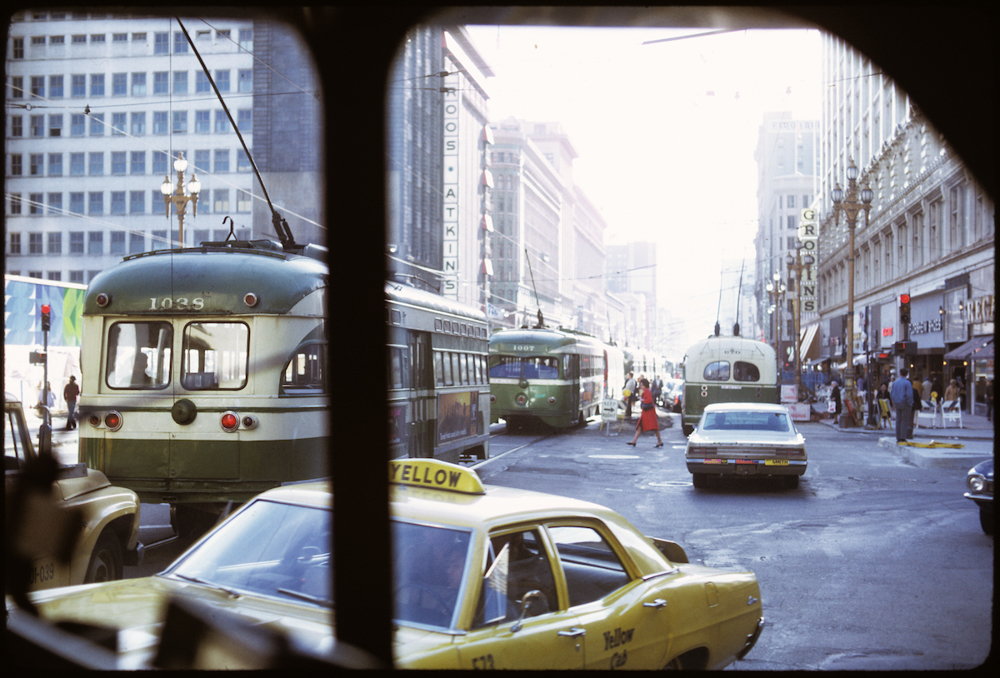
view of traffic on market street from inside streetcar

A typical day in the life of a Muni Operator.  This shot was taken near Market and 5th Streets in the early 1970s

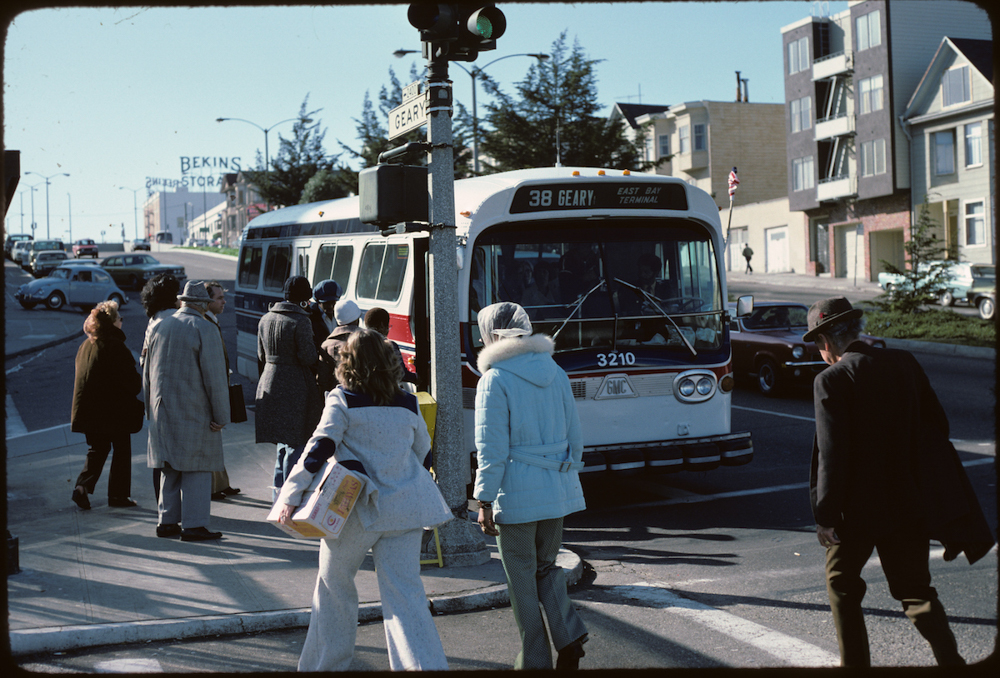
Passengers boarding 38 Geary bus with red white and blue paint scheme

Here, customers board a 38 Geary bus painted for the 1976 Bicentennial in a striking red, white, and blue paint job.

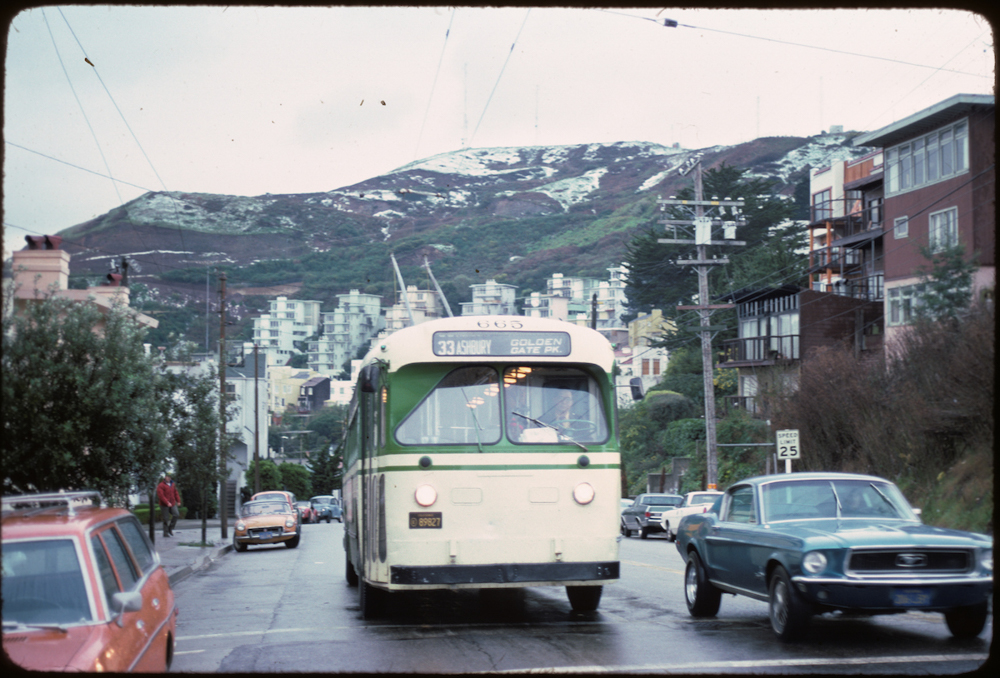
33 Ashbury bus with Twin Peaks in background

A rare snowfall is captured blanketing parts of Twin Peaks in this February 1976 photo.

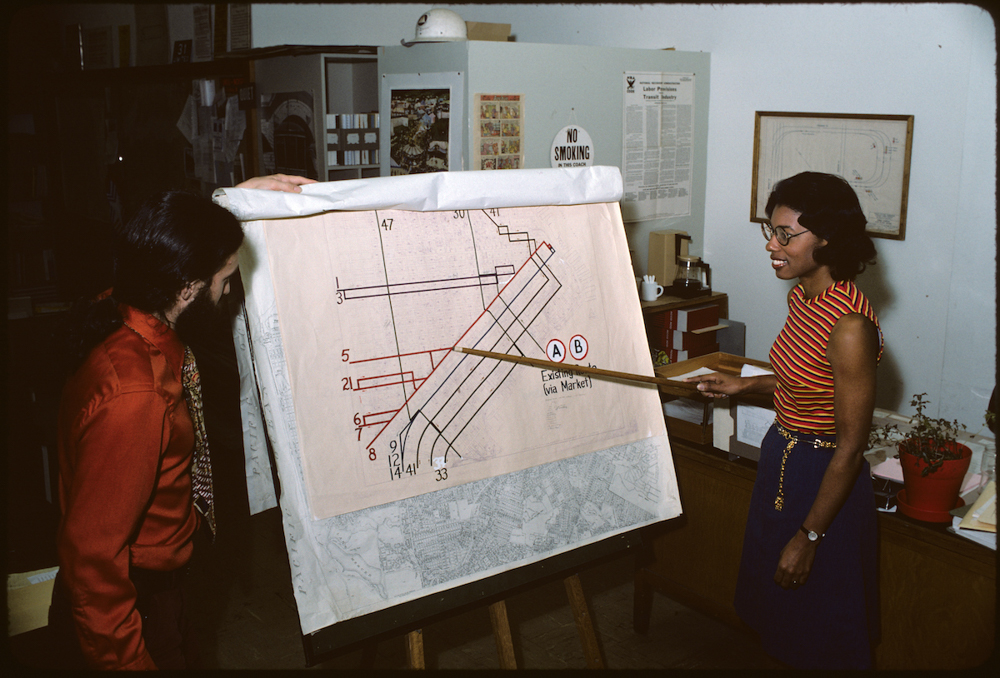
two people standing in front of and pointing at map

This shot gives a peek inside the operations of Muni, showing Planning Dept. staff reviewing a map of bus lines.

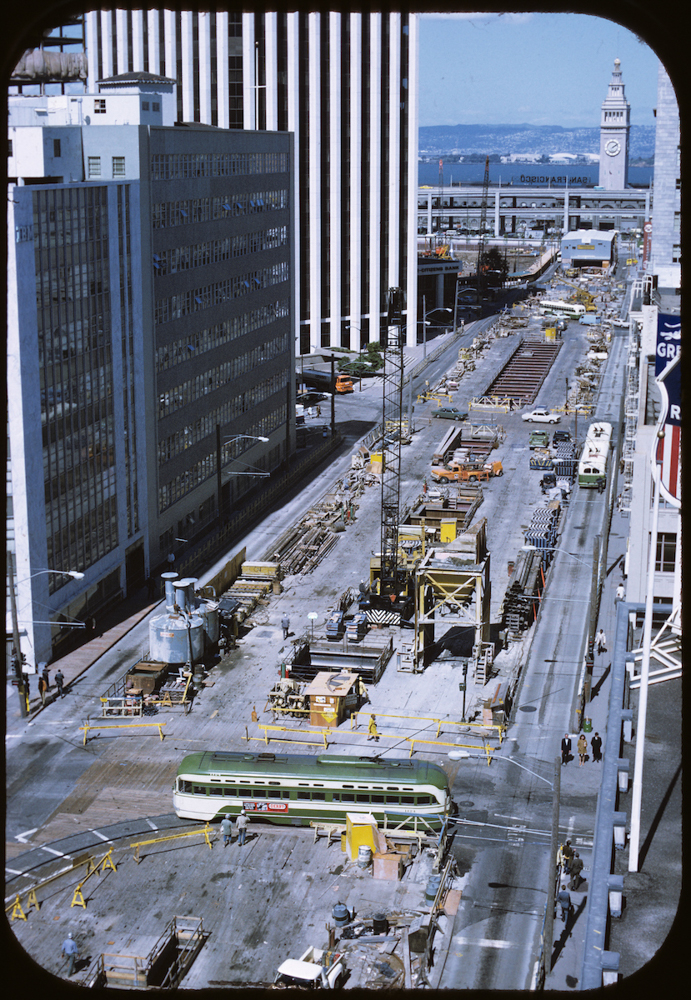
overhead view of Market Street showing construction and Ferry Building

BART and Market Street Subway construction is underway in this early 1970s photo. During construction, Market Street was closed to all vehicles except for transit and local deliveries.

In addition to the color slides, Archive staff performed selective scanning of photos from the 1970s and 80s this year. These photos bring more recent history to view and shed light on life in the city during this time.

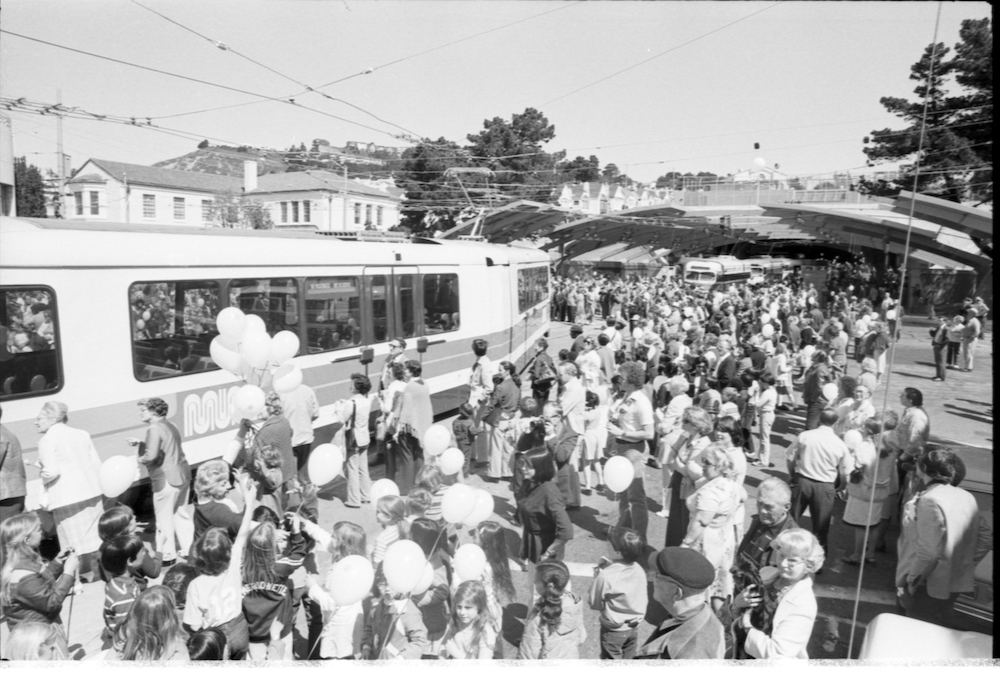
crowd of people and streetcars outside West Portal station

On April 2, 1979, the newly rebuilt West Portal Station opened with a ribbon cutting by the mayor, streetcar parade, and hundreds of citizens touring the station. Just a couple of weeks later, LRV service began on the K Line between Balboa Park and West Portal in advance of the full opening of Muni Metro the following year.

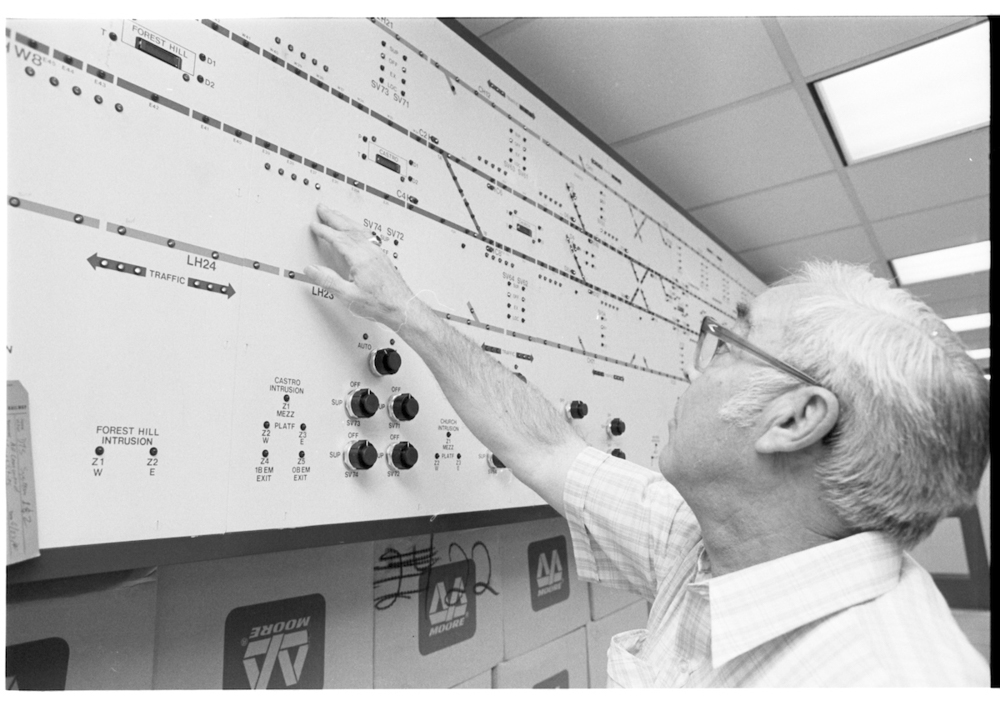
person pointing at map of subway system with lights

This 1981 shot, taken inside Muni Central Control, shows an electronic board indicating the position of streetcars within the Market Street Subway. At that time, this state-of-the-art tool was critical to monitoring rail traffic in the subway after it opened in 1980.

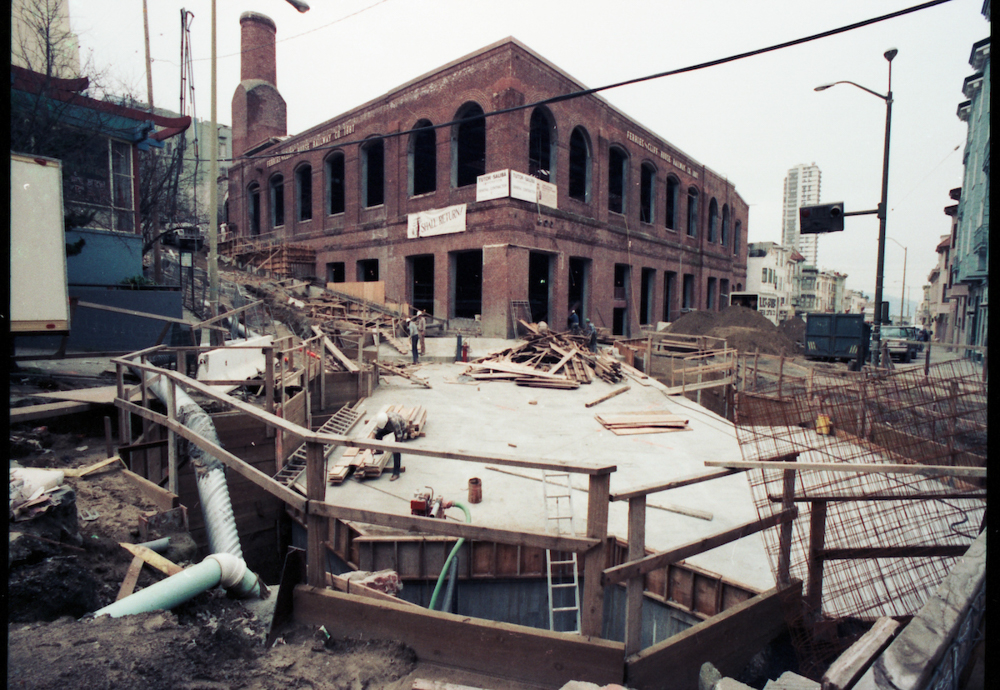
brick building with construction in foreground

Between 1982 and 84, the Cable Car system was shut down for a complete rebuild.  This 1983 photo shows the powerhouse and underground cable infrastructure under construction at Mason and Washington Streets.

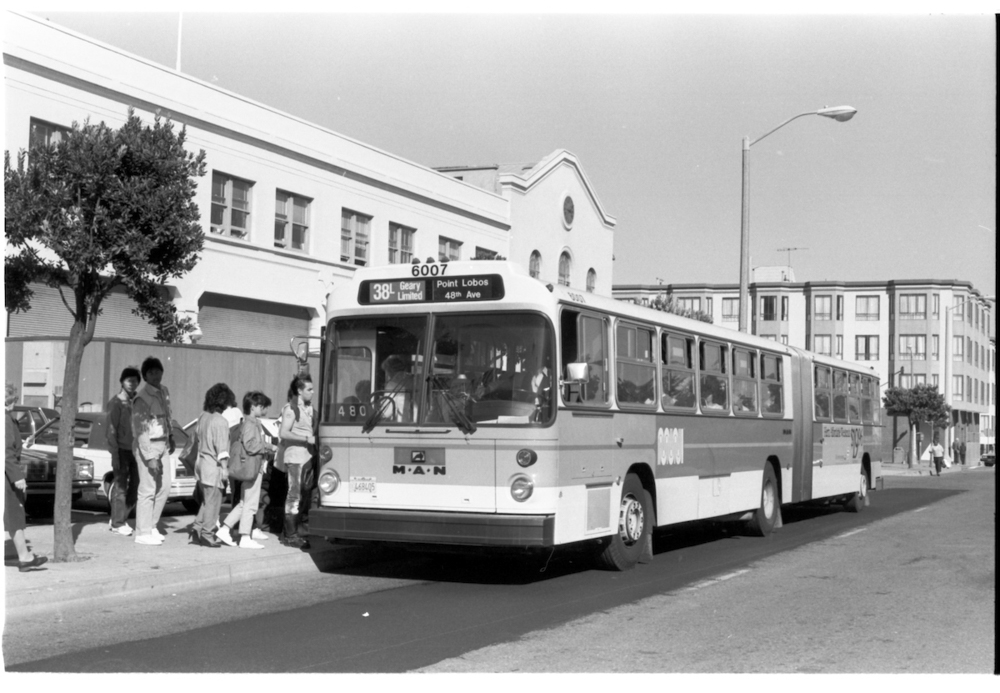
bus with people boarding

 Muni purchased its first extra-long articulated buses in the 1980s to meet demand on high ridership lines like the 38L Geary Limited pictured here at Geary and Presidio in 1985.

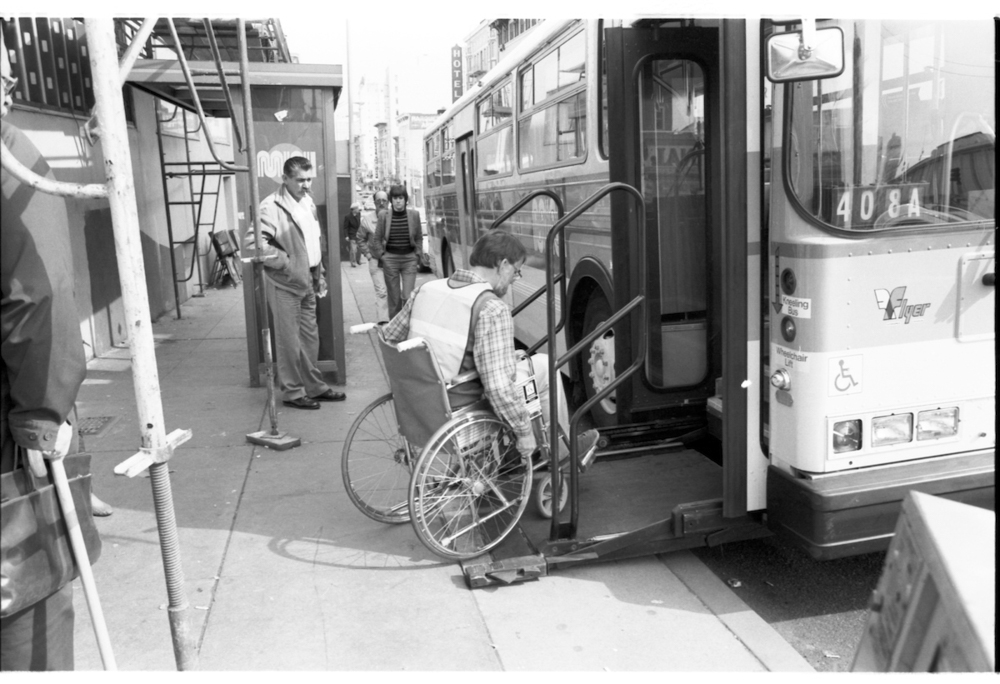
person sitting in wheelchair boarding bus

Advocacy groups and federal law brought improvements to the accessibility of the Muni system in the 1980s. With the construction of boarding ramps on rail lines, elevators in subway stations, and the arrival of buses equipped with lifts, more people were able to ride public transit.

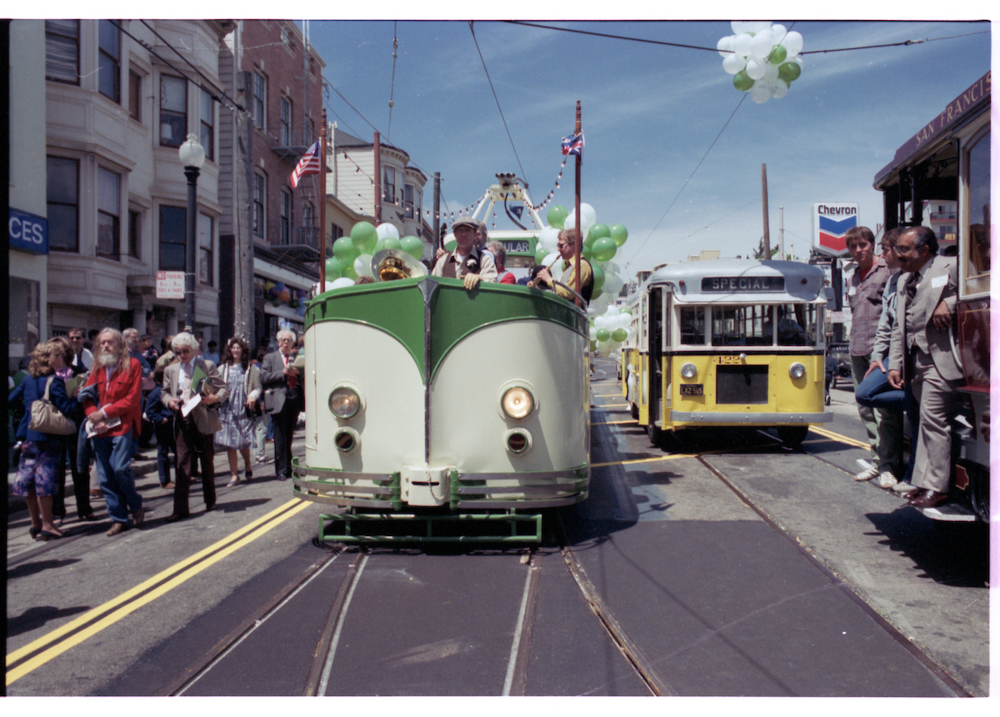
vintage streetcars and buses on street with people around

June 23, 1983 marked the first “Trolley Festival”, a celebration of the city’s long and unique transit history carried on today in the Muni Heritage festival. The open-air Boat Car, pictured here, has always been a popular attraction at the festivals.

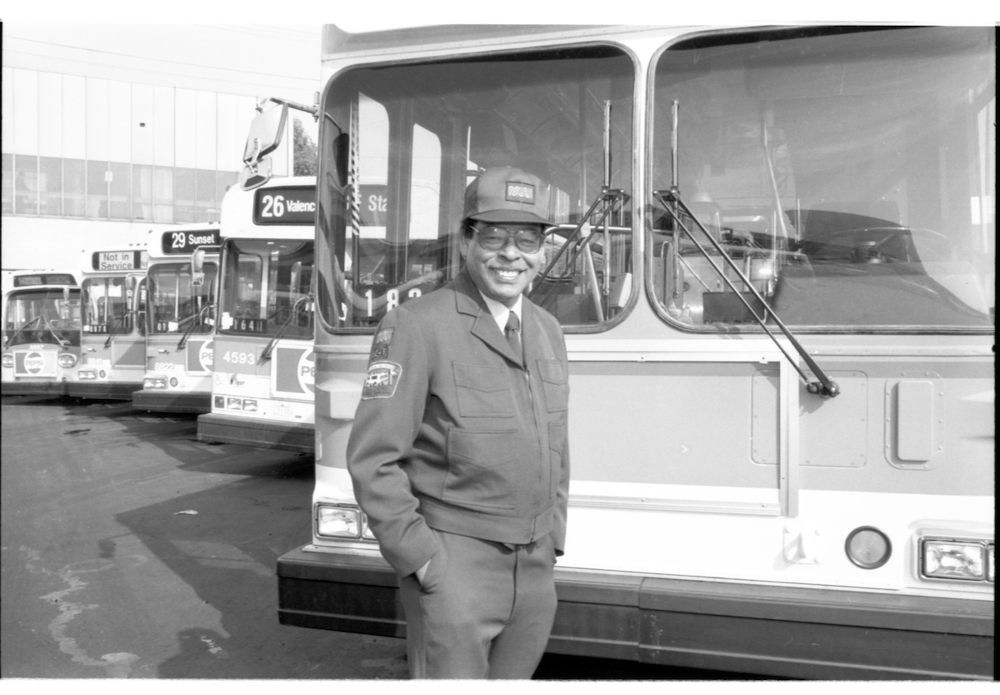
person standing in front of row of buses smiling

Muni Operator of the Month Marshall Lacewell poses in Woods Division bus yard for this January 1989 shot. Employee award photos are a common subject among the files currently being archived.

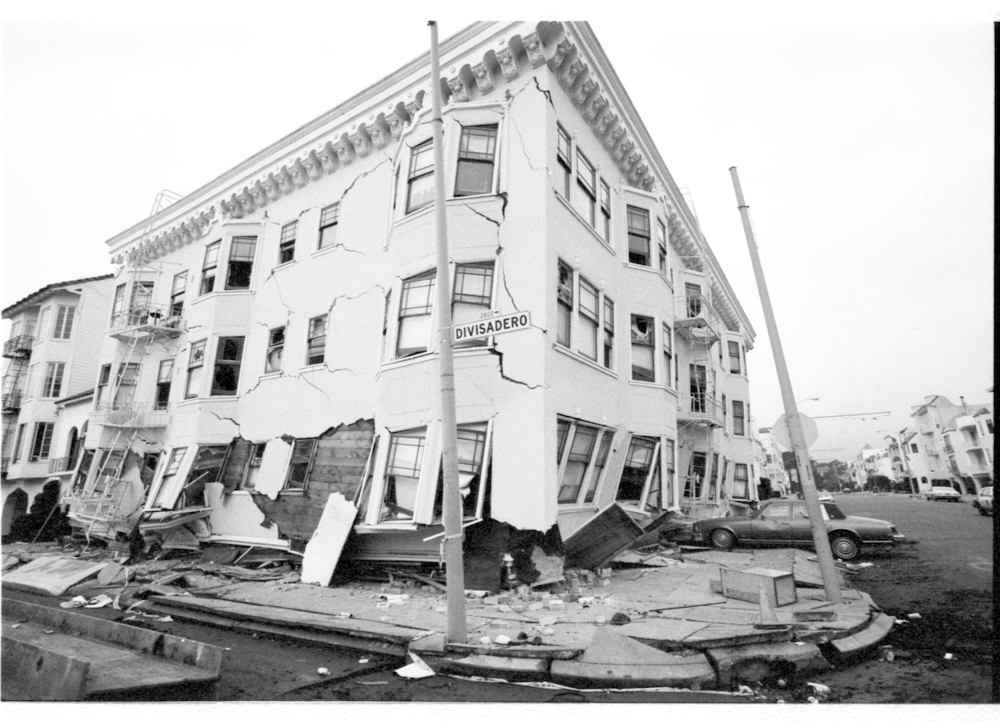
building slumped over, with cracked and damaged walls after earthquake

On October 17, 1989, the Loma Prieta earthquake struck with devastating consequences across the region. Muni staff worked through the night to restore transit service and an estimated 65% of vehicles were running by the following morning to provide essential transportation following the disaster.

trolley bus painted with christmas decorations including fireplaces, santa claus figures and candy canes

One quirky “sign of the times” shot scanned this year was this photo of Muni bus painted with Christmas decorations and a fireplace. The bus, an old Marmon Herrington trolley coach, saw limited special service in December ’89.

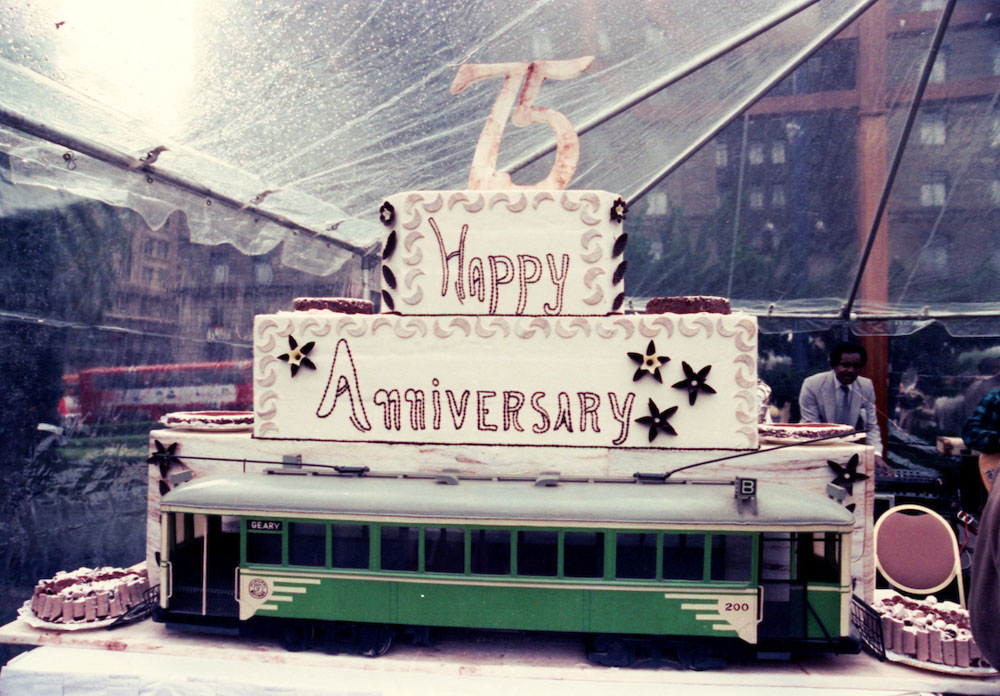
cake and model of streetcar decorated to celebrate Muni's 75th Anniversary

To finish off the list, a shot of a huge cake and streetcar model from Muni's 75th birthday on December 28, 1987.  As we look ahead to celebrating our 109th birthday this year, we thank our riders, supporters and leaders for their commitment as we strive to provide the most safe, frequent and reliable service.

Closing out the year with over a decade of new photos from 1978-1990 scanned, staff will continue this work into 2022. We hope you’ve enjoyed this look back in time at some of the latest images to be archived this year.  To see more of these and thousands other historic photos dating back to 1903, check out our Photo Archive web page


Published December 22, 2021 at 07:14AM
https://ift.tt/3yP7BHR

Tuesday, 21 December 2021

Happy Holidays from the SFMTA

Happy Holidays from the SFMTA
By Jeffrey Tumlin

As the year comes to a close, we are grateful for our riders, customers, city partners and neighbors, whose support this past year has been invaluable. We want to take this opportunity to wish you and your family a joyous holiday season and a happy new year. 

As 2021 ends, we are taking a moment to reflect on the challenges of the last year and the ways our agency was able to respond to them with courage, commitment and compassion. Our dedicated employees are the heart and soul of our agency, and we hope you’ll join us in celebrating them and the ways they’ve supported San Francisco’s recovery. 

The COVID-19 pandemic and the changes it’s provoked in the San Francisco Bay Area have required the SFMTA to rethink street design and transit operations, as well as expedite processes and practices that have traditionally taken much longer. At every step of the way, we’ve prioritized the health and safety of our customers and our workforce.  

We know it hasn’t always been smooth sailing. Even as we adjusted Muni routes to meet the needs of the community, we struggled with significant financial and staffing challenges. But, as the pandemic and people’s needs evolved, we adjusted and increased our service, making changes as we could and improving the speed and reliability of our most popular bus lines to keep public transit on schedule and traffic flowing. 

We are proud to share this and other achievements we’ve made in the new 2021 annual report. We’ve named it “Meeting the Moment,” as it captures the changes we have made, the efforts we have pioneered and the projects and programs we are leading in preparation for the transportation system of tomorrow. This report reflects the importance of our work to create a safe, reliable, equitable and low-carbon transportation system. You can find it at SFMTA.com/Annual. 

We look forward to the next year as we continue to rebuild service and develop new revenue streams that will allow us to build the first-class transportation network our city deserves. We thank you for your collaboration during these difficult times and look forward to working with you in 2022 to support the diverse and vibrant neighborhoods and people of San Francisco. 

Happy Holidays! 


Published December 21, 2021 at 06:03PM
https://ift.tt/3EgNQd5

Monday, 20 December 2021

Safe Driver Awards 2021

Safe Driver Awards 2021
By Pamela Johnson

Navigating any type of vehicle, no matter the size, through miles of hilly San Francisco terrain and sharing the roadway with others is no easy feat. Add Ubers, private and commercial vehicles, taxis, bicycles, scooters and pedestrians into the mix and the challenge escalates quickly.  

But what is even more truly remarkable is that we have 282 Muni transit operators who've managed this safe driving record with no avoidable safety incidents year after year for more than 15 years. Some for several decades!  

This year, the Muni operators named as honorees for the annual Safe Driver Award Program have met that challenge to be called a Safe Driver. Additionally, 20 new operators were welcomed to this elite club of which three have at least 35 years of safe driving: 

  • Oliverio Valle, Cable Car Division, 47 Years Safe Driving 

  • Lonnie Moore Jr, Green Division, 44 Years Safe Driving 

  • Jason Lao, Green Division, 37 Years Safe Driving 

Typically, we hold a banquet dinner to formally honor these operators who have proven to be the best of the best and the safest of the safe, but as you know, like the previous year, 2020 was anything but typical. While we cannot celebrate in person again this year, the accomplishment does not go unnoticed. A special recognition will take place during the Tuesday, January 18th Board of Director’s meeting at 1 pm. Director of Transportation, Jeff Tumlin and Transit Workers Union Local 250A will be presenting the awards. The meeting will be streamed live through SFGovTV.  

What are the criteria for being a Safe Driver? 

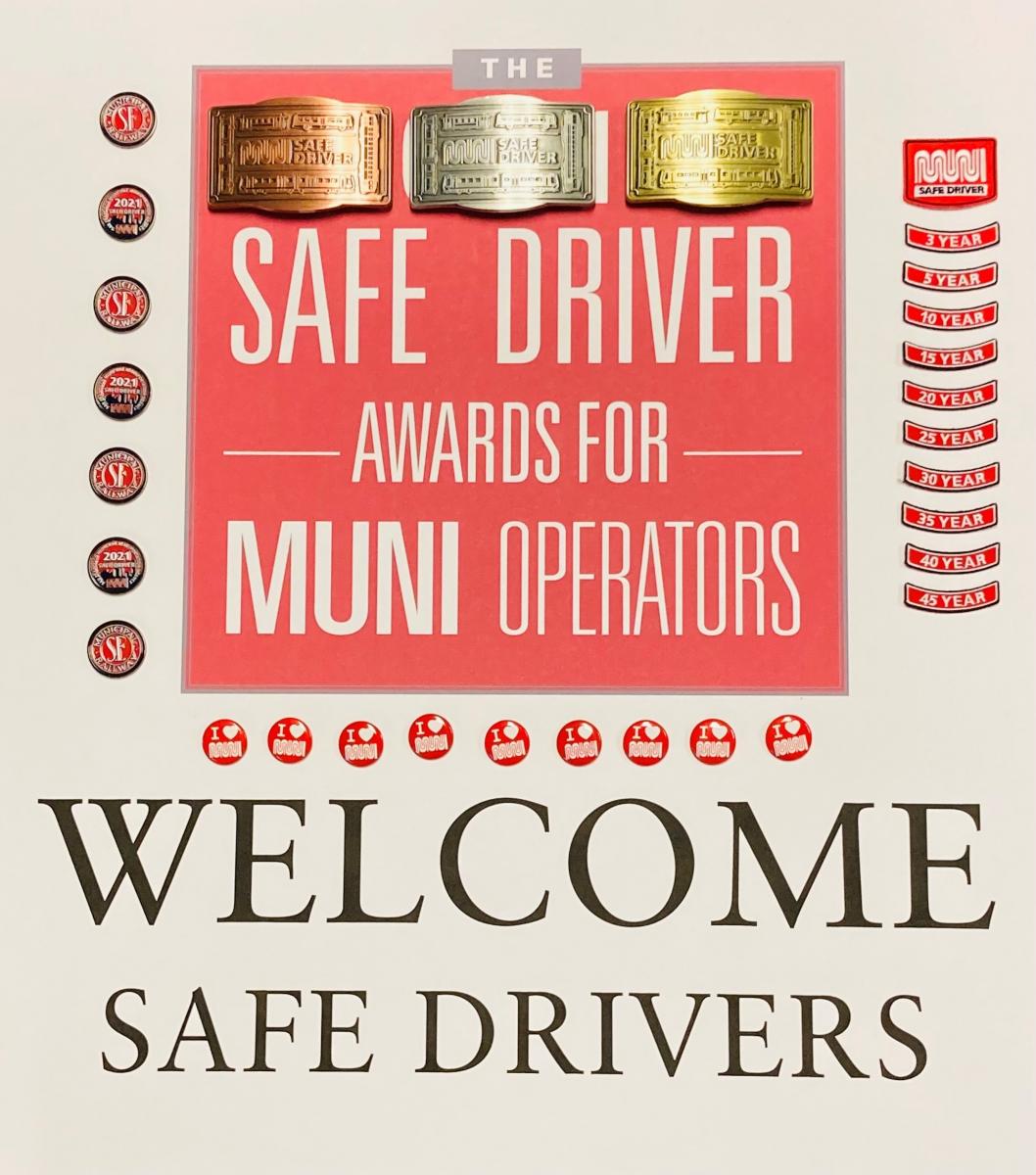
Simply put, operators who have driven a minimum of 1,952 qualifying hours* each fiscal year with no avoidable safety incidents on record. Safe drivers are also recognized with belt buckles, patches and certificates at various points. 

Qualifying hours are defined as the sum of actual hours spent operating a transit vehicle (platform hours, including both regular and overtime) plus hours of vacation taken and holiday hours granted (including floating days) within the qualifying period. Due to COVID-19, qualifying hours for FY2021 also include COVID Sick and Furlough. The qualifying period of the fiscal year is July 1, 2020, to June 30, 2021. 

It goes without saying that receiving a Safe Drivers Award is a career milestone achievement for transit drivers everywhere. Muni operators who exemplify the term "safe driver" have clearly demonstrated excellence in service and have furthered the SFMTA's ongoing commitment being a transit first city. 

This year the 282 transit operators being honored with the Safe Driver distinction have at least 15 years of Safe Driving experience and will receive a commemorative 2021 token, belt buckles, patches to wear on their uniform shirt or jacket, and a certificate.  

We thank all our drivers for their exemplary work moving San Francisco regardless of the number of years involved. The following list honors those with 15 years or more of safe driving who have earned the coveted distinction of being called a Safe Driver.​  

Safe Driver Awards 2021 token, belt buckles and patches


Published December 20, 2021 at 03:11PM
https://ift.tt/3J30mka