Monday, 31 January 2022

Bonds, Strikes and Natural Disasters: The Origins of Muni

Bonds, Strikes and Natural Disasters: The Origins of Muni
By Jeremy Menzies

The first San Francisco Municipal Railway streetcars rolled into service 109 years ago on December 28, 1912. Muni was not the first transit provider in the city, nor the first publicly run railway in the country. However, it was the first to be established in a major US city, giving it widespread recognition. Muni’s immediate success  set an example that many cities across the country would come to follow. 

Reflecting on this recently passed anniversary, we took a look at some of the key events that led to the creation of Muni. What we found was a unique political, economic and social climate in San Francisco around the turn of the 20th century, all leading to the establishment of “the people’s railway”.. 

Monopolies Control Transit 

In the late 1800s, San Francisco’s transportation system wasn’t fit for the needs of the booming city. Service was provided by more than a dozen separate companies using a mix of modes ranging from steam trains to electric streetcars. Competition between companies created a confusing network for riders with duplicative lines mostly serving downtown, each with their own fare policies. 

By 1902, multiple mergers of smaller companies led to nearly all lines being run by the United Railroads of San Francisco. Unfortunately for San Franciscans, URR’s main priority was making profits for its investors and executives, not providing the best transit service. With a near monopoly on all public transit, there was little the public could do to demand better service. 
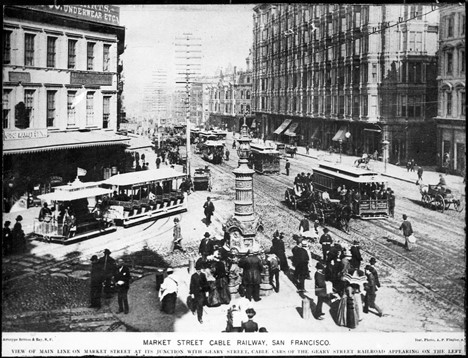
Archival photo approximately from the 1890's and early 1900's depicting San Francisco's public transit system

This is what public transit in San Francisco looked like in the 1890s and early 1900s. A complicated system of lines run by over two dozen different companies, dominated by cable cars. 

The Push for Public Ownership 

Around the turn of the 20th century, cities across the country were experiencing rapid economic and population growth as people flocked in to fill new industrial, service, and construction jobs. Life in the city exposed the deep economic differences between rich and poor. In San Francisco, a small wealthy class controlled most of the city’s industry and utilities like water, power, and transportation. Living the high life while many of those they employed struggled to get by working 12-hour days for low wages. 

The city government was seen as a tool to help equalize these disparities and popular support for the city to take control over basic utilities that everyone needed. In this political climate, a new charter was passed in 1900 which charged City Hall with gradually taking ownership of all essential public services. This charter laid the groundwork for building Muni, as well as other services that would come later, like the Hetch Hetchy Water and Power System and SFO airport. 

Disaster Exposes Deep Corruption 

The 1906 Earthquake and Fire destroyed most of the city and left vital transportation services in shambles. Shortly after the disaster, deals were made to allow URR to convert nearly all its cable, horse car, and steam lines to modern electric streetcar operation. The company’s heavy investment in reconstruction efforts improved the system and helped get the city back on its feet. 

In the years following the quake, positive public impressions of URR were quickly ruined by the discovery of bribery between company officials and City Hall. By 1910, the board of supervisors, mayor and all corrupt city officials were removed from office in attempt to clear the slate. 
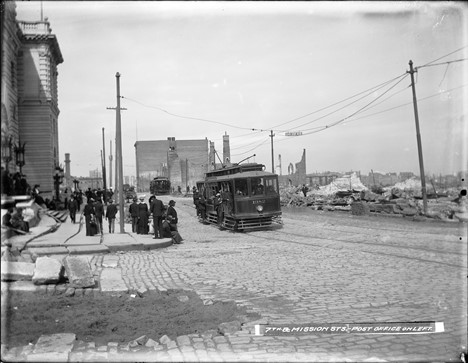
Archival photo depicting a busy electric streetcar in San Francisco on Mission & 7th

Transit service following the 1906 disaster was critical in getting the city running again. Here an electric streetcar packed with people on Mission & 7th streets passes by another essential service, the US Post Office.

Labor Unrest 

URR’s corrupt practices and focus on profits also created serious problems for the company’s workforce. In 1902 and 1907, streetcar employees went on strike to demand better working conditions. The 1907 strike lasted months, with URR hiring armed strikebreakers to battle with strikers, turning into one of the deadliest in San Francisco history. All told, more than 25 people died and 1,100 were injured from clashes and accidents.  
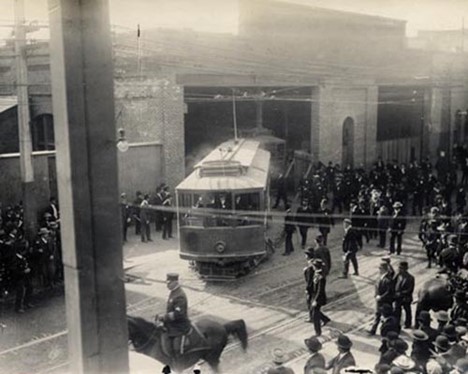
Archival photo from 1907 depicting a streetcar in San Francisco on Turk and Fillmore Streets under police protection during the deadly URR strike

This 1907 shot shows a streetcar on Turk and Fillmore Streets under police protection during the deadly URR strike. (Image courtesy CA State Library:  Dobbin, Hamilton Henry. Streetcar Strike. N.p., 1907. Print.) 

The Municipal Railway Dream Realized 

After three attempts to pass bond measures to build a city-owned railway between 1902 and June 1909, a fourth ultimately succeeded in December 1909. With over $2 million in bond money, San Francisco finally had a transit system “for the people, by the people” within sight. 

Construction began in June 1911 on the A and B Geary streetcar lines, which would serve Golden Gate Park and the ocean from Market and Kearny streets. By the end of 1912, the city had its own electric railway line with modern streetcars, a brand-new headquarters, and a promising future ahead.  

As the city’s first publicly owned utility, the opening of Muni was a source of great civic pride. On the first day of service, a reported 15,000 people rode the streetcars and more than 50,000 gathered downtown to see the dream that was years in the making. 
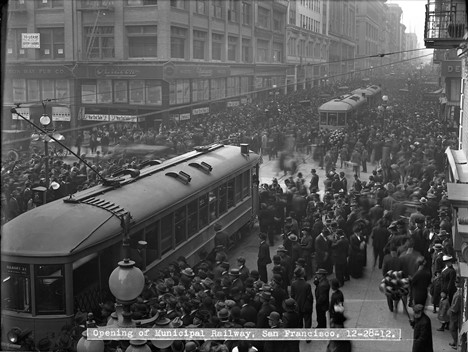
Archival photo depicting opening day of the San Francisco Municipal Railway on December 28, 1912

Opening day of the San Francisco Municipal Railway on December 28, 1912. Muni was the first publicly owned railway line in a major American city, sparking a national movement. 

Today, Muni is one of the nation’s largest transit systems. Our special blend of historic and modern vehicles, rail lines and bus routes, and administrative structure reflect our city’s history and our citizen’s values. Created in a political and economic climate as unique as San Francisco itself, Muni stands as an enduring symbol of what can be done in the “City that Knows How”. 


Published January 31, 2022 at 11:43AM
https://ift.tt/C5JvO0xTL

Thursday, 27 January 2022

Happy Lunar New Year 2022: Year of the Tiger 

Happy Lunar New Year 2022: Year of the Tiger 
By Pamela Johnson

Lunar New Year is one of the biggest holidays celebrated in many Asian communities. Diverse San Franciscan communities including Chinese, Japanese, Korean, and Vietnamese people have long celebrated this festive occasion.  For many, the Lunar New Year brings a fresh mindset and resolutions for happiness and health. A zodiac animal with specific traits represents each year in the repeating zodiac cycle of 12 years. 2022 is the Year of the Tiger, the third animal in the zodiac. The tiger is considered courageous and adventurous.  

The holiday follows the moon's cycles and usually begins in late January or early February. This year Lunar New Year begins February 1.  

Fun Fact: In the lunar calendar, the Vietnamese zodiac and the Chinese zodiac are similar, but the Vietnamese zodiac includes a cat while the Chinese zodiac includes a rabbit. 

As we enter the Year of the Tiger, join SFMTA in supporting Asian heritage events throughout January and February: 

Local Lunar New Year events:   


Published January 27, 2022 at 01:17PM
https://ift.tt/3HcxSTK

Tuesday, 25 January 2022

Bus Testing on the New Van Ness BRT Corridor a Success

Bus Testing on the New Van Ness BRT Corridor a Success
By Nehama Rogozen

Muni and Golden Gate Transit staff recently conducted important bus operations testing that is an important step towards the Van Ness Bus Rapid Transit (BRT) corridor opening this spring. This testing included emergency turns and maneuvers, repositioning buses, verifying signals are working, clearances between passing buses and safe turns while bike racks are deployed.  

The training also included several staff. Traffic engineers made sure traffic and transit signals were working and reviewed street markings. Transportation planners coordinated closely with operations, training, engineering and construction staff to make necessary adjustments. Outreach staff and ambassadors answered questions and made sure customers knew testing was taking place. Field managers and operators provided suggestions for improvements based on experience.  

Since most Muni operators are new to operating a bus on a BRT corridor, operators will be trained on the new system over the coming weeks. To ensure that their training is as robust as possible, trainers from Muni and Golden Gate Transit participated in the testing activities to see what additional skills operators will need to learn.  

The Van Ness Improvement Project is bringing San Francisco’s first BRT corridor that will improve transit service and address traffic congestion on Van Ness Avenue, in addition to providing extensive utility upgrades, civic improvements and safety enhancements.  

We know that this project has been a long ride for the community, and we are eagerly preparing for several opening activities to celebrate the new BRT corridor. These will include a ribbon-cutting, lighting of the public light sculpture, family-friendly activities and ways to support Van Ness businesses.  

During testing, our ambassadors heard lots of positive feedback from people walking. A parent remarked that it would be easier to take her daughter to school on the bus, while someone else noted that an ambulance successfully used the red lanes to cut through traffic, saying, “Wow! I didn’t think about it until now, but I see how this is not only good for those of us riding the bus, but also really good for emergency services!” Someone else commented that the BRT system, despite delays, “was well worth the wait.” 

In the meantime, there remain a few more specific turns that need to be tested, so if you see buses in the median, please do not attempt to board them. Sidewalk signage is directing customers to the correct stops that are currently boarding from the sidewalk curb. We look forward to welcoming you aboard buses in the BRT corridor in just a couple of months.  

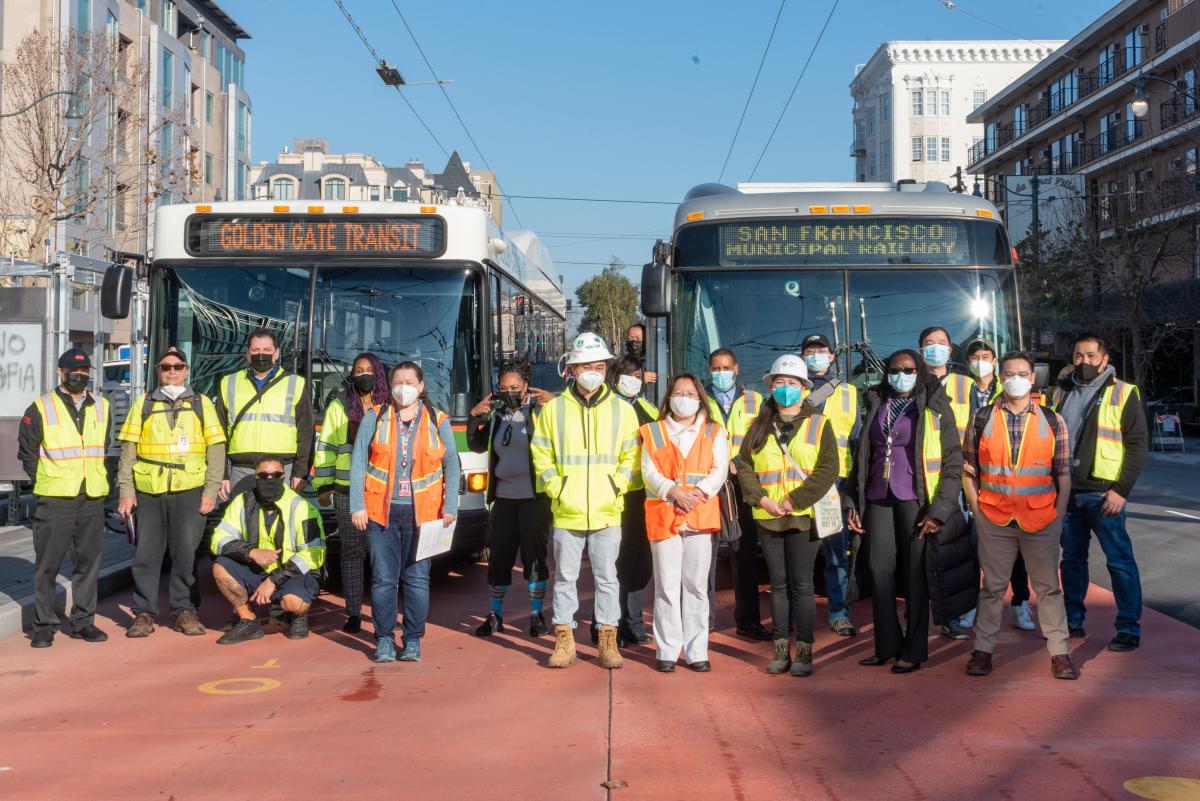
 Approximately twenty folks wearing yellow and orange safety vests pose in front of a Golden Gate Transit bus and a Muni bus on the red lanes. Van Ness buildings are visible in the background.

Staff from Muni and Golden Gate Transit in front of revenue vehicles before testing begins. 

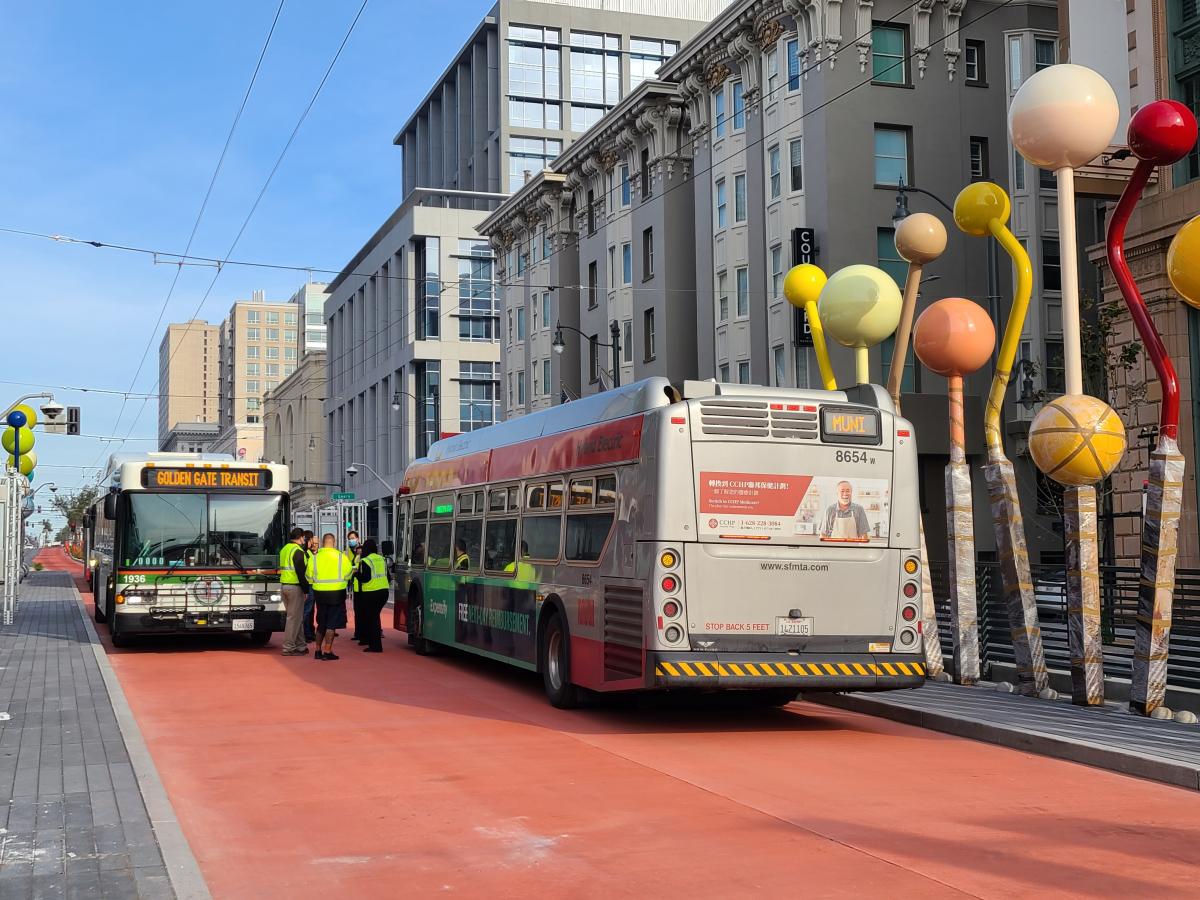
A Golden Gate Transit bus and a Muni bus are parked next to each other in a red transit lane, with staff standing between the two buses. On each side of the platform, public artwork is visible. The public artwork is composed of tall balls in various colors attached to poles, curving in various directions. In the background are mostly housing complexes.

Staff measure passing distances between a Golden Gate Transit bus and a Muni bus at the Geary-O'Farrell BRT stop, where public artwork is being installed. 

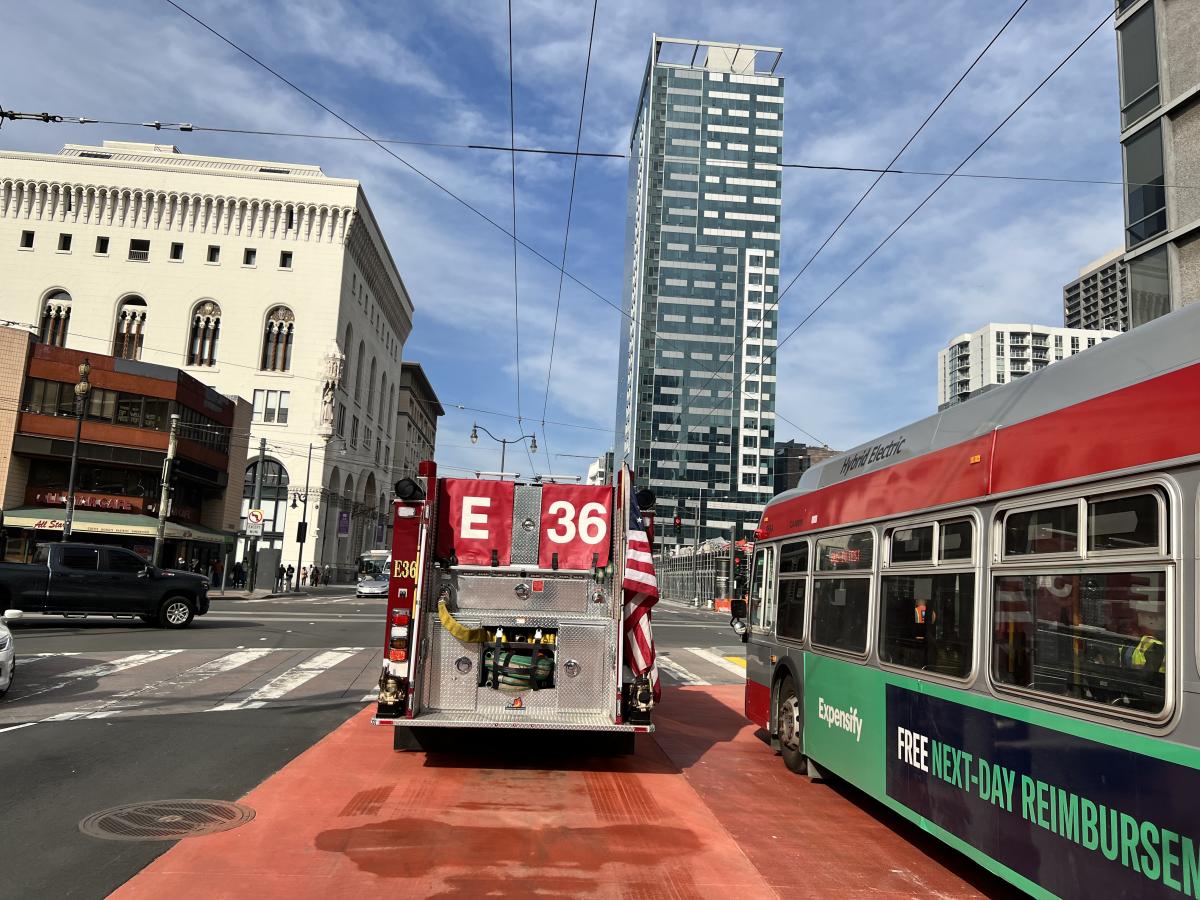
The back of a firetruck is shown passing the side of a Muni bus at the intersection of Van Ness and Market.

A fire truck uses the red lanes to bypass traffic on Van Ness. 


Published January 25, 2022 at 02:05PM
https://ift.tt/3tYnE5D

Thursday, 13 January 2022

Get a Text, Not a Tow

Get a Text, Not a Tow
By Erica Kato

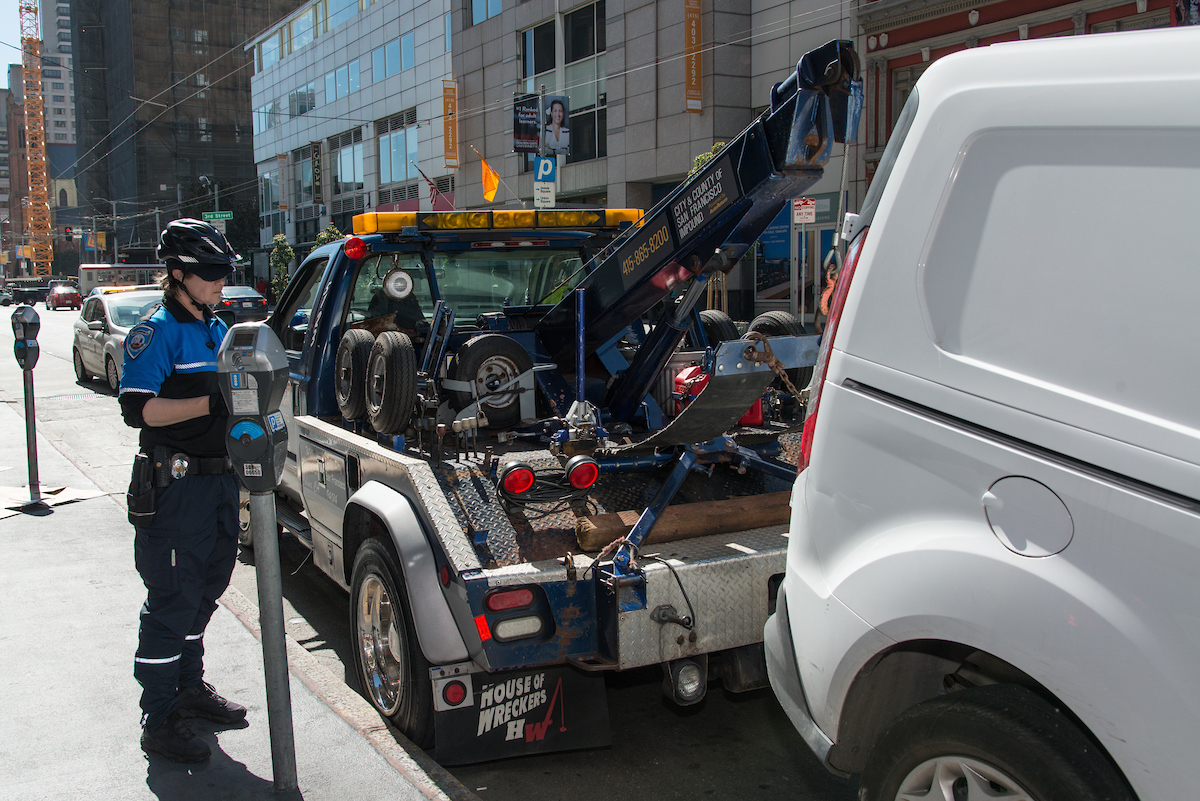
Photo of parking control officer issuing a citation while a tow truck prepares to tow away a van

Today we are pleased to announce “Text Before Tow,” a first-of-its-kind program where customers can sign up to receive a text message notification prior to having their vehicle towed.

This pilot program applies to four categories of tows: (1) parking more than 72-hours (2) blocked driveways (3) construction zones and (4) temporary no-parking zones such as special event or moving trucks. These categories represent 27% of all vehicles towed in 2020, approximately 12,500. It is important to note that peak-hour tow-away lanes, hazards, yellow or white zones and all other violations are not included.  

To enroll a vehicle, customers need to complete a short online form to register their license plate and phone number. When a customer’s vehicle is about to be towed, they will receive a text notifying them that a tow truck has been dispatched. Note: Vehicles will still receive a citation for the violation from Parking Control Officers (PCO).

This service does not provide the drivers with a “countdown” as it is dependent on the travel time of the tow truck, which could be as few as five minutes. Once a vehicle is hooked up to a tow truck, the tow cannot be stopped. Should the driver return before the tow truck arrives, the vehicle will not be towed, however a parking violation ticket will still be issued.

 Please note that this program is provided as a courtesy only. The SFMTA cannot guarantee the delivery or receipt of text messages. Failure to receive a text message cannot be used as a basis for a refund claim or for the release of a towed vehicle.

For more information or to sign up for this program, we invite you to visit our website: https://www.sfmta.com/text-tow-program-application.


Published January 13, 2022 at 12:23PM
https://ift.tt/3tFMJCr

Tuesday, 11 January 2022

San Francisco Beautiful and the SFMTA Launch the 2022 Muni Art Project

San Francisco Beautiful and the SFMTA Launch the 2022 Muni Art Project
By Sophia Scherr

We’re partnering with San Francisco Beautiful (SFB) to announce the kick-off of the 2022 Muni Art Project. The annual collaboration features the original work of five new local artists who visually interpret poems and a new theme each year.

For the first time, instead of featuring the work of five different local poets, only one local poet was chosen: the late Lawrence Ferlinghetti. The 2022 theme, “Streets of San Francisco” is the seventh year that the SFMTA, San Francisco Beautiful and The Poetry Society of America (sponsors of Poetry in Motion®) have collaborated to bring art and poetry to Muni commuters. The Muni Art Project is the only public art project that exclusively features local, San Francisco artists and poets.

The inspiring biographies of the Muni Art 2022 artists, Richard Louis Perri, Sebastian Rafael, Steffan Sanguinetti, Krithika Sengo and Tan Sirinumas are available at: sfbeautiful.org/muni-art.

You can see one of these works of art and read the accompanying poetry on your next Muni ride through April.

Poems

The Changing Light

Recipe for Happiness in Khabarovsk or Anyplace

Populist Manfesto

 What is Poetry?

At the Golden Gate

Artists

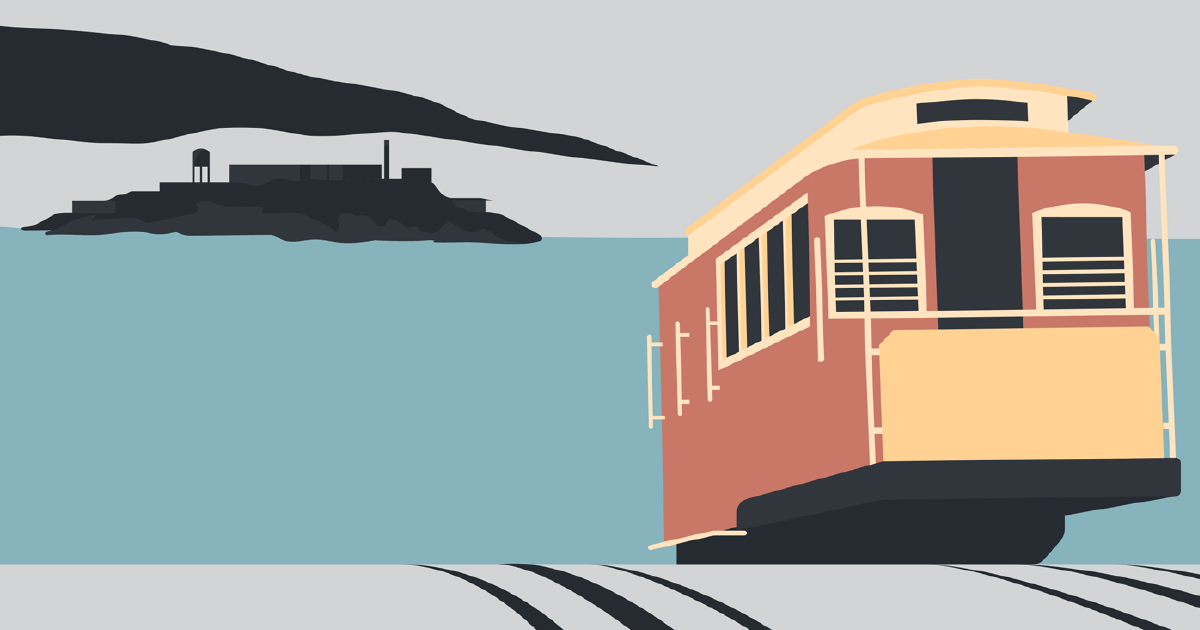
painting of cable car with alcatraz in background by SanguinettiLearn more about artist Steffan Sanguinetti


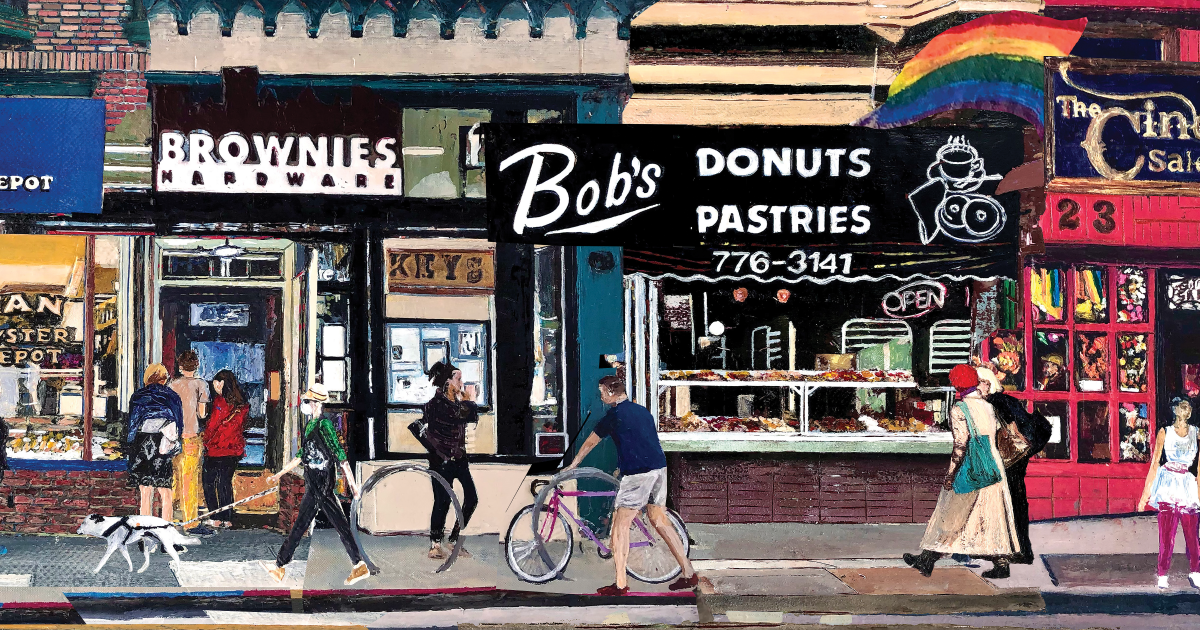
Painting of Bob's Donuts by Tan SirinumasLearn more about artist Tan Sirinumas


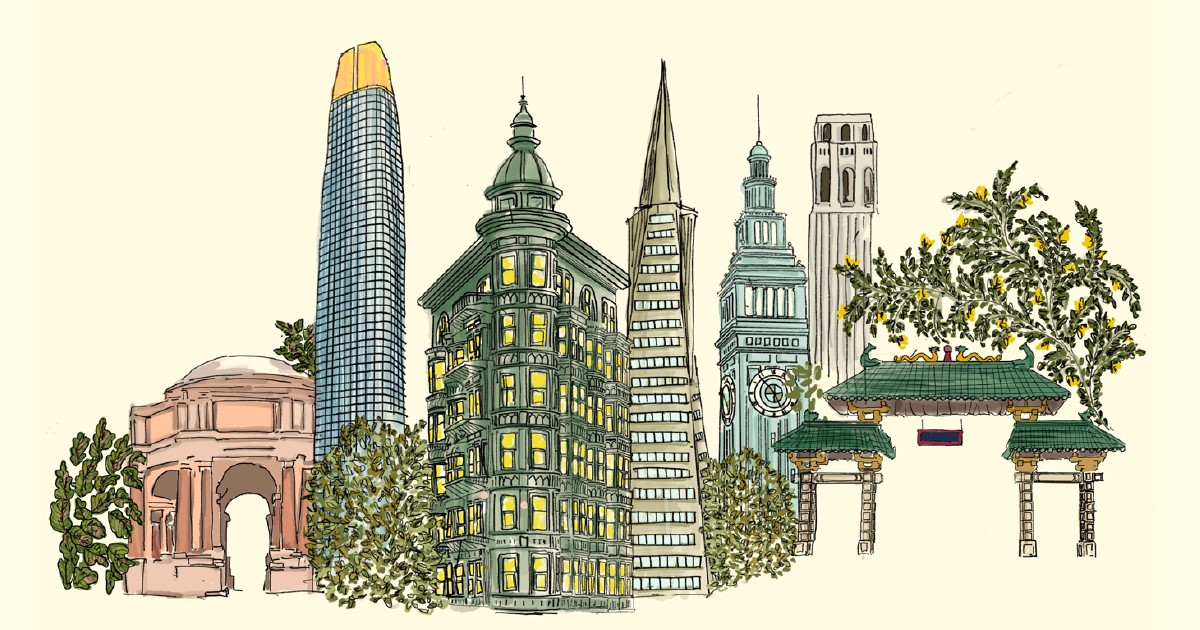
Painting of San Francisco skyline by Krithika Sentottaiyan

Learn more about artist Krithika Sengottaiyan 


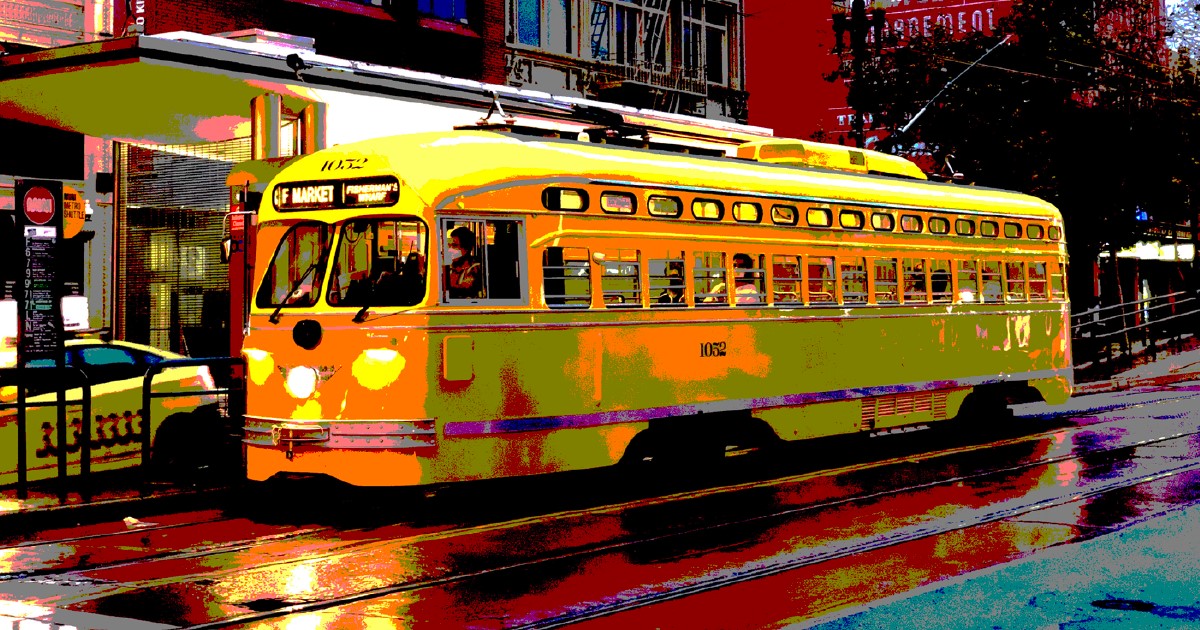
Painting of PCC streetcar by Richard Louis Perri

Learn more about artist Richard Louis Perri


Painting of cable car by Sebastian RaphaelLearn more about artist Sebastian Raphael


Published January 11, 2022 at 10:51AM
https://ift.tt/3zPXwuP

Monday, 10 January 2022

Are Ride-hail Companies Serving Wheelchair Users in San Francisco?

Are Ride-hail Companies Serving Wheelchair Users in San Francisco?
By Maddy Ruvolo

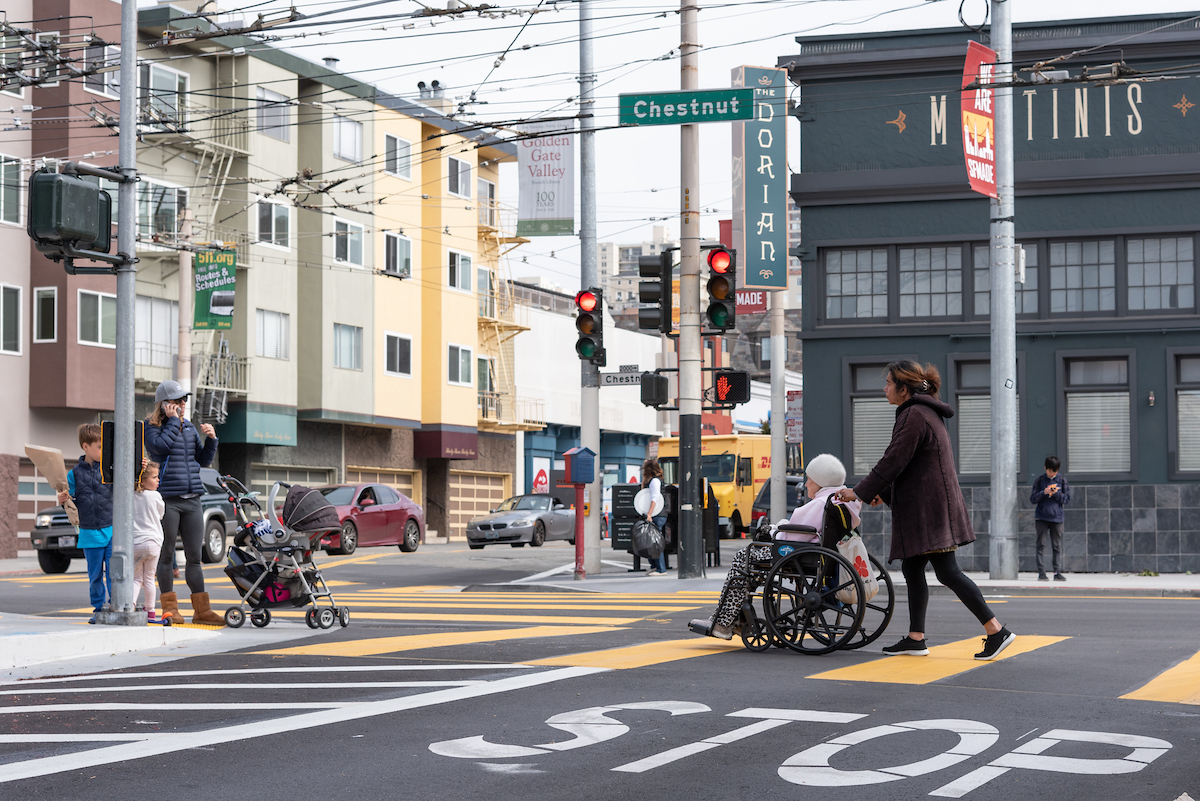
woman pushing a woman in a wheelchair on Chestnut Street

Since 2013, ride-hail companies, also known as Transportation Network Companies or TNCs, have become increasingly visible on San Francisco’s streets. In the area of disability access and TNCs, while some individuals have reported increased mobility and independence because of TNCs, wheelchair users have largely been unable to use the service. Ride hailing apps generally did not offer wheelchair accessible vehicles—nor were they required to do so by the CPUC.

While the SFMTA and our sister agency, the San Francisco County Transportation Authority (SFCTA) do not have the authority to regulate these services—a job entrusted statewide to the California Public Utilities Commission (CPUC)—we have worked together to pay close attention to the impact they have on our transportation network and shaped our areas of studies, policies, and programs accordingly. For example, over the years, the City has documented how well these services do or do not meet San Francisco’s Guiding Principles for Emerging Mobility Services, helping to shape policy and recommendations around our congestion and disability access goals.

A move in the right direction: the TNC Access for All Act

For this reason, San Francisco was proud to support the TNC Access for All Act, signed into law by then-Governor Jerry Brown in 2018. The bill requires the CPUC to develop regulations relating to accessibility for persons with disabilities, including wheelchair users who need a wheelchair accessible vehicle (WAV). The bill also created a financial incentive for TNCs to increase accessibility by imposing a per-trip fee on all TNC rides in the state. The funds from this fee are then used to reimburse ride hailing companies for their expenses if they demonstrate they are improving access to WAVs on their platforms. If a company does not meet the requirements established for reimbursement, or if they do not provide WAV services in a county at all, the collected fees are deposited into an “Access Fund” for other eligible providers to help provide on-demand WAV services in that area instead.

Since July 2019, TNCs have collected a 10-cent fee for every non-WAV trip in California. While the CPUC has not yet distributed funds to non-TNC providers as part of the Access Fund, we have started to receive data on how TNCs like Uber and Lyft are trying to improve WAV services in the few counties for which information has been reported.

So, how do we know if wheelchair accessible TNC services are improving in San Francisco and throughout the state?

For TNCs to keep the fees they are collecting to pay for WAV services, companies like Uber and Lyft must demonstrate to the CPUC that their WAV services are meeting certain quarterly performance requirements. The CPUC requires TNCs seeking reimbursement to submit reports, called “Advice Letters,” to the CPUC and anyone registered on the CPUC’s official “service list.” These reports are a series of PDF and Excel files that include aggregated data by county on service aspects like number of trip requests and rate of fulfillment, hours of service provided, response times (the time between requesting a trip and receiving a ride), expenses incurred, complaints received, and outreach performed.

All of the information provided in these Advice Letters is incredibly valuable for understanding the state of wheelchair accessible TNC service throughout California. However, the way CPUC requires the TNCs to file the information to a small group and in a difficult-to-read format has limited the utility of the data. Until now! In 2021, the SFMTA and SFCTA were chosen to participate in the San Francisco Office of Civic Innovation’s Civic Bridge Program. Through this program, we were matched with pro-bono partner ZS Associates to develop publicly available data dashboards to display key pieces of the data submitted by TNCs.

The dashboards, which are now hosted on our website, feature the following tabs: Total Trips Requested and Completed, Trips Requested and Completed by Operator, Average Number of WAVs Available Each Hour, Trips Requested – Completed and Cancelled, Response Time, TNC Expenses, and TNC Complaints.

The Trips tabs show requested and completed WAV trips, as well as cancellations. The Response Time tab includes a breakdown of the average time between passenger request and driver arrival. The Expenses tab includes program expenditures by spending category (and note that “Partnership Costs” include most of the direct costs of providing WAV service—usually the amount paid to a contractor who is providing WAV trips for the TNC. “Operational Costs” are primarily overhead). Finally, the Complaints tab categorizes the complaints reported about the TNCs’ WAV service. Each tab can be viewed by vendor (currently Lyft, Uber, or Nomad), county, year, and quarter.

We are pleased to make this important reporting data more publicly accessible, and encourage you to explore the dashboards.


Published January 10, 2022 at 01:21PM
https://ift.tt/3K93zzk

Friday, 7 January 2022

Omicron Surge Impact on Muni Routes and Schedules

Omicron Surge Impact on Muni Routes and Schedules
By Julie Kirschbaum

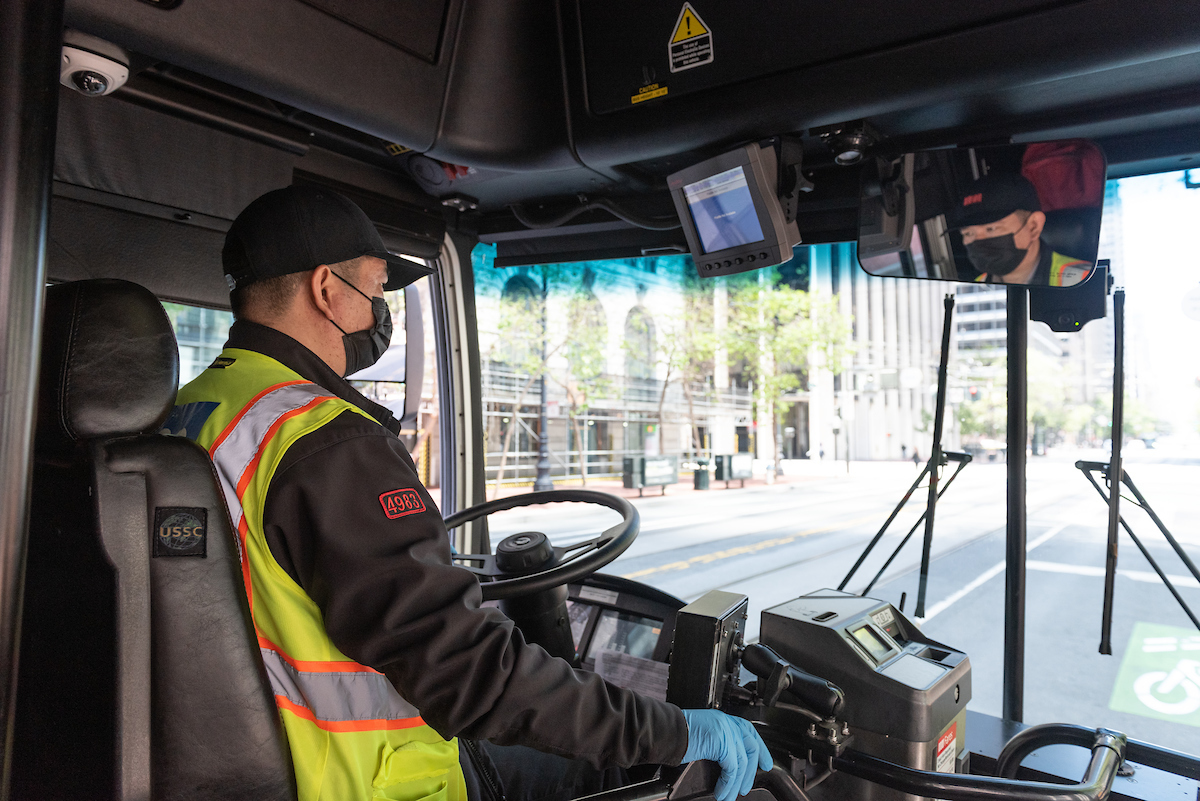
Photo of a bus operator wearing a mask

As has been reported widely in the media, the highly contagious Omicron variant has led to rapid and unprecedented spread of the COVID-19 virus in San Francisco. More than 100 SFMTA staff have contracted COVID since late last month. Combined with pre-existing staffing shortages, this has led to an increase in missed Muni service. We’re also experiencing staffing impacts in other job classifications, including mechanics, car cleaners and transit supervisors. 

Currently, we are missing up to 15% of scheduled Muni service, which means that riders may need to wait longer than usual for their bus or train. Our hope is that this will be the extent of our impacts. However, the situation is fluid, and we are monitoring staffing levels on a daily basis.

As part of our contingency planning, we are preparing for what might happen if our overall staffing levels drop significantly or if a small, but vital group—such as our Transit Management Center or Power Control Center is significantly impacted. Either of these situations could leave us with no choice but to make additional Muni service reductions such as cancelling routes or introducing bus substitutions for rail service.

We are doing our best to avoid this situation by communicating proactively with staff about masking and staying home if they have any symptoms and keeping some staff working vital functions at remote locations to limit exposure. We are grateful that nearly 100% of the SFMTA workforce is vaccinated, and we are encouraging boosters as an effective precaution. We are also doing hard work behind the scenes to prepare signage, operator instructions, and all the other materials we would need to implement changes as smoothly as possible — in the case these become necessary.

For the latest information on service changes, please visit our Core Service webpage. You can also find our latest updates by subscribing to Muni alerts or visiting our Twitter feed.


Published January 07, 2022 at 02:10PM
https://ift.tt/3G9cRbZ