Thursday, 31 March 2022

BRT Service on Van Ness to Begin Tomorrow

BRT Service on Van Ness to Begin Tomorrow
By Jiaying Yu

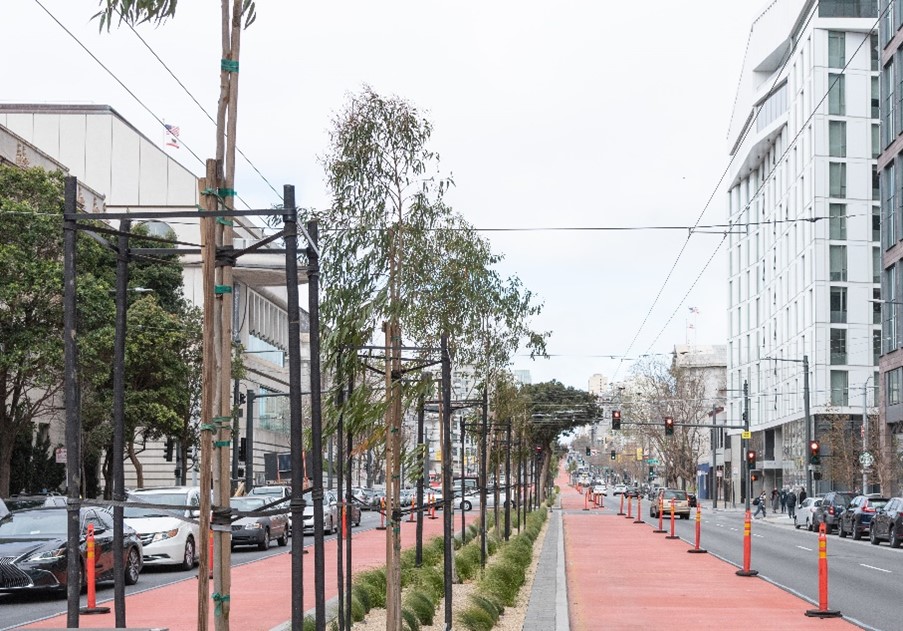
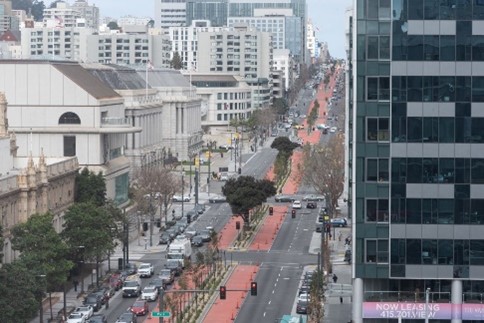
Aerial view of the Van Ness Avenue corridor featuring the BRT's signature red transit lanes

Tomorrow, April 1, we will cut the ribbon on San Francisco’s first Bus Rapid Transit (BRT) corridor on Van Ness Avenue. The public is invited to join and celebrate this historic moment in front of the War Memorial. The ribbon-cutting will include speeches from local and state leaders, performances from local musicians and giveaways. After the ribbon is cut, there will be an inaugural ride on the new Van Ness BRT corridor to North Point where the celebration continues with live music.  

BRT service on Van Ness is part of Muni’s Rapid Network, which prioritizes frequency and reliability for customers. Muni and Golden Gate Transit customers are expected to experience 32% shorter travel times. With dedicated transit lanes in the middle of the road, enhanced traffic signals with Transit Signal Priority and new platforms and shelters, the Van Ness BRT corridor will be the fastest way to travel north-south in this part of San Francisco.  

In addition to these transit improvements, the Van Ness Improvement Project brought several other features to the corridor. Some of these improvements were underground, while surface improvements include:  

  • Bulb-outs that extend sidewalks at intersections to shorten the distance for people to safely cross the street 
  • Median refuges that provide people walking with a safe place to wait while crossing Van Ness
  • Countdown signals let people walking know how much time they have to cross the street, and accessible auditory pedestrian signals provide verbal directions to bus platforms for people who are blind and low vision
  • Landscaping, new trees and shrubs, new sidewalks and a colorful public light sculpture on the Geary/O’Farrell boarding island

We are excited to introduce you to the new and improved Van Ness.  For details go to Van Ness Improvement Project.


Published March 31, 2022 at 12:05PM
https://ift.tt/R6xak1J

Wednesday, 30 March 2022

Women Pioneers at Muni: Adeline Svendsen and Muni’s First Newsletter

Women Pioneers at Muni: Adeline Svendsen and Muni’s First Newsletter
By Jeremy Menzies

To close out Women’s History Month, here’s a look back at one woman whose work to bring Muni staff together in the late 1940s created a legacy that lives on to this day. Adeline “Addy” Svendsen was founding editor of Muni’s first internal newsletter, “Trolley Topics.”

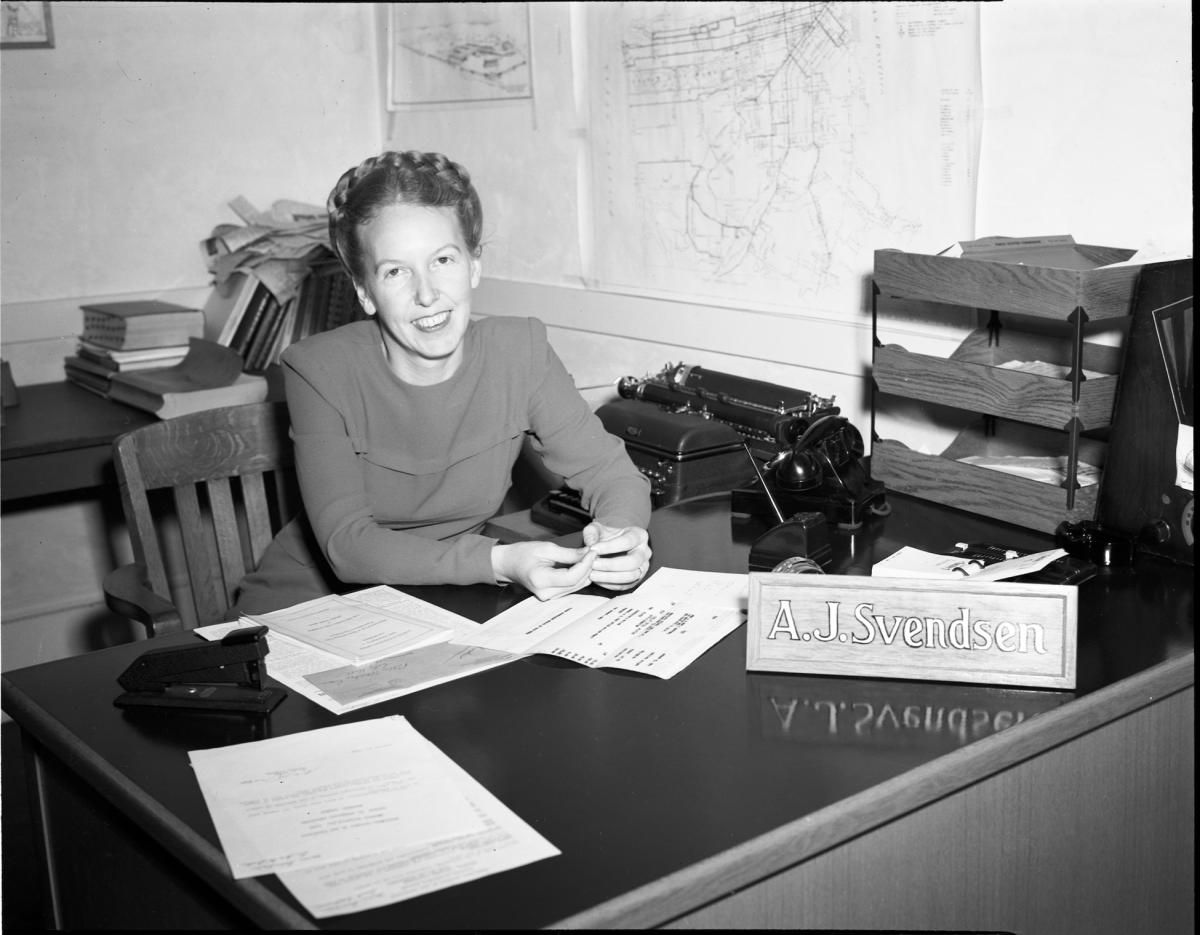
Adeline Svendsen sits at her desk in the Geneva Carhouse office building in this 1949 shot.

Adeline Svendsen sits at her desk in the Geneva Carhouse office building in this 1949 shot.

Trolley Topics was a new venture when it started in February 1946. As Svendsen wrote in the first issue it was created, “to bring a little fun, a little news, and a lot of good will to all our fellow employees in the Railway.”

Just two years prior in 1944, Muni merged with the Market Street Railway Company, expanding the small municipal operation into the largest transit provider in the city with hundreds of employees, vehicles of every shape and size, and dozens of facilities scattered across town. The newsletter was meant to help unite the two workforces (which historically had been in competition with each other) and keep everyone on the same page about what was happening across the railway.

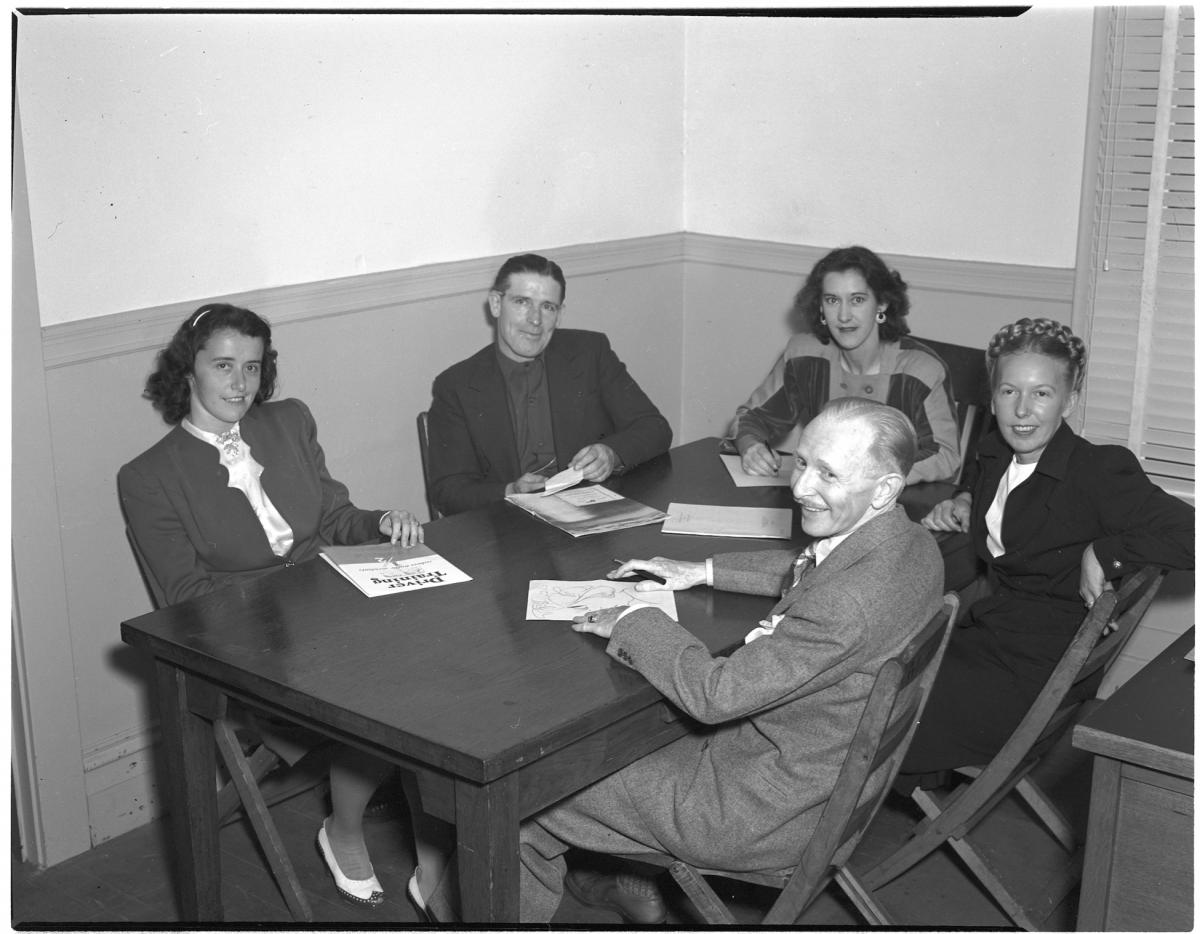
Group photo of Trolley Topics contributing staff in 1946. Clockwise from left: reporters Dolores Shea, Robert Fish, Maybelle Paetzel, editor Adeline Svendsen, and cartoonist Charles Reed.

Group photo of Trolley Topics contributing staff in 1946. Clockwise from left: reporters Dolores Shea, Robert Fish, Maybelle Paetzel, editor Adeline Svendsen, and cartoonist Charles Reed.

Through her perseverance and editorial savvy, Svendsen’s monthly quickly evolved from a bare-bones typewritten handout to a proper paper within just six-months of the first issue. Properly printed with an eye-catching front page, nicely laid out columns and photographs supplied mainly by the Muni Photography Department, Trolley Topics looked much like any professional magazine of the day.

Typically, each issue had sections for employee commendations, news from each division about staff activities, goofy transportation-centric cartoons, and articles about general railway announcements and programs. As the years progressed, the paper expanded its scope to include messages from the mayor, announcements about policy changes affecting city employees, more photos from staff events and awards, and occasional news from other departments.

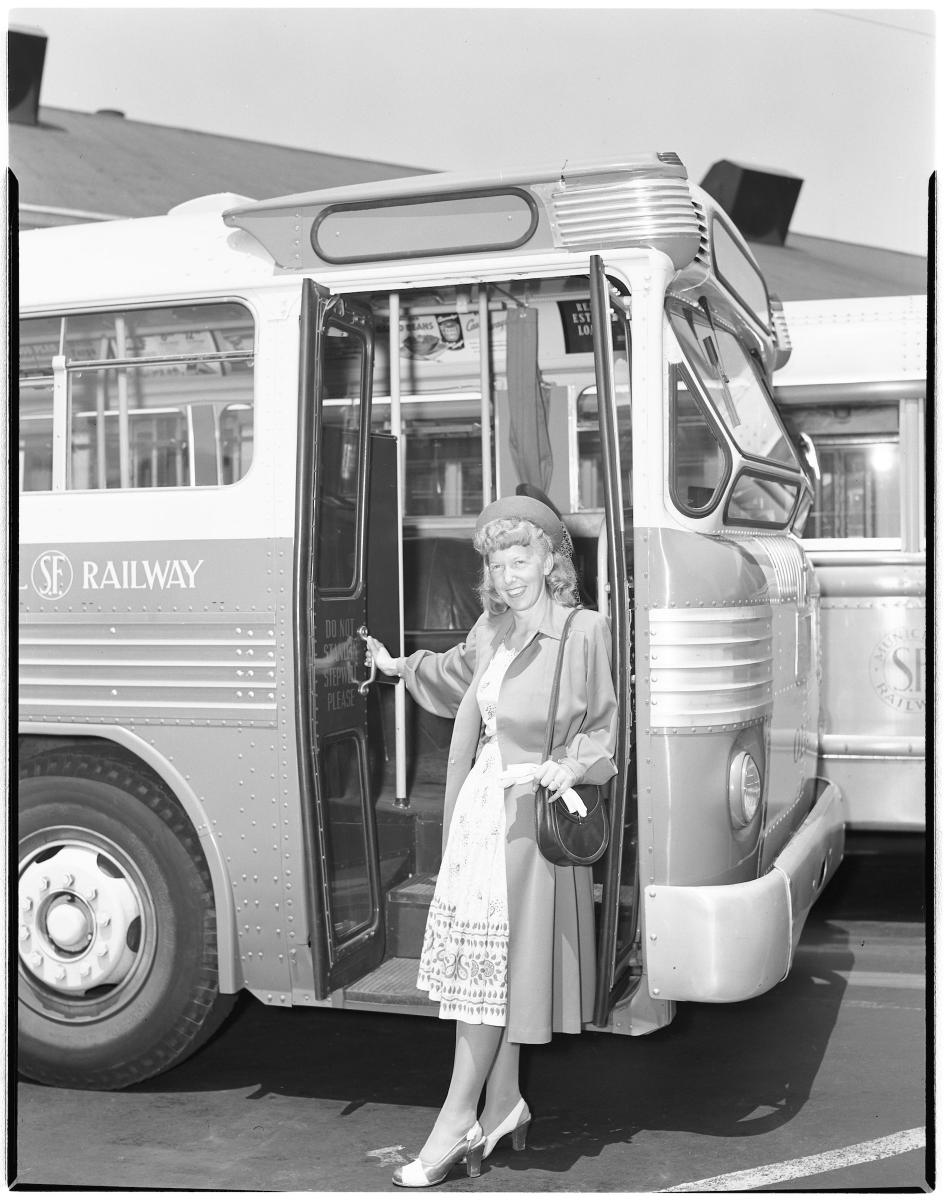
Svendsen poses with one of Muni’s newest buses in this 1947 photo taken at a bus garage once located on 24th and Utah streets.

Svendsen poses with one of Muni’s newest buses in this 1947 photo taken at a bus garage once located on 24th and Utah streets. 

Unfortunately, Adeline Svendsen left the Railway abruptly in 1952 and with her departure, the publication ceased production. Despite the short-lived run of the paper, Svendsen’s nearly seven-year project left an important mark on Muni.

Recognizing the importance of Svendsen’s original Trolley Topics, the newsletter was revived using the same name in 1973. Much like its predecessor, the 1970s Trolley Topics covered staff awards and events but also focused on major programs to improve the system. In mid-1980, the second run of the paper ceased production due to budget problems, with no replacement until the 1990s.

Not only did Adeline Svendsen’s Trolley Topics bring staff together and provide much needed information at the time it was published, her work offers inspiration for our ever expanding efforts to connect our nearly 6,000 colleagues today. Additionally, the stories and photos published in both the original and the revived Trolley Topics give us an invaluable glimpse into the operations and culture of Muni during those times.


Published March 30, 2022 at 02:11PM
https://ift.tt/rvyFWNU

Friday, 18 March 2022

The Van Ness BRT Will Soon Welcome You

The Van Ness BRT Will Soon Welcome You
By John Gravener

New Van Ness Avenue transit lanes open to Muni and Golden Gate Transit buses April 1, 2022.

We will be celebrating the new Van Ness Bus Rapid Transit system with a ribbon-cutting ceremony at the War Memorial on April 1, at 9:15 a.m., and you are invited!

This immense civic improvement project has not only brought the first Bus Rapid Transit corridor to San Francisco, it also presented the opportunity to do much-needed underground and utilities work. This project looks towards San Francisco’s future with an eye towards climate resiliency and transit efficiency

The Bus Rapid Transit corridor provides a globally proven solution to improve transit service and address traffic congestion on Van Ness Avenue. With the new, physically-separated transit lanes along the Van Ness corridor, buses will be able to travel without getting caught up in traffic and passengers will be able to board buses more easily. Other benefits include improved lighting, sidewalk extensions (bulb-outs), new countdown signals for people crossing Van Ness and improved accessibility for those with mobility needs.

As great as the street-level improvements are for Van Ness Avenue, the work that has been completed underground is just as important. The construction that has been completed allowed for extensive utility maintenance which included the replacement of sewer pipes and water mains, some that had not been replaced in more than 100 years! This work prepares San Francisco for the next major earthquake and the effects of climate change with stronger infrastructure. The emergency water supply system dating back to the early 1900s was also part of the overhaul, providing firefighters adequate water pressure and volume throughout the city to fight fires, a hard-learned lesson from the 1906 earthquake and fires: Fires ripped through the city after the 1906 earthquake because the water mains had been severely damaged and there was no water pressure. The emergency water supply system was implemented soon after to prevent history from repeating itself.

We look forward to seeing you on Van Ness. We appreciate your patience as we revitalize the historic corridor. We hope you’ll enjoy it.

For details about the ribbon-cutting and to RSVP, go to SFMTA.com/VanNess.


Published March 18, 2022 at 08:49AM
https://ift.tt/4zEQxZP

Wednesday, 16 March 2022

SFMTA to Replace All Parking Meters in the City

SFMTA to Replace All Parking Meters in the City
By Jessie Liang

Test

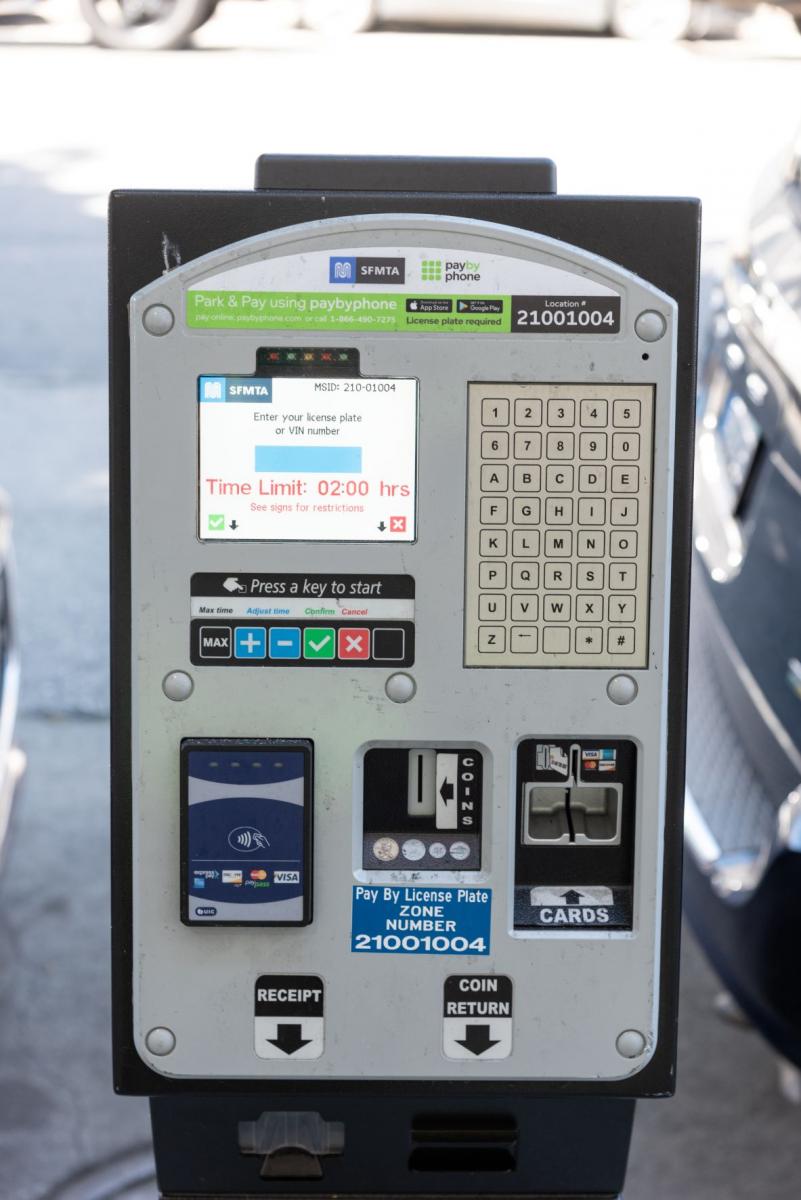
San Franciscans will see new parking meters on city streets beginning in early March 2022. Staff from the SFMTA’s Parking Meter Shop will replace the meters at all the nearly 27,000 paid parking spaces in the city because those meters have reached the end of their useful lives, and because many of the meters rely on 3G communications technology that soon will be phased out by the wireless companies. The first new meters will be installed in the South of Market and Mission Bay neighborhoods.  SFMTA staff will provide notices on vehicle windshields when the new meters are activated. 

The new meters will provide several benefits, including larger and more legible screens, more intuitive user interface, more powerful batteries, and more resistance to vandalism.  

The following neighborhoods will move to a pay-by-license-plate system with new paystations.

  • South Beach
  • SoMa
  • Mission Bay
  • Civic Center
  • Hayes Valley
  • Fisherman’s Wharf
  • Telegraph Hill
  • Chinatown
  • North Beach
  • Financial District
  • Union Square 

The new system not only makes on-street parking more efficient, but also streamlines enforcement and reduces an estimated $6 million in operating costs over the next decade.  

Pay-by-license-plate, in which you enter your license plate number instead of your space number to pay for parking, gives you the option to pay at any paystation as you head to your destination—simply enter the zone number for the block where you parked. If you pay for parking but leave before your paid time expires, you may return to the same block and park without having to pay again, as long as you are within the original paid timeframe.  

SFMTA tested the new single space meters and the new pay-by-license-plate system in several neighborhoods before undertaking this citywide parking meter replacement project.  For information about a pilot of the pay-by-license-plate system in the Dogpatch neighborhood, click here.  

The purchase of new hardware for the citywide parking meter upgrade project is funded by the SFMTA’s capital budget and will not impact the price you pay at the meter. Parking meter rates will continue to be determined using the agency’s demand-responsive parking pricing program, and more information can be found at the Demand-Responsive Parking page. 

Please visit the Citywide Parking Meter Replacement Project for more details. To learn how to pay for parking at a meter, please visit the SFMTA parking website. 


Published March 16, 2022 at 02:28PM
https://ift.tt/YmCjM4B

Tuesday, 15 March 2022

Virtual Permit Transition Summary

Virtual Permit Transition Summary
By Stephen Chun

Effective April 1, 2022 the SFMTA will transition annual Residential Parking Permit (RPP) permits from physical stickers to virtual permits. This will streamline the RPP application and administration process. This change will not apply to other permit types—including 1 Day, Visitor, Press, City Vehicle, Teacher and Contractor permits.  

Currently, about 70,000 San Francisco residents living in RPP areas purchase an annual parking permit in sticker form each year. Those renewing their permit at the same address can pay online and receive their permit in the mail.  People buying new permits can do so (a) in-person at the Customer Service Center, where the customer receives their physical sticker at time of purchase, (b) by-mail, or (c) online, and receive their permit in the mail.  

Virtual permits have several benefits, such as: 

  • Permit is active as soon as it is paid. No waiting for a permit to be mailed. 

  • Permits can be purchased online. No need to visit the Customer Service Center. 

  • No need to place a sticker on the vehicle. 

  • Digital permits cannot be stolen from a vehicle. 

  • Faster enforcement in RPP areas with use of LPR technology. 

  • More opportunities for customer friendly RPP policy innovations that advance the City’s Transit First, Vision Zero and Climate Action goals. 

Enforcement  

This transition is made possible through the use of License Plate Recognition (LPR) technology for RPP enforcement. With LPR technology, enforcement vehicles read license plate numbers as they drive through neighborhoods, checking in real time if vehicles have a permit. The system will notify Parking Control Officers if a vehicle without a permit is found to be parked overtime without a permit.  

Privacy Protections  

SFMTA policies regarding the use of LPR technology for parking enforcement is in full compliance with state and with pending local legislation on the use of surveillance technology. All images obtained through the LPR system, with the exception of those associated with a violation, are automatically purged after seven days. Images associated with a violation will be purged after 365 days. Access to images will be limited to authorized vendor support staff and SFMTA employees for the purpose of citation processing, payment and review.  


Published March 15, 2022 at 11:28AM
https://ift.tt/YrE5kOu

Thursday, 10 March 2022

Share Your Feedback on Geary Boulevard's Transit and Safety Improvements

Share Your Feedback on Geary Boulevard's Transit and Safety Improvements
By Amy Fowler

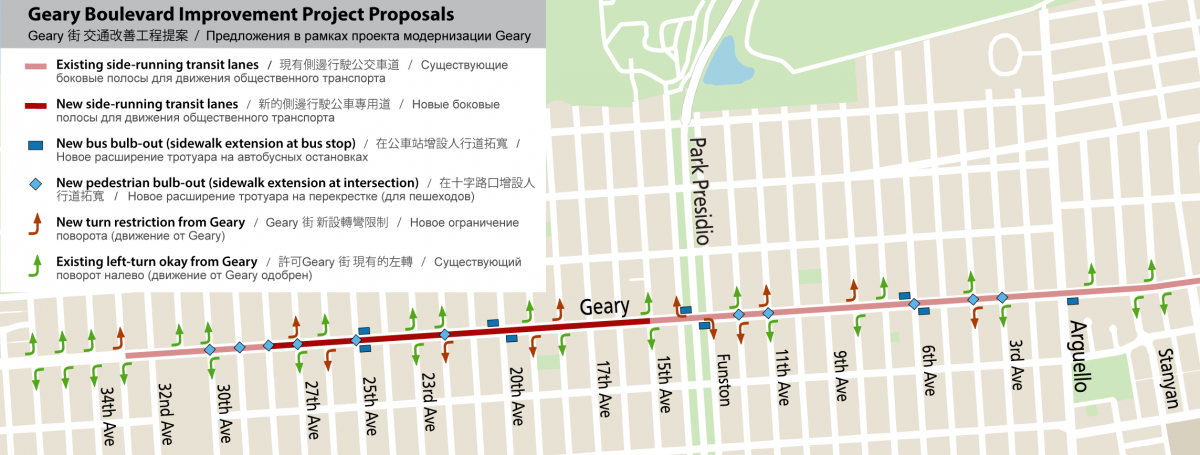
Geary Boulevard is a critical east-west arterial and one of the busiest bus corridors in North America, connecting downtown San Francisco to the Richmond District. The SFMTA has been busy working on the second phase of planned improvements on Geary, called the Geary Boulevard Improvement Project, to improve Muni’s 38 Geary bus service and address traffic safety between 34th Avenue and Stanyan Street. 

The project is building on the success of the Geary Rapid Project, which was recently completed on time and on budget and has already shown promising travel time savings on the eastern half of the Geary corridor.   

Last fall, we asked neighbors in the Richmond about their priorities for transit, safety and driving issues on Geary via pop-up events on the corridor and a Virtual Open House. Thanks to input from over 600 community members, the SFMTA has used this feedback to draft the detailed, block-by-block project design. 

Now we’re conducting outreach on this detailed proposal, which includes: 

  • Installing transit lanes between 28th and 15th avenues. To make room, angled parking on Geary would be converted to parallel parking. 

  • Relocating 11 bus stops and removing two closely-spaced stops to improve transit performance. 

  • Traffic signal upgrades, new bus bulb-outs and lengthening bus zones that are too short to accommodate two buses. 

  • Safety improvements, including pedestrian bulb-outs, daylighting, expanded median refuges and left-turn restrictions at key intersections.

Geary Boulevard Improvement Project conceptual scope map image

Some of the proposed changes would remove parking along Geary—about two parking spaces per block face on average. To help offset this loss, we’re proposing to increase parking spaces on some side streets by converting some parallel parking near Geary to angled parking. 

We have also heard from small businesses about the importance of maintaining customer access to their storefronts. In response, we’re proposing parking policy changes that could help increase parking availability for people visiting businesses or other short-term trips. Some of this can be achieved by curb space changes, such as adding more passenger or commercial loading zones. We are also proposing to add evening and Sunday metering on Geary in Central Richmond between 14th and 28th avenues. This would help to improve parking availability for businesses, but would mean free parking at meters wouldn’t start until later in the evening. Parking meters, especially in commercial areas, are the most effective tool we have to manage parking in high-demand areas. The proposed extended hours can help support increased business activity and make parking spaces easier to find for everyone. 

Do you live or work in the Richmond near Geary? We want your feedback!  

Learn more about the detailed project design and let us know what you think in two simple steps: 

Step 1: Visit our website, where you can review the block-by-block design for the Geary Boulevard Improvement Project. Learn about improvements proposed, including additional transit lanes, bus stop changes and safety treatments. 

Step 2: Then, take a brief survey about the detailed project design. Let us know which project proposals you like or don’t like. The survey will be open through March 31. 

Want to connect directly with staff about the project? You can meet with project staff in-person at our Community Pop-Up event at Geary and 20th Avenue on Tuesday, March 15 from 11:00am to 1:00pm. Or, drop in to our Virtual Office Hours on Wednesday, March 16, anytime from 5:30 p.m. to 7 p.m. 

We’ll also be hosting a self-guided (unstaffed) open house at One Richmond (802 Clement Street at 9th Avenue). Drop in anytime Mondays – Fridays from 1-5 p.m. through March 28 to view project materials and take the survey in-person.  

We’ll use this input to help create the final project proposal, to be considered for approval later in 2022 by the SFMTA Board of Directors.  Construction would be coordinated with needed utility upgrades, as many sewer and water pipes under Geary are over 100 years old. 

Learn more about the project at SFMTA.com/ImproveGeary.  


Published March 10, 2022 at 10:40AM
https://ift.tt/yJ68aOh

Geary Boulevard Improvement Project Update

Geary Boulevard Improvement Project Update
By Amy Fowler

Geary Boulevard is a critical east-west arterial and one of the busiest bus corridors in North America, connecting downtown San Francisco to the Richmond District. The SFMTA has been busy working on the second phase of planned improvements on Geary, called the Geary Boulevard Improvement Project, to improve Muni’s 38 Geary bus service and address traffic safety between 34th Avenue and Stanyan Street. 

The project is building on the success of the Geary Rapid Project, which was recently completed on time and on budget and has already shown promising travel time savings on the eastern half of the Geary corridor.   

Last fall, we asked neighbors in the Richmond about their priorities for transit, safety and driving issues on Geary via pop-up events on the corridor and a Virtual Open House. Thanks to input from over 600 community members, the SFMTA has used this feedback to draft the detailed, block-by-block project design. 

Now we’re conducting outreach on this detailed proposal, which includes: 

  • Installing transit lanes between 28th and 15th avenues. To make room, angled parking on Geary would be converted to parallel parking. 

  • Relocating 11 bus stops and removing two closely-spaced stops to improve transit performance. 

  • Traffic signal upgrades, new bus bulb-outs and lengthening bus zones that are too short to accommodate two buses. 

  • Safety improvements, including pedestrian bulb-outs, daylighting, expanded median refuges and left-turn restrictions at key intersections.

Geary Boulevard Improvement Project conceptual scope map image

Some of the proposed changes would remove parking along Geary—about two parking spaces per block face on average. To help offset this loss, we’re proposing to increase parking spaces on some side streets by converting some parallel parking near Geary to angled parking. 

We have also heard from small businesses about the importance of maintaining customer access to their storefronts. In response, we’re proposing parking policy changes that could help increase parking availability for people visiting businesses or other short-term trips. Some of this can be achieved by curb space changes, such as adding more passenger or commercial loading zones. We are also proposing to add evening and Sunday metering on Geary in Central Richmond between 14th and 28th avenues. This would help to improve parking availability for businesses, but would mean free parking at meters wouldn’t start until later in the evening. Parking meters, especially in commercial areas, are the most effective tool we have to manage parking in high-demand areas. The proposed extended hours can help support increased business activity and make parking spaces easier to find for everyone. 

Do you live or work in the Richmond near Geary? We want your feedback!  

Learn more about the detailed project design and let us know what you think in two simple steps: 

Step 1: Visit our website, where you can review the block-by-block design for the Geary Boulevard Improvement Project. Learn about improvements proposed, including additional transit lanes, bus stop changes and safety treatments. 

Step 2: Then, take a brief survey about the detailed project design. Let us know which project proposals you like or don’t like. The survey will be open through March 31. 

Want to connect directly with staff about the project? You can meet with project staff in-person at our Community Pop-Up event at Geary and 20th Avenue on Tuesday, March 15 from 11:00am to 1:00pm. Or, drop in to our Virtual Office Hours on Wednesday, March 16, anytime from 5:30 p.m. to 7 p.m. 

We’ll also be hosting a self-guided (unstaffed) open house at One Richmond (802 Clement Street at 9th Avenue). Drop in anytime Mondays – Fridays from 1-5 p.m. through March 28 to view project materials and take the survey in-person.  

We’ll use this input to help create the final project proposal, to be considered for approval later in 2022 by the SFMTA Board of Directors.  Construction would be coordinated with needed utility upgrades, as many sewer and water pipes under Geary are over 100 years old. 

Learn more about the project at SFMTA.com/ImproveGeary.  


Published March 10, 2022 at 07:53AM
https://ift.tt/k6qM2hs